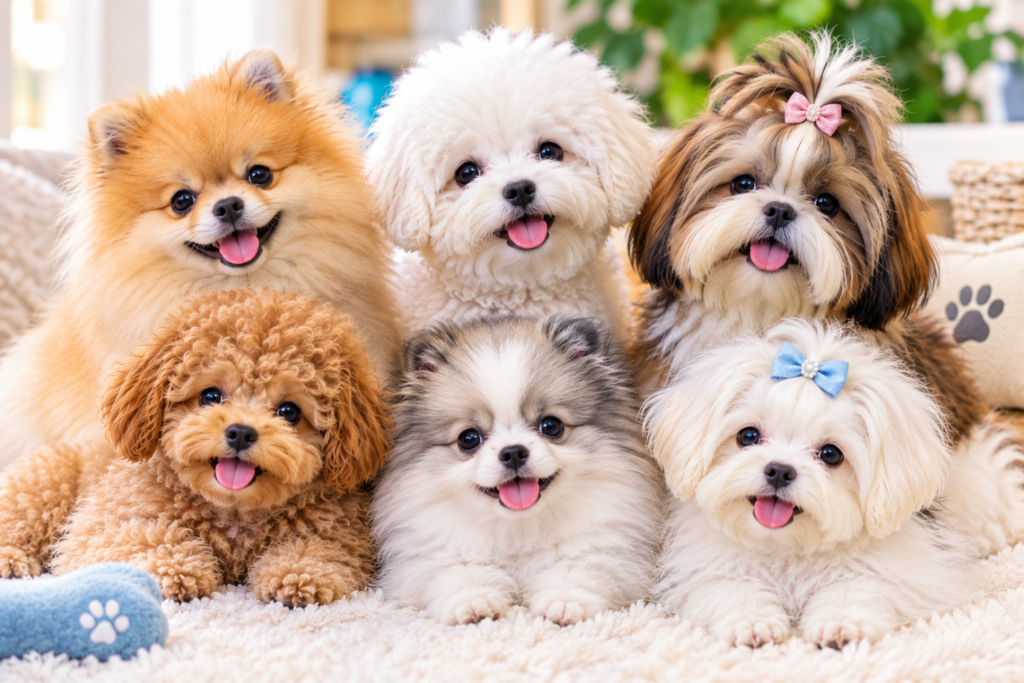
Fluffy little dogs come in many shapes, coat types, and personalities. Popular examples include the Pomeranian, Shih Tzu, Bichon Frise, Havanese, Maltese, and Toy Poodle. Some are energetic and playful, while others are happiest as close companions, so the right choice depends on more than simply how cute or cuddly a dog looks.
If you are searching for a small, soft-coated companion, this guide covers 15 breeds worth knowing, along with grooming requirements, temperament, living situations, and a few details that are easy to overlook. For more insight here small dogs that are fluffy
What Are Fluffy Little Dogs?
There isn’t one official breed category called “fluffy little dogs.” The phrase generally describes small breeds with noticeably soft, dense, long, curly, or feathered coats.
The American Kennel Club lists many small breeds across its Toy and other breed groups, including Pomeranians, Shih Tzus, Havanese, Maltese, Pekingese, Papillons, and Toy Poodles.
One useful distinction is fluffy versus low-maintenance. A dog can be tiny and adorable while still requiring substantial coat care. For example, Bichon Frise coats need frequent brushing and grooming even though the breed is often described as low-shedding.
15 Fluffy Little Dogs to Know
1. Pomeranian
The Pomeranian is probably one of the first breeds people picture when they hear “fluffy little dog.” Its dense double coat, plumed tail, and fox-like expression give it a particularly fluffy appearance.
Pomeranians are small but generally lively, curious, intelligent, and affectionate. They can fit well into city or suburban homes when their exercise and companionship needs are met.
Temperament: Lively, curious, affectionate
Coat: Dense double coat
Care level: Moderate to high
Good fit: Apartments, couples, individuals, families with older children
A common mistake is assuming that a Pomeranian needs almost no activity because of its size. These dogs can be surprisingly energetic.
Another easily overlooked point is grooming. The thick coat needs frequent brushing, and AKC notes that professional grooming may be useful every several weeks for owners who aren’t comfortable maintaining the coat themselves.
2. Shih Tzu
The Shih Tzu is a classic small companion dog with a long, luxurious coat. Its friendly personality and relatively modest exercise needs can make it appealing to people living in smaller homes.
The coat can be maintained long or trimmed into a shorter puppy cut. AKC specifically notes that keeping the coat in a puppy cut can make maintenance easier.
Temperament: Friendly, affectionate, lively
Coat: Long and flowing
Care level: Moderate to high
Good fit: Apartments, families, attentive owners
The common misconception is that a short haircut eliminates grooming. Even a short-coated Shih Tzu still needs routine coat care, bathing, and attention to areas that can become tangled.
3. Bichon Frise
The Bichon Frise looks almost like a little cotton ball on four legs. Its curly coat and rounded grooming style create the breed’s familiar powder-puff appearance.
Bichons are generally cheerful, playful, and social. They can adapt to everything from an apartment to a larger family home.
Temperament: Cheerful, playful, social
Coat: Curly and dense
Care level: High grooming needs
Good fit: Families, apartments, active households
One thing owners sometimes misunderstand is shedding. Bichons are often described as non-shedding or low-shedding, but that does not mean they are maintenance-free. Their hair continues growing and needs regular brushing and grooming.
4. Havanese
The Havanese is Cuba’s native dog breed and is known for its silky coat, lively personality, and affectionate nature. It is small enough for many indoor living situations but still enjoys play and activity.
The breed is also included among the AKC’s small Toy Group breeds.
Temperament: Affectionate, playful, sociable
Coat: Silky and soft
Care level: Moderate
Good fit: Families, couples, attentive owners
Havanese often enjoy being around their people. That makes them charming companions but also means they may not be the ideal choice for a household where the dog will routinely spend very long periods alone.
5. Maltese
The Maltese is a tiny companion breed recognized for its beautiful white coat. Its hair can grow long and silky, creating an especially elegant fluffy appearance.
Despite its delicate appearance, the Maltese is not simply a decorative lapdog. It can be playful, alert, and surprisingly lively.
Temperament: Affectionate, playful, lively
Coat: Long and silky
Care level: Moderate to high
Good fit: Apartments, couples, individuals, families with gentle older children
Daily coat care becomes particularly important when the hair is kept long. Owners who prefer less maintenance can discuss a shorter trim with a professional groomer.
6. Toy Poodle
Toy Poodles have dense, curly coats and are among the most intelligent small dog breeds. Their coat can be shaped into different grooming styles, including a fluffy teddy-bear look.
Their intelligence is both an advantage and a responsibility. They generally benefit from training, games, and mental stimulation rather than being treated as a dog that only needs occasional cuddles.
Temperament: Intelligent, active, responsive
Coat: Dense and curly
Care level: Moderate to high
Good fit: Active individuals, families, experienced owners
A common mistake is focusing entirely on the Toy Poodle’s small size. These dogs can have plenty of energy and often enjoy learning tricks and participating in activities.
7. Lhasa Apso
The Lhasa Apso has a long, dense coat and a distinctive, confident personality. The breed is small but does not necessarily behave like a typical cuddly toy dog.
Lhasa Apsos can be devoted to their families while remaining somewhat independent and alert around unfamiliar people.
Temperament: Confident, independent, loyal
Coat: Long and dense
Care level: High grooming needs
Good fit: Quiet homes, individuals, experienced owners
The long coat requires consistent attention. A shorter pet trim can make everyday care considerably easier.
8. Pekingese
Pekingese dogs have a distinctive combination of a compact body, broad head, and abundant coat. Their appearance can make them look like tiny royal companions.
They tend to have confident personalities and may be less interested in nonstop activity than some other small breeds.
Temperament: Confident, independent, affectionate
Coat: Long and abundant
Care level: High
Good fit: Calm households, apartments, experienced owners
Their small size should not be confused with fragility-free handling. Children should be taught to interact gently with any small dog.
9. Papillon
The Papillon is best known for its large, butterfly-like ears, but its fine coat also has attractive feathering around the ears, chest, legs, and tail.
This is one of the small dogs that can surprise first-time owners. Papillons are intelligent, active, and often enthusiastic about training. AKC describes them as lively dogs that enjoy activities such as dog sports and learning tricks.
Temperament: Intelligent, energetic, alert
Coat: Fine with feathering
Care level: Moderate
Good fit: Active individuals and families
If you’re looking for a fluffy dog that enjoys learning rather than simply lounging, the Papillon deserves consideration.
10. Japanese Chin
The Japanese Chin is a small companion breed with a silky coat, feathered ears, and a plumed tail. Its elegant appearance can make it look almost cat-like.
This breed can suit people who appreciate a quieter companion and are prepared to provide regular social interaction and coat care.
Temperament: Affectionate, sensitive, charming
Coat: Silky and feathered
Care level: Moderate
Good fit: Calm households and apartment living
11. Cavalier King Charles Spaniel
The Cavalier King Charles Spaniel is slightly larger than some toy breeds but still belongs in the conversation when people are searching for small, soft-coated companions.
Its silky coat has feathering on the ears, chest, legs, and tail. AKC describes Cavaliers as adaptable, gentle, and loving.
Temperament: Gentle, affectionate, adaptable
Coat: Silky with feathering
Care level: Moderate
Good fit: Families, couples, companion-focused households
One thing to remember is that “small” does not automatically mean “low exercise.” Cavaliers still need appropriate daily activity and interaction.
12. Coton de Tulear
The Coton de Tulear gets its name from the cotton-like texture of its coat. It is a small companion breed with a soft appearance and a generally cheerful personality.
Temperament: Playful, affectionate, companionable
Coat: Soft and cotton-like
Care level: Moderate to high
Good fit: Families and people who want a close companion
The coat is part of the breed’s charm, but it also means brushing needs to become a regular routine rather than an occasional task.
13. Bolognese
The Bolognese is a small Italian companion dog related to the Bichon family. It has a soft white coat and a compact body.
Bolognese dogs tend to be particularly suited to people looking for a close household companion rather than a high-intensity sporting dog.
Temperament: Devoted, calm, affectionate
Coat: Fluffy and textured
Care level: Moderate
Good fit: Quiet households and companion-focused owners
14. Tibetan Spaniel
The Tibetan Spaniel is a small breed with a silky double coat and noticeable feathering. It can be affectionate with its family while retaining an independent side.
Temperament: Alert, affectionate, independent
Coat: Silky double coat
Care level: Moderate
Good fit: Apartments and quieter homes
These dogs can be good watchdogs in the sense that they may notice unfamiliar activity, but their small size does not make them a substitute for a purpose-bred protection dog.
15. Brussels Griffon
The Brussels Griffon comes in different coat types, and rough-coated individuals can have the shaggy appearance people associate with fluffy little dogs.
They are expressive, people-oriented little dogs with plenty of personality.
Temperament: Lively, affectionate, alert
Coat: Rough or smooth depending on variety
Care level: Moderate
Good fit: Adults, couples, attentive families
Their expressive faces can make them seem almost human, but they still need consistent training and boundaries like any other dog.
Which Fluffy Little Dogs Are Best for Apartments?
Many small breeds can adapt well to apartment living, but apartment suitability is about more than body size. A dog that weighs only a few pounds can still be noisy, energetic, or demanding if its needs are not met.
AKC notes that many small dogs can be suitable for apartment life, while also emphasizing that not all small dogs are natural lapdogs.
For a smaller home, consider: Fluffy Little Dogs
- Shih Tzu: Often comfortable with relatively modest exercise.
- Bichon Frise: Adaptable but requires significant grooming.
- Maltese: Small and companion-oriented.
- Havanese: Social and adaptable when given sufficient interaction.
- Pomeranian: Small enough for apartments but still lively.
- Japanese Chin: A compact companion suited to indoor life.
The key is to match the dog’s energy and social needs with your routine.
What Are the Small Fluffy Dogs Called?
There isn’t one universal name for all small fluffy dogs. You may hear terms such as toy breeds, companion breeds, small breeds, long-haired small dogs, or simply fluffy small dogs.
Interestingly, the word “Bichon” is associated with a group of small companion dogs, and AKC notes that the term has been used in connection with several fluffy companion breeds, including the Maltese, Bolognese, and Havanese.
So if you’re searching for a particular type, it’s more useful to search by individual breed than by the phrase “fluffy dog breed.”
What Breed of Dog Is Small and Cuddly?
If by “cuddly” you mean a dog that generally enjoys close companionship, several small breeds may fit the description.
Shih Tzus, Havanese, Maltese, Bichon Frises, and Cavalier King Charles Spaniels are all commonly kept as companion dogs. But individual personality matters. A breed’s general temperament is a guide, not a guarantee of how every individual dog will behave.
For example, some dogs love sitting beside their owners but dislike being picked up. Others may want to follow their person from room to room without necessarily wanting to sit on a lap.
A good match comes from respecting the dog’s personality rather than expecting a small dog to behave like a stuffed animal.
What Are the Top 10 Small Dogs?
There is no objective universal “top 10” because the best small dog depends on what you want from a companion.
For a broad starting point, these 10 breeds cover a useful range of personalities and coat types: Fluffy Little Dogs
- Pomeranian
- Shih Tzu
- Bichon Frise
- Havanese
- Maltese
- Toy Poodle
- Papillon
- Cavalier King Charles Spaniel
- Pekingese
- Lhasa Apso
They are not ranked from best to worst. Each has different grooming, exercise, training, and social needs.
Which Fluffy Little Dogs Need the Most Grooming?
Coat length and texture make a big difference.
Long or dense coats can tangle quickly, particularly behind the ears, under the legs, around the collar, and near the tail. This is one of the places where new owners sometimes underestimate the work involved.
Dogs that may require substantial coat maintenance include: Fluffy Little Dogs
- Pomeranian
- Shih Tzu
- Maltese
- Bichon Frise
- Havanese
- Lhasa Apso
- Pekingese
- Toy Poodle
A useful routine is to make brushing part of normal life from puppyhood. Waiting until a coat is badly tangled can turn grooming into an uncomfortable experience and make the dog reluctant to cooperate.
How to Groom a Small Fluffy Dog
A fluffy coat looks great when it is healthy, but grooming should be practical rather than purely cosmetic.
Start Slowly
For puppies, introduce the brush gradually. Let the dog sniff the grooming tool, touch it gently to the coat, and reward calm behavior.
Check Common Trouble Spots
Pay extra attention to: Fluffy Little Dogs
- Behind the ears
- Under the front legs
- Around the collar
- Inside the back legs
- Around the tail
- Between the toes
These areas can develop tangles more easily than the rest of the coat.
Don’t Ignore the Skin
When brushing, don’t simply skim the surface of a very thick coat. You want to maintain the coat while being gentle with the skin underneath.
Use Professional Grooming When Appropriate
Some owners can maintain a simple trim at home, while others are better served by a professional groomer. The right schedule depends on the breed, coat length, haircut, and individual dog.
If grooming becomes difficult or the coat develops significant matting, ask a veterinarian or professional groomer for guidance rather than trying to cut difficult mats out yourself.
Are Fluffy Little Dogs Good Family Pets?
Many can be, but “small” and “family-friendly” are not automatically the same thing.
Very small dogs can be vulnerable to accidental injury from rough handling. AKC specifically cautions that some small dogs may be too delicate for households with very young children and suggests considering whether a breed’s temperament and physical sturdiness fit the family.
For families, look at: Fluffy Little Dogs
- The dog’s typical temperament
- How sturdy the breed is
- The ages of the children
- Whether adults can supervise interactions
- The dog’s exercise needs
- Grooming requirements
- How much time the household can spend with the dog
Children should learn not to pull fur, chase a dog, disturb it while eating or sleeping, or pick up a small dog without adult guidance.
What Is the Cutest Small Dog?
There is no objective number-one cutest dog. “Cute” is a personal preference, and even the AKC’s own discussion of cute small breeds treats the subject as subjective rather than a definitive ranking.
If you prefer a very fluffy look, the Pomeranian and Bichon Frise stand out.
If you prefer a long-haired look, the Shih Tzu and Maltese are obvious choices.
If you prefer silky feathering, consider the Havanese, Papillon, Japanese Chin, or Cavalier King Charles Spaniel.
If you prefer a curly coat, the Toy Poodle offers a very different kind of fluffy appearance.
The better question is not simply “Which one is cutest?” but “Which dog’s needs fit my home?”
Common Mistakes When Choosing a Fluffy Small Dog
A fluffy coat can make a dog look like an easygoing teddy bear, but appearance can hide important differences.
Mistake 1: Choosing Only by Appearance
A Pomeranian and Shih Tzu may both look adorable in photographs, but their personalities and care requirements aren’t identical.
Mistake 2: Assuming Small Means Low Energy
Papillons and Toy Poodles, for example, can be highly intelligent and active. Small bodies can still contain plenty of energy.
Mistake 3: Underestimating Grooming
A long, beautiful coat is a commitment. Brushing and professional grooming should be included in your routine and budget.
Mistake 4: Treating a Small Dog Like a Toy
Small dogs still need boundaries, training, exercise, socialization, and respectful handling.
Mistake 5: Ignoring the Individual Dog
Breed characteristics are useful, but every dog has its own personality. A calm individual from an energetic breed may behave differently from another dog of the same breed.
The Bottom Line
Fluffy little dogs can be wonderful companions, but the best match is the one whose personality and care requirements fit your everyday life. If you want a particularly plush appearance, start by comparing breeds such as the Pomeranian, Bichon Frise, Shih Tzu, Havanese, Maltese, and Toy Poodle rather than choosing from looks alone. Pay special attention to grooming: the fluffiest coat is often the one that demands the most regular maintenance. Before bringing a dog home, compare its exercise, social, grooming, and family needs with what you can realistically provide.
[…] Small dogs are not automatically easier than larger dogs. Some are energetic, some are sensitive, and some need surprisingly regular grooming. The best family match is one whose personality and daily needs fit the household. For more insight here fluffy little dogs […]