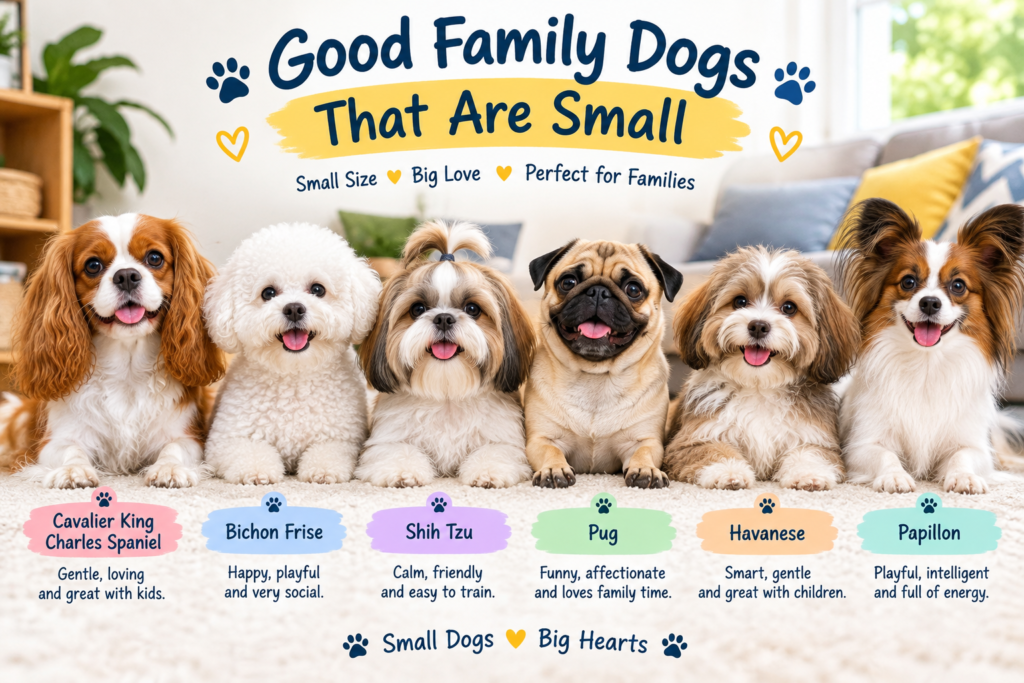
Good family dogs that are small can be affectionate, playful, and adaptable without taking up much space. Breeds such as the Cavalier King Charles Spaniel, Havanese, Shih Tzu, Bichon Frise, and Boston Terrier are worth considering, but the right choice depends on your children’s ages, activity level, grooming expectations, and living situation.
Small dogs are not automatically easier than larger dogs. Some are energetic, some are sensitive, and some need surprisingly regular grooming. The best family match is one whose personality and daily needs fit the household. For more insight here fluffy little dogs
What Makes a Small Dog Good for a Family?
A family-friendly small dog should be more than cute or compact. Temperament, trainability, exercise needs, tolerance for handling, and the ages of children all matter.
The American Kennel Club notes that toy breeds can be affectionate, sociable, and adaptable, while also emphasizing that their small size does not mean they lack energy or personality.
When comparing breeds, look for qualities such as: Good Family Dogs That Are Small
- A generally sociable temperament
- An ability to adapt to the family’s routine
- Manageable exercise requirements
- A willingness to learn basic manners
- A size appropriate for the children in the household
- Grooming needs the family can realistically handle
- A personality that fits the home’s activity level
Breed tendencies are useful starting points, but they do not guarantee an individual dog’s behavior.
15 Good Family Dogs That Are Small
1. Cavalier King Charles Spaniel
The Cavalier King Charles Spaniel is a small companion breed known for being affectionate, gentle, and adaptable. The AKC describes Cavaliers as suitable for a range of people, from young children to older adults, and notes that they are trainable and generally easygoing companions.
Temperament: Gentle, affectionate, adaptable
Exercise: Moderate
Grooming: Regular brushing
Family fit: Families wanting an affectionate companion
One thing families should not assume is that a Cavalier can spend every day doing nothing. These dogs still benefit from walks, play, training, and social interaction.
2. Havanese
Havanese are cheerful, social little dogs that can adapt to city or suburban living. The AKC describes them as intelligent, loving, and highly social, and notes that moderate exercise such as walks or play is generally appropriate.
Temperament: Friendly, playful, affectionate
Exercise: Moderate
Grooming: High if the coat is kept long
Family fit: Social families who spend plenty of time at home
Their coat is an important consideration. A long Havanese coat needs regular brushing to prevent mats and tangles.
3. Shih Tzu
The Shih Tzu is a classic companion dog with a friendly, outgoing personality. The breed can be a good choice for households looking for a small dog that does not require intense daily exercise. AKC describes the Shih Tzu as a lively and friendly house pet.
Temperament: Friendly, affectionate, playful
Exercise: Relatively modest
Grooming: Moderate to high
Family fit: Families and apartment households
A shorter “puppy cut” can make coat maintenance easier, but regular grooming is still necessary.
4. Bichon Frise
The Bichon Frise is small, cheerful, playful, and sturdy for its size. Its fluffy appearance is a major attraction, but the coat requires regular maintenance.
Temperament: Playful, curious, social
Exercise: Moderate
Grooming: High
Family fit: Families prepared for regular grooming
Bichons can be especially appealing to families that want a small dog with a lively personality rather than a dog that simply sits on a lap.
5. Boston Terrier
The Boston Terrier is a compact companion with a friendly, bright, and amusing personality. Its short coat also means less brushing than many long-haired small breeds.
Temperament: Friendly, lively, amusing
Exercise: Moderate
Grooming: Relatively low
Family fit: Families wanting a playful short-coated dog
Their compact build can make them convenient for smaller homes, although they still need daily interaction and appropriate activity.
6. Toy Poodle
Toy Poodles are small, intelligent, active dogs that can become wonderful family companions when properly trained and socialized. The AKC describes Poodles as highly intelligent and adaptable to different living situations.
Temperament: Intelligent, active, responsive
Exercise: Moderate
Grooming: High
Family fit: Families that enjoy training and interactive activities
Don’t mistake the Toy Poodle’s small body for a low-energy personality. Mental stimulation is particularly important for this intelligent breed.
7. Miniature Schnauzer
The Miniature Schnauzer is a small, outgoing dog with an intelligent and generally adaptable personality. It can be a good option for an active family that wants a dog with more energy and personality than a typical lapdog.
Temperament: Friendly, alert, intelligent
Exercise: Moderate
Grooming: Moderate
Family fit: Active families
They generally benefit from training, daily walks, and games that give them something to think about.
8. Maltese
The Maltese is a tiny companion dog known for its affectionate personality and long, silky coat.
Temperament: Affectionate, lively, playful
Exercise: Low to moderate
Grooming: High with a long coat
Family fit: Families with gentle children and adults who can provide close supervision
Because the Maltese is very small, families with young children need to teach careful handling. A tiny dog can be injured accidentally even when a child has good intentions.
9. Pomeranian
Pomeranians are tiny, lively, and confident. Their thick coat gives them a fluffy appearance, while their personality can be much bigger than their body.
Temperament: Lively, confident, intelligent
Exercise: Moderate
Grooming: High
Family fit: Families with older, respectful children
They can work well in smaller homes, but owners should provide training rather than allowing unwanted barking or other behaviors simply because the dog is small.
10. Pug
Pugs are small companion dogs with playful and affectionate personalities. Their compact size can make them appealing to families living in smaller spaces.
Temperament: Playful, affectionate, outgoing
Exercise: Moderate but carefully managed
Grooming: Relatively low coat maintenance
Family fit: Families wanting a companion-oriented dog
Because of their short facial structure, families should discuss breed-specific health considerations with a veterinarian and avoid assuming that every Pug has the same exercise tolerance.
11. Papillon
The Papillon is a tiny but energetic and intelligent breed. Its butterfly-shaped ears are distinctive, while its personality can make it a surprisingly active family companion.
Temperament: Intelligent, lively, alert
Exercise: Moderate
Grooming: Moderate
Family fit: Active families interested in training
Papillons often enjoy learning tricks and participating in activities, so they can be particularly rewarding for families that enjoy teaching their dog new things.
12. Coton de Tulear
The Coton de Tulear is a small companion breed with a soft, cotton-like coat. It is known for being affectionate and playful.
Temperament: Affectionate, cheerful, playful
Exercise: Moderate
Grooming: Moderate to high
Family fit: Families seeking a close companion
The fluffy coat is attractive but needs consistent attention to prevent tangling.
13. English Toy Spaniel
The English Toy Spaniel is a small companion breed with a gentle, affectionate temperament. The AKC breed temperament guide describes it as bright, willing to please, charming, gentle, and playful.
Temperament: Gentle, affectionate, playful
Exercise: Low to moderate
Grooming: Moderate
Family fit: Calm households and families with respectful children
14. Yorkshire Terrier
Yorkshire Terriers are tiny but lively dogs. Their affectionate and energetic nature can make them entertaining companions for families that understand the needs of a very small breed.
Temperament: Affectionate, energetic, alert
Exercise: Moderate
Grooming: Moderate to high
Family fit: Families with older children and attentive adults
Their size means supervision around young children is particularly important.
15. Biewer Terrier
The Biewer Terrier is a small companion breed with a long, flowing coat and a friendly, devoted personality. The AKC temperament guide describes the breed as charming, intelligent, devoted to family, amusing, and friendly with other animals.
Temperament: Friendly, devoted, intelligent
Exercise: Moderate
Grooming: High
Family fit: Families prepared for regular coat care
Which Small Dogs Are Good With Children?
Several small breeds can be good family companions, but there is no breed that automatically guarantees a safe or easy relationship with children.
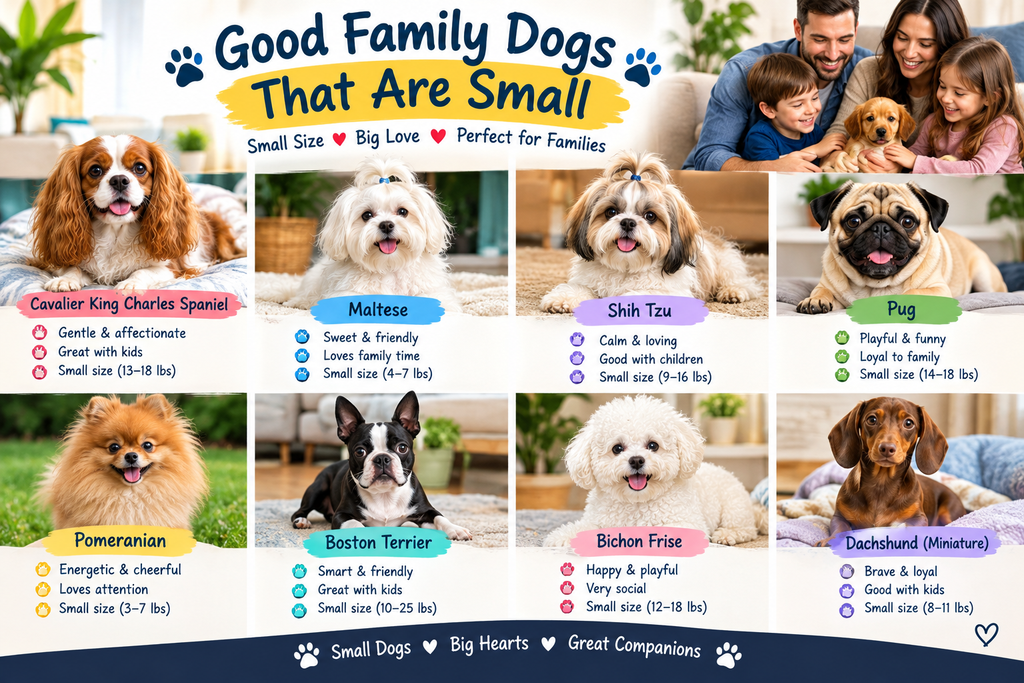
Cavalier King Charles Spaniels, Havanese, Shih Tzus, Bichon Frises, and Boston Terriers are reasonable breeds to research when looking for a small family dog.
However, children’s ages matter enormously. A dog that works well with respectful older children may not be the same choice for a household with a toddler who is still learning how to interact with pets.
For younger children: Good Family Dogs That Are Small
- Supervise interactions between children and dogs.
- Teach children not to pull ears, tails, or fur.
- Give the dog a quiet place where it can retreat.
- Never allow children to disturb a dog while it is eating or sleeping.
- Teach children to let the dog approach them rather than forcing contact.
Breed is only one part of the equation. The individual dog’s temperament and the family’s supervision habits matter too.
What Is the Best Small Family Dog for an Apartment?
Apartment living can work well with many small breeds, but size alone should not determine the choice.
The AKC notes that toy dogs are often adaptable to apartment living, while also emphasizing that many are energetic and intelligent.
For apartment households, consider: Good Family Dogs That Are Small
- Shih Tzu: Relatively modest exercise needs.
- Cavalier King Charles Spaniel: Adaptable and affectionate.
- Havanese: Social and adaptable but needs companionship.
- Bichon Frise: Small and playful but requires substantial grooming.
- Boston Terrier: Compact with a short coat.
- Maltese: Very small and companion-oriented.
A dog that fits an apartment still needs walks, play, training, and mental stimulation.
What Are the Top 10 Small Family Dogs?
There is no scientifically established “top 10” ranking because family needs vary. Instead, these 10 are useful breeds to research when looking for a small family companion: Good Family Dogs That Are Small
- Cavalier King Charles Spaniel
- Havanese
- Shih Tzu
- Bichon Frise
- Boston Terrier
- Toy Poodle
- Miniature Schnauzer
- Maltese
- Pug
- Papillon
These breeds should not be viewed as a ranking. Their exercise, grooming, temperament, and training needs are different.
Small Dog vs. Young Children: An Important Consideration
One of the biggest mistakes families make is assuming that a smaller dog is automatically safer for young children.
Very small dogs can be physically vulnerable to accidental falls, being stepped on, rough handling, or being picked up incorrectly. A slightly sturdier small breed may sometimes be a more practical fit for a busy household.
The safest approach is to match: Good Family Dogs That Are Small
Dog temperament + physical size + child’s age + adult supervision + household routine.
For families with very young children, an adult should take primary responsibility for the dog’s care. Older children can participate in age-appropriate tasks, but they should not be expected to manage the dog’s health or safety independently.
How Much Exercise Do Small Family Dogs Need?
Exercise needs vary widely.
A Shih Tzu may be comfortable with moderate daily activity, while a Papillon or Toy Poodle may want more games and mental challenges. Havanese generally need moderate exercise, including walks and play.
A simple family routine might include: Good Family Dogs That Are Small
- A morning walk or play session
- Short training sessions
- Interactive indoor games
- Another walk or play period later in the day
- Quiet family time
Mental exercise counts, too. Five or ten minutes of basic training can give an intelligent dog something useful to focus on.
Grooming Needs Families Should Expect
Grooming is one area where small family dogs can differ dramatically.
Lower-maintenance coats
Boston Terriers and some other short-coated breeds generally need less coat maintenance.
Moderate grooming
Cavalier King Charles Spaniels, Papillons, and Miniature Schnauzers need regular coat care but may be easier to manage than dogs with very long coats.
Higher-maintenance coats
Havanese, Shih Tzus, Maltese, Bichon Frises, Poodles, and Pomeranians can require frequent brushing and/or professional grooming.
For example, AKC recommends daily brushing for a Havanese when the coat is kept long to help prevent mats and tangles.
That is a useful detail to consider before choosing a fluffy family dog: grooming isn’t just about making the dog look attractive. It is part of routine care.
What Should Families Look for in a Small Dog?
Before choosing a breed, write down what your household can realistically provide.
Consider your family’s: Good Family Dogs That Are Small
- Children’s ages
- Daily schedule
- Home size
- Exercise habits
- Grooming availability
- Training experience
- Tolerance for barking
- Time the dog will spend alone
- Ability to supervise children around the dog
Then compare those needs with individual breeds.
For example, a family that wants a playful training partner might prefer a Toy Poodle or Papillon, while a household seeking a more companion-focused dog might investigate a Shih Tzu or Havanese.
The Bottom Line
Good family dogs that are small are not defined by size alone. Look for a breed whose temperament, exercise needs, grooming requirements, and physical sturdiness make sense for your household, and remember that an individual dog’s personality matters just as much as its breed. Families with young children should make supervision and gentle handling part of the routine from day one. Once you have narrowed down a few breeds, spend time with adult dogs of those breeds and talk with your veterinarian or reputable breed professionals before making your final choice.
[…] Small breeds of dogs with short hair can be a practical choice for people who want a compact companion without the brushing and coat maintenance associated with long-haired breeds. Popular options include the Chihuahua, Dachshund, Boston Terrier, Pug, French Bulldog, Italian Greyhound, and Miniature Pinscher. However, short hair does not automatically mean low maintenance—exercise, shedding, training, and health needs still vary considerably between breeds. For more insight here good family dogs that are small […]