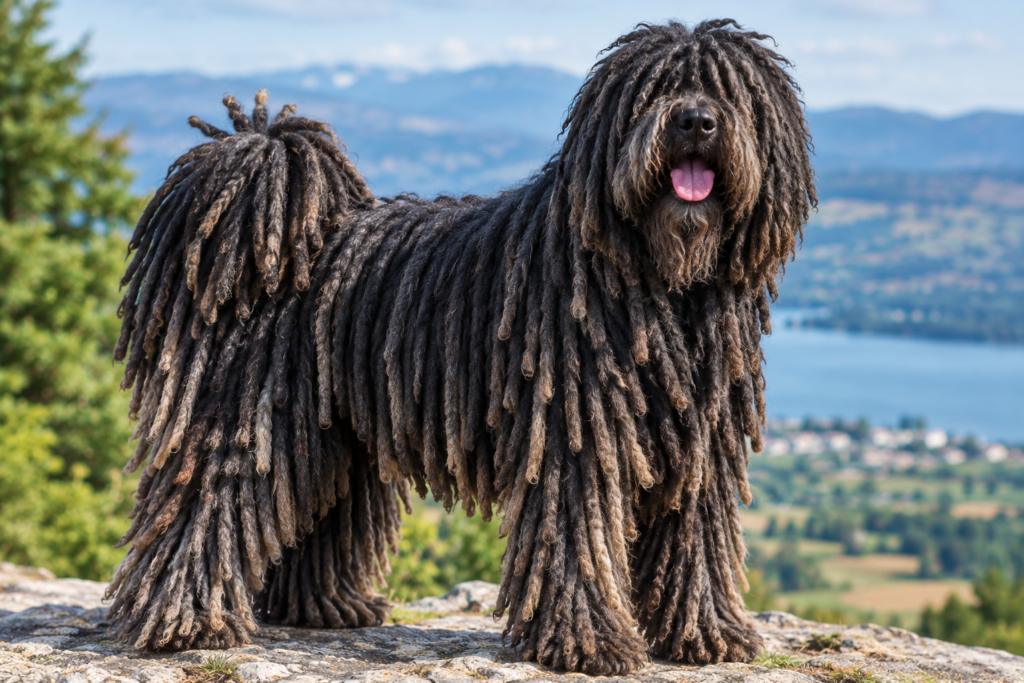
When people search for a dreadlock dog, they are usually looking for a dog with a naturally corded or matted-looking coat. Several breeds can develop this unusual appearance, but the Komondor is probably the most famous example. Its long white cords cover much of the body and can look remarkably similar to human dreadlocks.
Other dogs known for corded or flocked coats include the Puli, Bergamasco Sheepdog, Spanish Water Dog, and some Poodles. However, their coats do not all form in exactly the same way.
These coats are more than a fashion statement. In several of these breeds, the unusual coat developed alongside a working role, helping protect the dog from weather and, in some cases, predators. Foe more insigh here mop dog breed
Best Dreadlock Dog Breeds
| Breed | Coat Type | Origin | Original Purpose |
|---|---|---|---|
| Komondor | Long cords | Hungary | Livestock guardian |
| Puli | Tight cords | Hungary | Herding |
| Bergamasco Sheepdog | Flat flocks | Italy | Herding and guarding |
| Spanish Water Dog | Curly cords | Spain | Herding and working |
| Poodle | Corded or curly coat | Europe | Water retrieving/working |
The most recognizable dreadlock-like dogs are the Komondor and Puli. The Bergamasco is different because its coat forms larger, flatter flocks rather than traditional cords.
1. Komondor: The Classic Dreadlock Dog
The Komondor is often the first breed people think of when they hear “dreadlock dog.” This large Hungarian livestock guardian is covered in distinctive white cords from head to tail.
The breed was developed to protect livestock, especially sheep, from predators. Its white coat could help it blend into a flock, while the dense cords provided protection from harsh weather and predator bites.
Komondor Personality
Komondors are generally:
- Protective
- Loyal
- Independent
- Courageous
- Territorial
- Intelligent
Because they were bred to make decisions while guarding livestock, they are not always eager to follow every command immediately. The AKC describes the breed as requiring an experienced approach to training.
Komondor Coat
A Komondor puppy does not arrive with fully developed dreadlocks. The characteristic cords develop as the dog’s coat matures. The coarse outer coat combines with the softer undercoat to create the distinctive corded appearance.
2. Puli: The Smaller Dreadlock Dog
The Puli is another famous Hungarian dog with naturally occurring cords. Compared with the Komondor, the Puli is much smaller and more agile.
Historically, the Puli was used primarily as a herding dog. It worked closely with shepherds and needed speed, intelligence, and agility to move livestock.
Puli Personality
Pulik are known for being:
- Energetic
- Intelligent
- Agile
- Loyal
- Playful
- Highly responsive
The breed generally enjoys having a job and can excel in activities such as obedience, agility, and other dog sports.
Puli Coat
The Puli’s cords can become extremely long if they are allowed to grow. According to the AKC, the puppy coat begins developing its undercoat at roughly 9–10 months, while a full corded coat can take years to develop.
3. Bergamasco Sheepdog: The Fluffy Dreadlock Look
The Bergamasco Sheepdog is another fascinating breed that can look somewhat like it has dreadlocks. However, its coat is technically different from the cords of a Komondor or Puli.
Instead of traditional rope-like cords, the Bergamasco develops flocks—large, flat or irregular sections of felted hair.
The breed’s coat contains three types of hair:
- A woolly outer coat
- Long, rough “goat hair”
- A fine, oily undercoat
The interaction between these different coat types produces the breed’s characteristic flocked appearance.
Bergamascos originated in the Alpine regions of northern Italy and southern Switzerland and were developed as working sheepdogs.
Why Do Dogs Develop Dreadlocks?
These coats are the result of specific hair texture and natural growth, not simply ordinary dirt or neglected grooming.
According to the AKC, corded coats develop when long, slightly curly hair interweaves into rope-like strands. Owners managing a corded coat carefully separate developing mats into individual cords.
This is an important distinction: a healthy corded coat should not be confused with uncontrolled matting.
Are Dreadlocks Natural on Dogs?
For breeds such as the Komondor and Puli, yes. Their coats are naturally suited to forming cords.
However, not every dog with long hair should be allowed to develop dreadlocks. Random matting can pull on the skin, trap moisture and dirt, and cause serious discomfort.
A naturally corded breed has a coat structure that is specifically suited to this appearance.
Dreadlock Dog Grooming
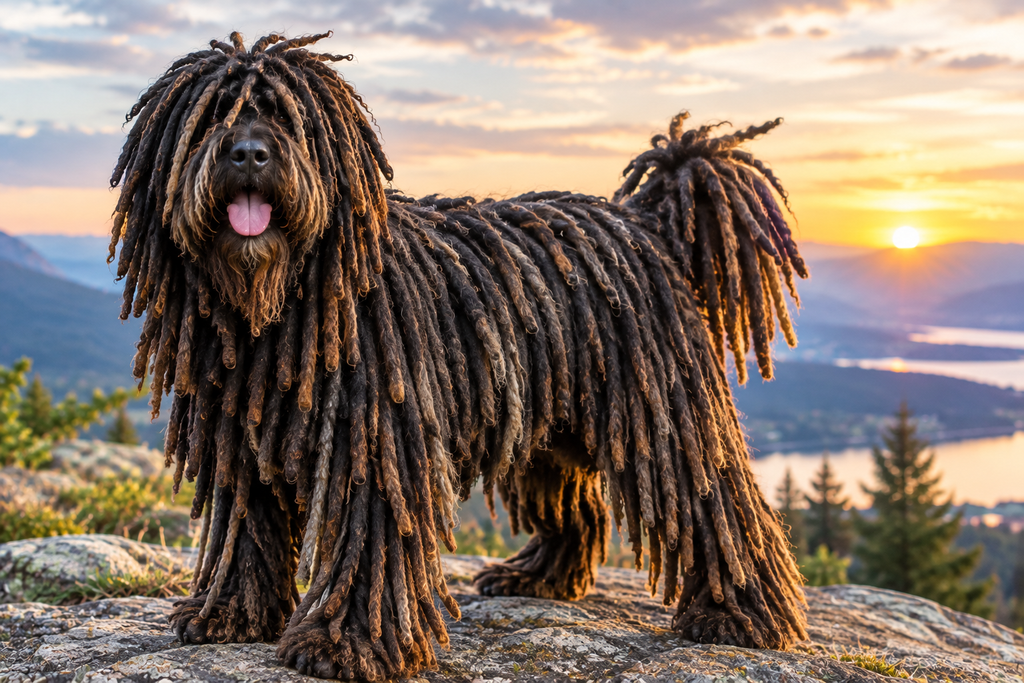
One of the biggest misconceptions about these dogs is that their unusual coats require no grooming.
In reality, corded coats still require careful maintenance.
The owner needs to:
- Keep cords separated
- Check the skin underneath
- Remove debris
- Keep the coat clean
- Dry the coat thoroughly after bathing
- Monitor for unwanted matting
The AKC explains that maintaining cords requires dedicated care, particularly as the coat develops.
Why Drying Matters
A wet corded coat can hold a significant amount of moisture. The Puli’s breed history article specifically warns that insufficient drying can allow moisture to remain trapped in the coat.
For this reason, owners need to take bathing and drying seriously.
Do Dreadlock Dogs Shed?
Corded breeds can appear to shed differently from ordinary dogs because loose hairs can become incorporated into the cords instead of falling freely around the house.
However, less visible loose hair does not mean zero maintenance.
The coat still needs regular inspection and care, and owners should never allow unhealthy mats to develop simply because the dog is a corded breed.
Dreadlock Dogs and Family Life
The suitability of a dreadlock-coated dog depends heavily on the breed.
A Puli, for example, can be energetic and highly interactive with its family, while a Komondor is a serious livestock guardian with stronger territorial and protective instincts. AKC breed experts emphasize that these two Hungarian breeds have very different working purposes despite their similar coats.
Before choosing one, consider:
- Your experience with dogs
- Available space
- Training time
- Exercise requirements
- Grooming commitment
- The breed’s guarding or herding instincts
Dreadlock Dog vs Regular Matted Dog
It is important to understand the difference.
Healthy Corded Coat
A healthy corded coat:
- Develops naturally in suitable breeds
- Has organized cords or flocks
- Is maintained carefully
- Allows access to the skin
- Is regularly inspected
Unhealthy Matting
Uncontrolled matting:
- Can pull on the skin
- Can trap moisture and debris
- May hide skin problems
- Can become painful
- Can make grooming extremely difficult
Therefore, dreadlocks should never be deliberately created by neglecting a dog’s grooming needs.
Which Dreadlock Dog Is Right for You?
Choose a Komondor if you want:
- A large guardian
- A highly protective dog
- A distinctive white corded coat
- An independent working breed
- A serious and loyal companion
Choose a Puli if you want:
- A smaller dog
- An energetic herding breed
- An agile companion
- A highly trainable working dog
- A distinctive corded coat
Consider a Bergamasco if you want:
- A unique flocked coat
- A working sheepdog
- A protective but family-oriented breed
- A different alternative to traditional corded dogs
Frequently Asked Questions
What dog breed looks like it has dreadlocks?
The Komondor is the most famous dog with a dreadlock-like coat. The Puli is another well-known corded breed.
What is the small dreadlock dog?
The Puli is the smaller, agile Hungarian dog famous for its corded coat.
Is a Komondor the same as a Puli?
No. Both are Hungarian breeds with corded coats, but the Komondor is a much larger livestock guardian, while the Puli is a smaller herding dog.
Does the Bergamasco have dreadlocks?
It has a similar appearance, but its coat forms flocks, which are larger and flatter than the cords seen in breeds such as the Komondor and Puli.
Are dreadlock dogs difficult to groom?
They can be. Corded coats require careful maintenance, especially while the cords are developing. Owners also need to clean and thoroughly dry the coat.
Conclusion
The dreadlock dog is not one specific breed. Several dogs can develop remarkable corded or flocked coats, with the Komondor and Puli being the most famous examples.
The Komondor is a large, powerful Hungarian livestock guardian, while the Puli is a smaller and more energetic herding dog. The Bergamasco Sheepdog offers another distinctive look with its unusual flat flocks.
These coats are beautiful, but they also require responsible care. A naturally corded coat should be maintained—not confused with unhealthy matting. For the right owner, these unusual breeds offer a fascinating combination of history, working ability, intelligence, loyalty, and one-of-a-kind appearance.
[…] It is important to understand that these are not ordinary mats caused by poor grooming. A healthy corded coat develops naturally and still requires careful maintenance. For more insigh here dreadlock dog […]