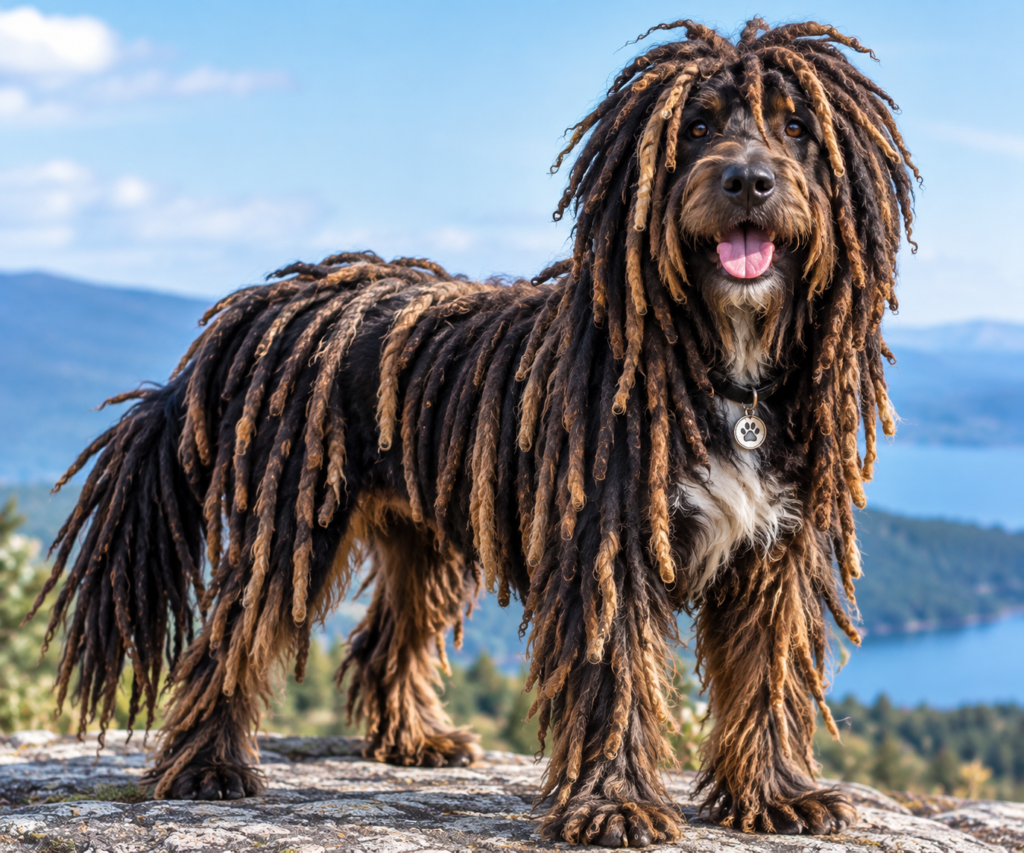
If you have seen a dog with dreads, you may have wondered what breed has those long, rope-like strands of hair. The most famous example is the Komondor, a large Hungarian livestock guardian recognized for its distinctive white, corded coat.
However, the Komondor is not the only dog that can have a dreadlock-like appearance. The Puli, Bergamasco Sheepdog, and Spanish Water Dog can also develop unusual corded or flocked coats. These coats are naturally connected to the breeds’ hair texture and, in several cases, their history as working dogs.
It is important to understand that these are not ordinary mats caused by poor grooming. A healthy corded coat develops naturally and still requires careful maintenance. For more insigh here dreadlock dog
Best Dog Breeds With Dreads
| Breed | Coat Appearance | Origin | Main Historical Role |
|---|---|---|---|
| Komondor | Long white cords | Hungary | Livestock guardian |
| Puli | Tight cords | Hungary | Herding |
| Bergamasco Sheepdog | Flat, irregular flocks | Italy | Herding |
| Spanish Water Dog | Curly/corded coat | Spain | Working and herding |
| Poodle | Can be corded | Europe | Working and retrieving |
Among these breeds, the Komondor and Puli are the closest match to what most people mean by a dog with dreadlocks.
1. Komondor: The Famous Dog With Dreads
The Komondor is probably the first breed that comes to mind when people search for a dog with dreads. Its long, white cords cover much of its body and create an appearance unlike almost any other dog.
The breed originated in Hungary and was developed as a livestock guardian. Its job was to protect flocks from predators and other threats. Its distinctive coat was functional as well as attractive, providing protection from weather and helping the dog blend among sheep.
Komondor Appearance
A mature Komondor has:
- Long white cords
- A large, powerful body
- Strong bone structure
- A broad head
- Dark eyes
- A substantial muzzle
- A muscular frame
Male Komondors have a minimum height of about 27.5 inches, while females have a minimum height of about 25.5 inches.
Despite its unusual coat, the Komondor is a serious working dog rather than simply a novelty breed.
Komondor Personality
Komondors are generally loyal, courageous, protective, and independent.
Because they were bred to guard livestock with considerable independence, they do not always behave like dogs that constantly seek direction from their owners. They can make their own decisions when they believe something is a threat.
This makes early socialization particularly important.
A well-socialized Komondor can be deeply devoted to its family, but it may remain cautious around unfamiliar people.
2. Puli: The Smaller Dog With Dreads
The Puli is another Hungarian breed famous for its corded coat.
Compared with the enormous Komondor, the Puli is considerably smaller and more agile. It was historically used as a herding dog, where speed, intelligence, and responsiveness were important.
Puli Appearance
The Puli can have:
- Long cords
- A compact body
- Agile movement
- A distinctive hanging coat
- A lively expression
Its cords can become very long as the dog matures, giving it the classic “dreadlock dog” appearance.
Puli Temperament
Pulik are typically energetic, intelligent, alert, and active. They often enjoy training and activities that challenge them mentally and physically.
For owners wanting a smaller dog with a dreadlocked appearance, the Puli is one of the most interesting choices.
3. Bergamasco Sheepdog
The Bergamasco Sheepdog is another breed that can look as though it has dreadlocks, but its coat is slightly different.
Instead of forming the long, individual cords associated with the Komondor and Puli, the Bergamasco develops flocks—large sections of felted hair.
Its coat contains three different types of hair that work together to create this unusual texture.
The breed originated in the Italian Alps and was developed as a working sheepdog.
Bergamasco Personality
The Bergamasco is generally intelligent, watchful, loyal, and closely connected to its family. Like other working breeds, it benefits from training, socialization, and an appropriate amount of daily activity.
4. Spanish Water Dog
The Spanish Water Dog can also develop a distinctive curly or corded coat.
It is a versatile working breed with a history associated with tasks such as herding and working around water.
Its coat can form cords when allowed to grow naturally, although its overall appearance is different from the classic white cords of the Komondor.
The Spanish Water Dog is generally active and intelligent, making regular exercise and mental stimulation important.
5. Can a Poodle Have Dreads?
Yes. Poodles can be corded, although the look is less common today than the familiar clipped Poodle styles.
Poodles have naturally curly coats, and historically some Poodles were kept in corded coats. With appropriate coat management, their hair can form long cords.
However, owners should understand the difference between intentional cord formation and uncontrolled matting.
Why Do Dogs Have Dreadlocks?
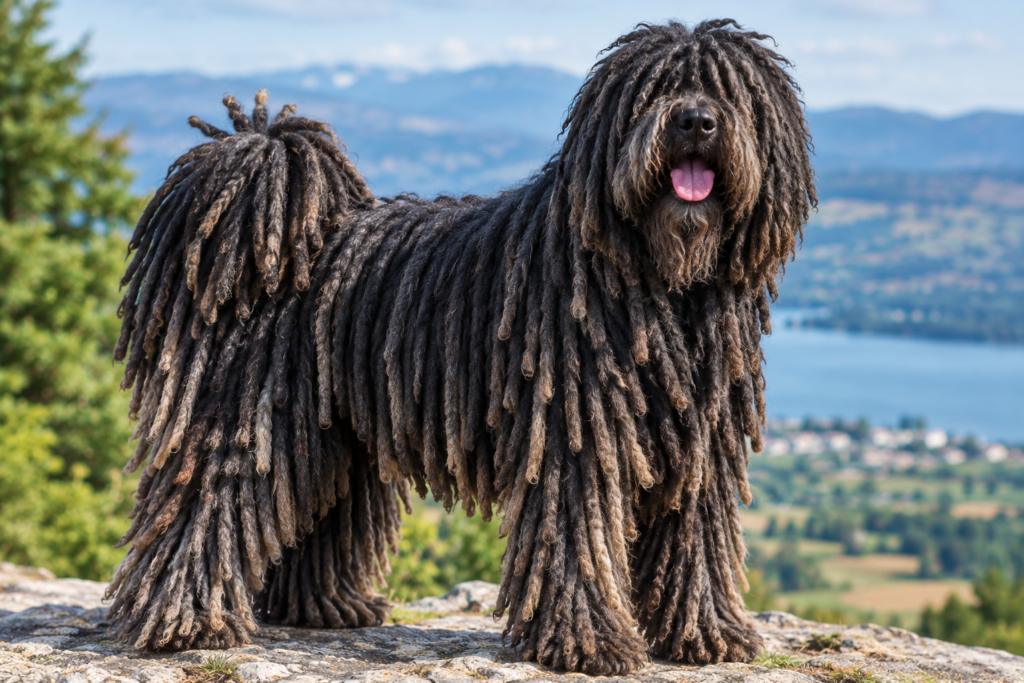
A dog’s “dreadlocks” are usually called cords.
Cords form when particular types of long, curly or textured hair naturally intertwine. In breeds specifically suited to corded coats, this process creates an organized coat structure rather than random mats.
The coat developed over generations alongside the dog’s working function.
For example:
- Komondor: livestock guardian
- Puli: herding dog
- Bergamasco: sheepdog
- Spanish Water Dog: versatile working dog
So, the dreadlocked appearance is part of the breed’s biology and history.
Are Dog Dreads Natural?
For breeds such as the Komondor and Puli, yes.
Their coats naturally develop cords as the dogs mature. Puppies usually have a softer, fluffier appearance before the adult coat begins to develop its characteristic structure.
However, not every long-haired dog should be allowed to develop dreads.
Uncontrolled mats can become painful and may trap moisture, dirt, and debris close to the skin.
Grooming a Dog With Dreads
One of the biggest misconceptions about dreadlocked dogs is that they do not need grooming.
The opposite is true.
A corded coat requires careful attention throughout the dog’s life.
Important grooming tasks include:
- Separating cords when necessary
- Checking the skin regularly
- Removing trapped debris
- Keeping the coat clean
- Thoroughly drying the coat after bathing
- Maintaining nails and ears
- Monitoring for skin irritation
The most important goal is to maintain a healthy coat while preventing unwanted matting.
Bathing a Dreadlocked Dog
Bathing a dog with a heavily corded coat can take considerably more time than bathing a short-haired dog.
Water can become trapped inside dense cords, so thorough drying is essential.
A wet corded coat that remains damp for an extended period can create an unhealthy environment close to the skin.
Owners should learn the correct bathing and drying techniques for their specific breed rather than treating a corded coat like ordinary dog hair.
Do Dreadlocked Dogs Shed?
Corded breeds may appear to shed less visibly because loose hairs can become incorporated into the cords instead of falling freely onto furniture and floors.
However, this does not mean they are completely non-shedding.
It also does not mean they are maintenance-free.
The coat still needs regular inspection and care.
Dog With Dreads: Temperament and Training
The appearance of these dogs can be playful and unusual, but many are serious working breeds.
The Komondor, for example, has strong guardian instincts and an independent nature. The Puli is more energetic and strongly associated with herding.
Training should begin early and include:
- Basic obedience
- Leash training
- Recall
- Puppy socialization
- Handling exercises
- Calm behavior around visitors
- Positive exposure to different environments
Large guardian breeds such as the Komondor require particularly responsible ownership because of their size and protective instincts.
Exercise Requirements
Exercise needs depend on the breed.
Komondor
Needs regular physical activity and mental stimulation but is not simply a high-energy running dog.
Puli
Generally more energetic and agile, with a strong need for activity and mental challenges.
Bergamasco
Benefits from regular exercise, training, and opportunities to interact with its environment.
Spanish Water Dog
An active working breed that generally benefits from both physical exercise and mental stimulation.
A good exercise routine should be adjusted according to the dog’s age, health, and individual temperament.
Are Dogs With Dreads Good Family Pets?
They can be, but the answer depends on the breed.
A Puli may be a good choice for an active family that enjoys training and outdoor activities. A Komondor can be a devoted family guardian but may be more challenging because of its size and natural protective behavior.
Before choosing one, consider:
- Grooming commitment
- Training experience
- Available living space
- Exercise requirements
- Children’s ages
- Other pets
- The breed’s natural instincts
The unique appearance should never be the only reason for choosing the dog.
Dog Dreads vs Unhealthy Mats
This distinction is extremely important.
Healthy Cords
Healthy cords are:
- Organized
- Characteristic of the breed
- Properly maintained
- Regularly inspected
- Managed to protect the skin
Unhealthy Mats
Uncontrolled mats can:
- Pull painfully on the skin
- Trap moisture
- Collect dirt
- Hide wounds or skin problems
- Restrict movement
- Cause significant discomfort
Therefore, never create dreadlocks by simply neglecting a dog’s coat.
Which Dog With Dreads Is Best?
Best for a large guardian:
Komondor
Best for a smaller, energetic herding dog:
Puli
Best for a unique flocked coat:
Bergamasco Sheepdog
Best for an active working-dog lifestyle:
Spanish Water Dog
There is no single best breed for everyone. The right choice depends on your experience, lifestyle, space, and willingness to maintain the coat.
Frequently Asked Questions
What dog breed has dreadlocks?
The Komondor is the most famous dog breed with a dreadlock-like corded coat. The Puli is another well-known example.
What is the small dog with dreads?
The Puli is a smaller Hungarian herding dog famous for its long corded coat.
Are dog dreadlocks real?
Yes. Some breeds naturally develop corded coats. These cords are different from unhealthy mats caused by neglect.
Do dogs with dreads need grooming?
Yes. Corded coats require regular care, cleaning, inspection, and proper drying.
Can Poodles have dreadlocks?
Yes. Poodles can be maintained in a corded coat, although this style is much less common than traditional clipped coats.
What is the biggest dog with dreads?
The Komondor is one of the largest and most recognizable naturally corded breeds.
Conclusion
A dog with dreads is usually a breed with a naturally corded or flocked coat. The Komondor is the most recognizable example, while the Puli, Bergamasco Sheepdog, and Spanish Water Dog can also have remarkable corded or dreadlock-like coats.
These dogs are fascinating because their unusual coats are connected to their history and working purposes. But their distinctive appearance also comes with responsibility. Proper grooming, regular skin checks, thorough drying, training, exercise, and socialization are essential.
If you are looking for a dog with a truly unique appearance, the Komondor and Puli are among the best-known choices—but their coats and personalities should be understood carefully before bringing one home.
[…] Popular examples include the Boston Terrier, American Foxhound, American Staffordshire Terrier, Alaskan Malamute, Catahoula Leopard Dog, Rat Terrier, and Chesapeake Bay Retriever. For more insight read hare dog with dreads […]
[…] Hooch belongs to the Dogue de Bordeaux breed, a large mastiff-type dog originally developed in France. The 1989 movie starring Tom Hanks introduced many viewers to this distinctive breed. The dog who played Hooch was named Beasley, and several dogs were used to portray Hooch’s different actions on screen. Source: Fore more insigh here dog with dreads […]