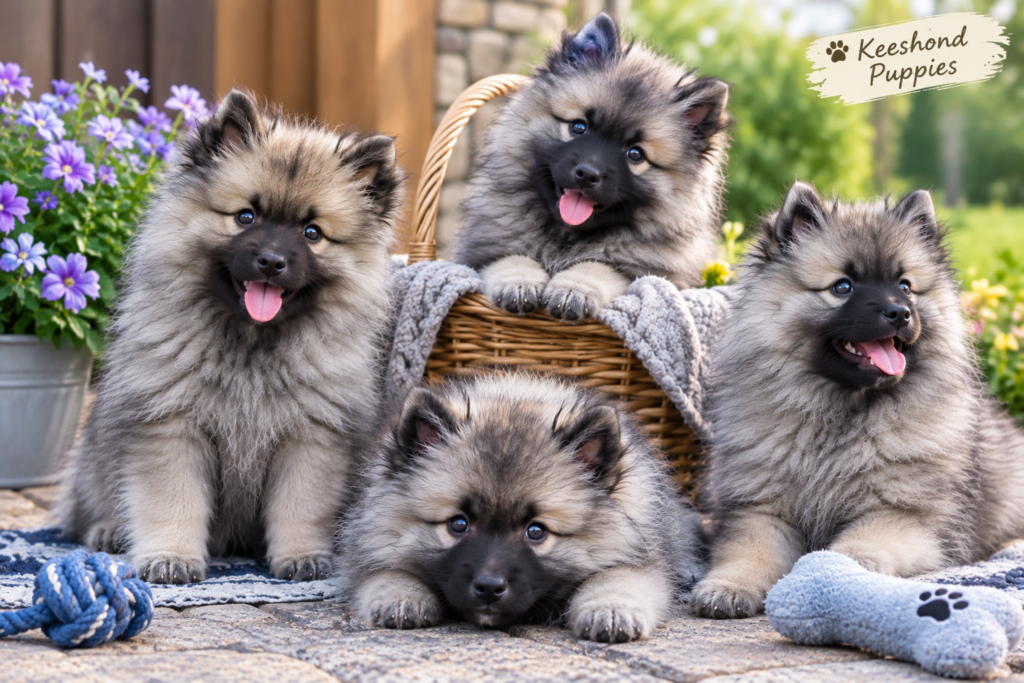
Keeshond puppies are fluffy, intelligent, affectionate, and naturally social dogs that often form strong bonds with their families. Their soft puppy coats, expressive faces, and distinctive gray, black, and cream coloring make them especially recognizable. However, that beautiful coat requires regular care, and young Keeshonds also need patient training, age-appropriate exercise, and plenty of positive social experiences. For more insigh here beaucerons
Keeshond Puppies at a Glance
- Breed: Keeshond
- Origin: Netherlands
- Size: Medium
- Temperament: Friendly, lively, intelligent, affectionate, alert
- Coat: Thick double coat
- Common adult coloring: Gray, black, and cream
- Grooming: Regular brushing required
- Exercise: Moderate and age-appropriate
- Training: Intelligent and generally responsive
- Best environment: An involved household where the puppy receives plenty of companionship
The Keeshond breed standard describes these dogs as lively, intelligent, alert, and affectionate companions. It also emphasizes that the breed should be outgoing and friendly rather than timid or aggressive.
What Do Keeshond Puppies Look Like?
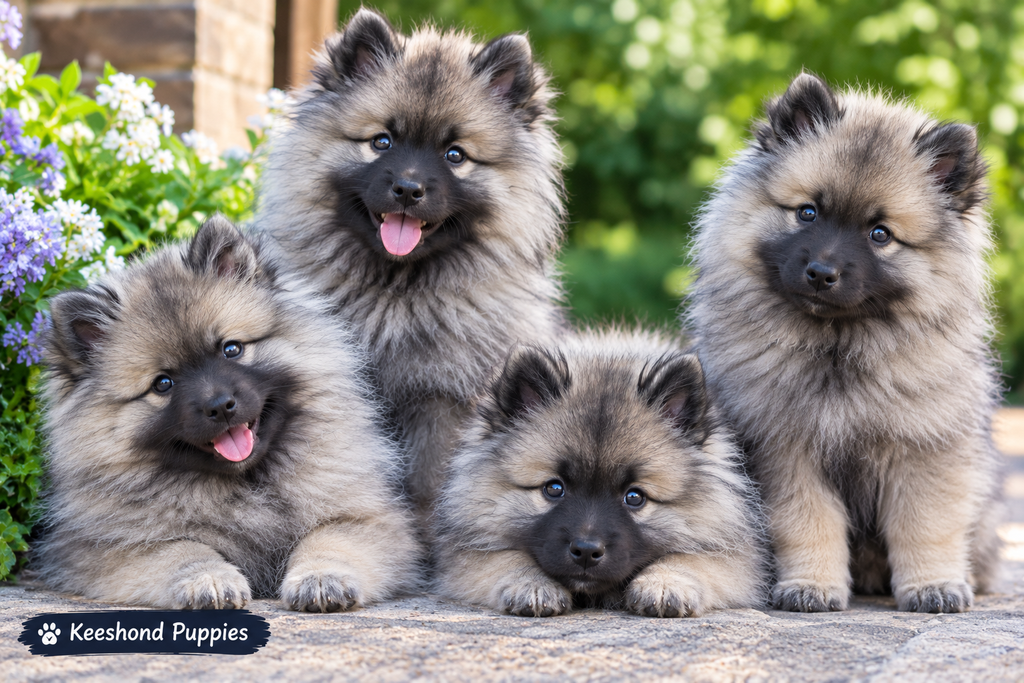
Keeshond puppies are known for their soft, fluffy appearance. Their puppy coat can look different from the coat they develop as adults because young Keeshonds may have more undercoat and fewer mature guard hairs.
The official breed standard specifically notes that a puppy’s coat may be predominantly undercoat and feel softer because the harsher adult guard hairs have not fully developed. The timing of that change varies from puppy to puppy.
Keeshond puppies typically have:
- Small pointed ears
- Dark facial markings
- A fluffy body
- A curled tail
- Expressive eyes
- Soft, dense puppy fur
- Developing gray, black, and cream markings
Their famous facial “spectacles” become an important part of their characteristic expression. Adult Keeshonds have a mixture of gray, black, and cream, while puppies can appear less intensely marked before their adult guard coat develops.
Keeshond Puppy Temperament
A well-socialized Keeshond puppy is generally friendly, curious, lively, and affectionate. These dogs tend to enjoy being around people and can also be comfortable with other dogs when appropriately socialized.
The breed standard states that Keeshonds should be neither timid nor aggressive, but instead outgoing and friendly with people and other dogs.
This makes early experiences especially important.
A young Keeshond should gradually experience:
- Different people
- Safe and friendly dogs
- Household sounds
- Different surfaces
- Gentle handling
- Short car rides
- Grooming equipment
- Collar and leash experiences
- New but controlled environments
The goal is not to overwhelm a puppy with everything at once. New experiences should be introduced gradually so the puppy can learn that unfamiliar situations are safe.
Are Keeshond Puppies Good Family Dogs?
Keeshonds can make wonderful family companions because they are affectionate, social, and generally people-oriented. Their moderate adult size can also make them easier to manage than some larger working breeds.
However, puppies still need supervision and guidance.
Children should learn how to interact gently with a puppy. Pulling ears, chasing the puppy, taking toys away roughly, or disturbing a sleeping puppy can create unnecessary stress.
A good family routine might include:
- Supervised play
- Quiet rest periods
- Short training sessions
- Gentle grooming
- Appropriate chew toys
- Calm interaction with children
A puppy also needs a safe place where it can rest without being disturbed.
Feeding Keeshond Puppies
Nutrition is an important part of puppy development. Keeshond puppies should receive a complete and balanced puppy diet appropriate for their age and size.
Rather than choosing food based only on advertising or appearance, owners should discuss the puppy’s nutritional needs with their veterinarian. Feeding amounts can vary depending on the puppy’s age, body condition, activity level, and the specific food being used.
A practical feeding routine should include:
- Consistent meal times
- Fresh water
- Appropriate puppy food
- Monitoring body condition
- Avoiding excessive treats
- Adjusting food as the puppy grows
Avoid making sudden food changes unless there is a good reason. If a dietary change is necessary, a gradual transition is generally easier on the digestive system.
Keeshond Puppy Training
Keeshond puppies are intelligent and generally eager to interact with their owners. That makes early training an important part of raising a well-mannered adult dog.
Start with simple behaviors rather than expecting a young puppy to master complicated commands immediately.
Useful early skills include:
- Responding to their name
- Coming when called
- Sitting
- Walking calmly on a leash
- Waiting at doors
- Leaving unwanted objects
- Settling down
- Accepting gentle handling
Keep sessions short and positive. Puppies have limited attention spans, and several brief sessions can be more productive than one long lesson.
Reward the behavior you want and avoid turning training into a battle.
House Training a Keeshond Puppy
House training requires consistency and patience. Young puppies cannot hold their bladder for as long as adult dogs, so accidents are a normal part of the learning process.
Take the puppy outside regularly, particularly:
- After waking
- After eating
- After drinking
- After playing
- Before bedtime
- When the puppy begins showing signs of needing to go
When the puppy eliminates in the appropriate place, calmly praise the behavior.
Accidents should be cleaned thoroughly rather than treated as deliberate disobedience. A consistent routine helps the puppy understand what is expected.
Socialization for Keeshond Puppies
Socialization is one of the most important parts of puppy development. It is not simply about making a puppy meet as many people and dogs as possible.
Instead, the goal is to help the puppy learn how to remain comfortable around normal aspects of life.
Positive socialization can include:
- Meeting calm people
- Seeing bicycles and cars from a safe distance
- Hearing household appliances
- Walking on different safe surfaces
- Seeing friendly dogs
- Visiting appropriate new environments
- Practicing gentle handling
The American Kennel Club recommends giving puppies appropriate physical and mental stimulation while allowing experiences to proceed at a pace the puppy can handle.
Watch the puppy’s body language. If the puppy appears frightened or overwhelmed, increase distance and give it time to settle rather than forcing interaction.
Exercise for Keeshond Puppies
Keeshond puppies are playful and energetic, but their exercise needs should be handled differently from those of an adult dog.
Puppies are still developing physically, so excessive repetitive exercise is not appropriate. The AKC recommends age- and breed-appropriate activity and warns that too much exercise can place stress on developing bones and tendons.
Good puppy activities include:
- Short walks appropriate for age
- Gentle play
- Exploring safe areas
- Simple training games
- Sniffing activities
- Food puzzles
- Playing with suitable toys
Avoid turning a young puppy into a running partner. Sustained running and repetitive high-impact activities should wait until the dog is physically mature.
The puppy should have plenty of opportunities to rest.
Mental Stimulation for Keeshond Puppies
Physical exercise is only part of raising a healthy puppy. Keeshonds are intelligent dogs, so they also benefit from activities that make them think.
Try simple games such as:
- Finding a hidden toy
- Learning a new cue
- Searching for treats
- Following a scent trail
- Using an appropriate food puzzle
- Practicing recall indoors
- Learning to settle on a mat
Mental stimulation can be particularly useful when outdoor activity needs to be limited.
A bored puppy may find its own entertainment, which can include chewing furniture, digging, or investigating objects that owners would rather leave alone. The AKC notes that boredom can contribute to destructive behavior in puppies.
Grooming Keeshond Puppies
One of the most important parts of Keeshond puppy care is teaching the puppy to enjoy grooming.
Keeshonds have a thick double coat, and the adult coat requires regular brushing. The AKC specifically lists daily brushing as part of Keeshond care.
Puppy grooming should begin gently and gradually.
Start with short sessions involving:
- A soft brush
- Gentle handling of the paws
- Checking the ears
- Looking at the teeth
- Touching the tail
- Handling the legs
- Brief nail-care practice
Do not expect a young puppy to remain still for a long grooming session.
The American Kennel Club recommends short, positive grooming sessions for puppies so they learn to associate brushing and other care with good experiences.
Do Keeshond Puppies Shed?
Yes. Keeshonds have a thick double coat, and owners should expect shedding.
Puppy coat development can be somewhat different from the adult coat. The official breed standard explains that puppy coats may be softer because they can contain predominantly undercoat before the adult guard hairs develop.
Regular brushing helps remove loose hair and keeps the coat from becoming tangled.
As the puppy grows, grooming becomes an important part of the normal household routine.
Should You Shave a Keeshond?
Generally, Keeshond owners should not shave or heavily sculpt the coat simply to make grooming easier.
The breed standard describes the Keeshond as having a natural double coat and says that trimming or sculpting that changes the natural appearance is severely penalized in the show ring.
For ordinary pet care, coat management should focus on brushing and keeping the skin and coat clean rather than removing the entire coat.
If you are concerned about excessive matting, skin problems, or coat condition, ask a veterinarian or qualified professional groomer for guidance.
Keeshond Puppies and Hot Weather
The Keeshond’s thick double coat means owners should take hot weather seriously.
During warm weather:
- Provide constant access to fresh water
- Offer a cool resting area
- Avoid strenuous activity during the hottest part of the day
- Watch for signs of overheating
- Prefer cooler times for outdoor activity
- Never leave the puppy in a parked vehicle
A thick coat does not mean a dog should be shaved automatically. Instead, focus on shade, ventilation, water, sensible exercise, and regular grooming.
Common Mistakes When Raising Keeshond Puppies
Even an affectionate and intelligent breed can develop unwanted habits if early training is inconsistent.
1. Ignoring grooming until the coat becomes difficult
A puppy that never learns to accept brushing may resist grooming later.
2. Over-exercising the puppy
More exercise is not always better for a growing puppy. Activity should remain appropriate for the puppy’s age and development.
3. Skipping socialization
A puppy needs positive exposure to ordinary sights, sounds, people, and environments.
4. Expecting adult behavior too soon
Puppies are still learning. Accidents, chewing, short attention spans, and occasional overexcitement are normal parts of development.
5. Using harsh training
Intelligent companion dogs generally respond better when training is clear, consistent, and rewarding rather than frightening or unnecessarily harsh.
Choosing a Healthy Keeshond Puppy
If you are considering bringing home a Keeshond puppy, take time to learn about the breed and the people producing the litter.
A responsible breeder should be willing to discuss:
- The puppy’s parents
- Health history
- Socialization
- Veterinary care
- Vaccination and deworming records
- The puppy’s living environment
- Breed temperament
- Appropriate future care
The American Kennel Club recommends researching the breed and working with responsible breeders when purchasing a puppy because this can provide greater predictability regarding temperament, size, and grooming needs.
Do not choose a puppy only because it has the fluffiest coat or the cutest face. Temperament, health, early care, and suitability for your lifestyle matter much more.
Are Keeshond Puppies Easy to Train?
Keeshonds are intelligent and can learn quickly, but training still requires consistency.
The breed’s intelligence should not be mistaken for automatic obedience. A puppy needs clear expectations and regular practice.
Keep training:
- Short
- Positive
- Consistent
- Age-appropriate
- Rewarding
A few minutes of focused training can be more useful than expecting a young puppy to concentrate for a long period.
Keeshond Puppies and Other Pets
Keeshonds are generally known for being friendly with other dogs. The breed standard specifically describes them as outgoing and friendly with other dogs.
Still, every puppy is an individual.
When introducing a Keeshond puppy to another pet:
- Use controlled introductions.
- Give both animals room to move away.
- Supervise interactions.
- Avoid forcing contact.
- Reward calm behavior.
- Provide separate food and resting areas.
Early positive experiences can help a puppy develop appropriate social skills.
How Much Attention Does a Keeshond Puppy Need?
Keeshond puppies are companion dogs, so they generally do best when they are included in family life.
They may enjoy:
- Sitting near their owners
- Playing games
- Learning tricks
- Going for walks
- Participating in training
- Relaxing with the family
The breed is adaptable and can participate in many activities when mature, including agility, obedience, hiking, herding, and other activities.
That versatility is one reason Keeshonds can be rewarding companions for families who enjoy spending time with their dog.
Frequently Asked Questions About Keeshond Puppies
Are Keeshond puppies good for families?
Yes, Keeshonds can be excellent family companions because they are generally affectionate, friendly, lively, and people-oriented. Children should still be taught safe and respectful puppy handling.
How often should you brush a Keeshond puppy?
Start teaching the puppy to accept brushing early. As the coat develops, regular brushing becomes increasingly important, and adult Keeshonds are generally best maintained with frequent brushing. The AKC recommends daily brushing for the breed.
Do Keeshond puppies have soft coats?
Yes. The breed standard notes that a puppy coat may be predominantly undercoat and can feel softer because the adult guard hairs have not yet developed fully.
Are Keeshond puppies energetic?
They are lively and playful, but puppy exercise should remain age-appropriate. Short play sessions, gentle exploration, training, and mental enrichment are better than excessive forced exercise.
Are Keeshonds aggressive?
The desired Keeshond temperament is not aggressive. The official breed standard describes the breed as outgoing and friendly with people and other dogs and states that it should be neither timid nor aggressive.
The Bottom Line
Keeshond puppies are affectionate, intelligent, playful companions that can bring a lot of personality into a family home. Their thick double coat means grooming should become part of their routine from an early age, while positive training, socialization, and age-appropriate exercise help them develop into confident adult dogs. With patience, companionship, and consistent care, a Keeshond puppy can grow into a friendly, lively, and devoted family companion.
Conclusion
Keeshond puppies are friendly, intelligent, playful, and affectionate dogs that can make wonderful family companions. Their thick, beautiful coats require regular grooming, while early training, socialization, and age-appropriate exercise help them grow into confident and well-behaved adults. With patience, proper care, and plenty of companionship, a Keeshond puppy can become a loyal and loving member of the family.
[…] The Blue Hungarian Vizsla is a term often used online for a Vizsla with an unusual blue, gray, or slate-colored appearance. However, the standard Hungarian Vizsla is not recognized as a blue-coated breed: official breed standards describe the correct color as russet gold, with other colors considered unacceptable under the Royal Kennel Club standard. For more insigh here keeshond puppies […]