
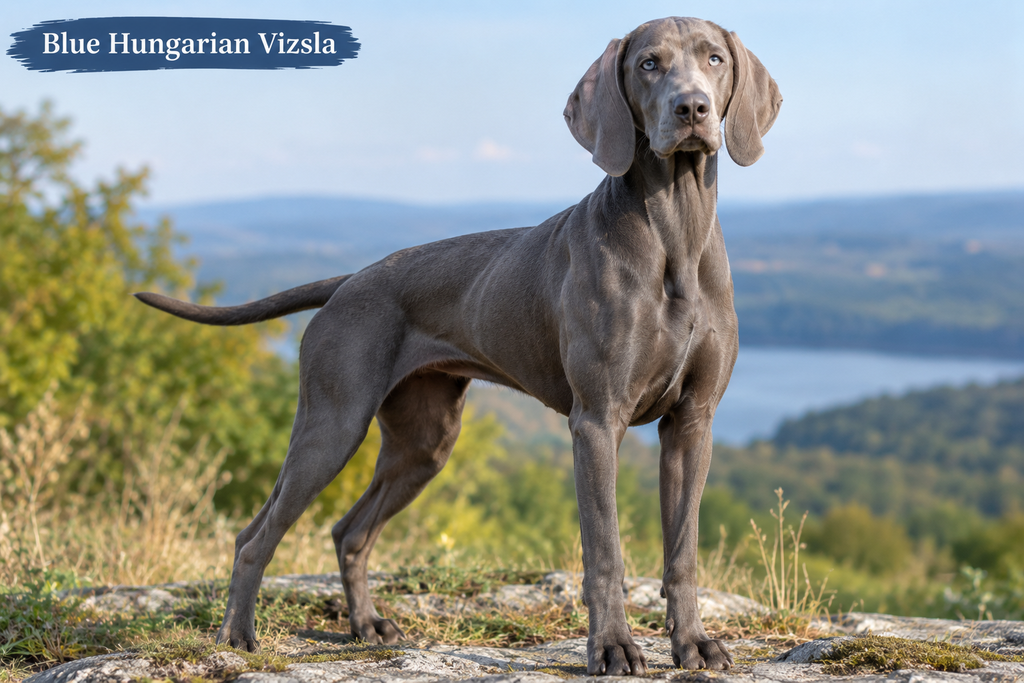
The Blue Hungarian Vizsla is a term often used online for a Vizsla with an unusual blue, gray, or slate-colored appearance. However, the standard Hungarian Vizsla is not recognized as a blue-coated breed: official breed standards describe the correct color as russet gold, with other colors considered unacceptable under the Royal Kennel Club standard. For more insigh here keeshond puppies
What Is a Blue Hungarian Vizsla?
The Hungarian Vizsla is a medium-sized hunting dog originating in Hungary. It was developed as a versatile gundog capable of pointing and retrieving game on land and in water. The breed is known for its athletic build, excellent nose, stamina, intelligence, and close working relationship with its handler.
The phrase “Blue Hungarian Vizsla” can therefore be confusing. A dog advertised under this name may have a non-standard coat color or may simply look different because of lighting, photography, coat variation, or inaccurate labeling.
The recognized Hungarian Vizsla standard calls for:
- Russet-gold coloring
- A short, dense coat
- A medium-sized athletic body
- An elegant, noble appearance
- A lively and intelligent temperament
The Royal Kennel Club states that any other color or combination of colors is unacceptable under its breed standard.
Hungarian Vizsla Appearance
A typical Hungarian Vizsla has a distinctive athletic and elegant appearance. It is medium-sized, lean, muscular, and built for sustained movement rather than heavy strength.
The breed standard describes a dog with a firm back, well-developed muscles, moderately broad and deep chest, and graceful movement.
Typical features include:
- Long, elegant head
- Broad nose with well-developed nostrils
- Medium-sized eyes
- Long hanging ears
- Lean, muscular body
- Short, dense coat
- Athletic legs
- Moderately thick tail
The breed’s movement is another important characteristic. A correct Vizsla should move with an elegant, lively, ground-covering gait suitable for its traditional work.
What Color Is a Hungarian Vizsla?
The traditional Hungarian Vizsla color is russet gold. Depending on the individual dog, the shade can appear somewhat lighter or darker, but it remains within the golden-rust range.
The FCI standard describes the breed as having a short russet-gold coat and identifies the color as an important part of its characteristic appearance.
Some small white markings on the chest or feet can be permissible under certain standards, but the Royal Kennel Club specifies russet gold as the breed-standard color and says other colors are unacceptable.
So, is blue an official Vizsla color?
No. Blue is not a recognized standard color for the Hungarian Vizsla under the major breed standards reviewed here. If someone is advertising a “blue Hungarian Vizsla,” prospective owners should ask exactly what breed, color genetics, and registration information the dog has.
This is particularly important when buying a puppy because unusual color labels can sometimes be used as marketing terms.
Blue Hungarian Vizsla Temperament
Although the phrase “blue” refers to appearance rather than temperament, the underlying Hungarian Vizsla should have the same basic breed characteristics.
The FCI describes the Hungarian Vizsla as lively, friendly, evenly tempered, and easy to train. It also emphasizes the breed’s willingness to maintain close contact with its handler while working.
A typical Vizsla can be:
- Affectionate
- Energetic
- Intelligent
- Sensitive
- People-oriented
- Trainable
- Alert
- Eager to work
This close bond with people is one reason Vizslas are sometimes described as highly attached companion dogs.
They generally do best when they are included in family activities rather than left isolated for long periods.
Are Hungarian Vizslas Good Family Dogs?
A well-socialized Hungarian Vizsla can be an excellent family companion, particularly for an active household.
The breed’s affectionate nature can make it enjoyable for families that have time to interact with their dog every day. However, a Vizsla is not a low-energy dog that can be satisfied with occasional walks.
Families should be prepared to provide:
- Daily exercise
- Training
- Mental stimulation
- Social interaction
- Safe outdoor activity
- Consistent household rules
Young children should also be supervised around an energetic dog because an excited Vizsla can accidentally knock someone over during play.
Blue Hungarian Vizsla Exercise Needs
Exercise is one of the biggest considerations for anyone interested in a Hungarian Vizsla.
The breed was developed as an all-purpose hunting dog and is expected to have stamina, athleticism, and enthusiasm for working in different environments. The Hungarian Vizsla Society describes the breed as having great stamina and an ability to work in all weather.
Suitable activities can include:
- Long walks
- Hiking
- Running when physically mature
- Retrieving games
- Swimming
- Scent work
- Obedience training
- Field activities
Simply letting a Vizsla into a yard is unlikely to meet all of its needs. Exercise is more useful when combined with interaction and mental work.
Training a Hungarian Vizsla
Hungarian Vizslas are intelligent and generally responsive to training. The breed standard specifically describes them as easily trained and emphasizes their willingness to work closely with their handler.
Positive, consistent training is usually the best approach.
Early training should cover:
- Name recognition
- Recall
- Loose-leash walking
- Sit and down
- Stay
- Leave it
- Calm greetings
- Basic household manners
Because Vizslas are sensitive dogs, harsh handling can damage trust and make training less productive. The FCI standard specifically states that the breed cannot tolerate rough treatment.
Hungarian Vizsla Grooming
One advantage of the Hungarian Vizsla is its relatively simple coat.
The breed has a short, straight, dense coat that is easy to care for compared with long-coated breeds.
Basic grooming can include:
- Regular brushing
- Occasional bathing when necessary
- Nail trimming
- Ear checks
- Dental care
- Routine skin checks
The short coat does not mean the breed is completely maintenance-free. Regular grooming still helps owners notice changes such as skin irritation, unusual lumps, or parasites.
Do Hungarian Vizslas Shed?
Yes, Hungarian Vizslas shed, although their short coat is much less noticeable around the home than the long hair of heavily coated breeds.
A rubber grooming brush or soft brush can help remove loose hair.
Regular brushing also gives owners an opportunity to check the dog’s skin and coat.
Hungarian Vizsla Size
The Hungarian Vizsla is a medium-sized breed.
The Royal Kennel Club standard gives these measurements:
- Males: 57–64 cm at the withers
- Females: 53–60 cm
- Weight: approximately 20–30 kg
The standard emphasizes balance and sound structure rather than simply producing the largest possible dog.
Blue Hungarian Vizsla Health Considerations
Like all breeds, Hungarian Vizslas can experience health problems, so responsible ownership includes preventive veterinary care.
The Royal Kennel Club’s current breed-specific health requirements list screening for:
- Hip dysplasia
- Elbow dysplasia
- Eye conditions
- Gonioscopy
These screening recommendations are particularly relevant when evaluating breeding dogs.
Owners should work with their veterinarian on an appropriate preventive-care plan rather than assuming that any individual dog will develop a particular condition.
Keeping a Vizsla at a healthy body condition is also important because it is an athletic breed that depends on sound movement.
Do Hungarian Vizslas Like Water?
Many Hungarian Vizslas enjoy retrieving and working in water. The breed was specifically developed as a versatile hunting dog capable of working both on land and in water.
If your dog enjoys swimming, always introduce water safely.
A good first experience should involve:
- Calm, shallow water
- Easy access back onto land
- Close supervision
- No forced entry
- A safe environment away from strong currents
Not every individual dog will be an enthusiastic swimmer, so the dog’s comfort should guide the experience.
Blue Hungarian Vizsla and Apartment Living
A Hungarian Vizsla can adapt to different living environments, but lifestyle matters more than simply having a house or apartment.
The Hungarian Vizsla Society notes that the breed can adapt to house or apartment living. However, its high stamina and working background mean an apartment owner still needs to provide sufficient daily exercise and mental stimulation.
A large house does not automatically make someone a good Vizsla owner, and an apartment does not automatically make someone a bad one.
The more important questions are:
- How much exercise can you provide?
- How much time can you spend with the dog?
- Can you provide training?
- Is the dog regularly left alone for long periods?
- Do you have safe places for exercise?
Common Mistakes With Hungarian Vizslas
Underestimating their energy
Their attractive appearance can make people forget that these are working dogs.
Providing exercise without mental stimulation
A long walk is useful, but scent games, retrieving, training, and problem-solving can also help satisfy an intelligent dog.
Leaving them alone for too long
Vizslas are strongly people-oriented and often thrive on close companionship.
Using harsh training
Their sensitivity means calm, clear, reward-based training is generally a better fit.
Choosing a puppy because of an unusual color
A rare-looking coat should never be more important than health, temperament, responsible breeding, and whether the dog is genuinely a Hungarian Vizsla.
What to Know Before Buying a “Blue Hungarian Vizsla”
If you see a puppy advertised specifically as a Blue Hungarian Vizsla, ask detailed questions before making a decision.
Check:
- The puppy’s registration information
- The breed of both parents
- Pedigree documentation
- Health screening of the parents
- Veterinary records
- Why the puppy is being described as “blue”
- Whether the color is recognized by the relevant kennel club
- Whether the seller is using unusual color as a premium selling point
The current Royal Kennel Club standard does not recognize blue as an acceptable Hungarian Vizsla color.
That does not automatically tell you everything about an individual dog, but it is an important reason to investigate the description carefully.
Frequently Asked Questions
Is the Blue Hungarian Vizsla a real breed?
No. “Blue Hungarian Vizsla” is not a separate recognized breed. The Hungarian Vizsla is the recognized breed, and its standard color is russet gold.
Can a Hungarian Vizsla have a blue coat?
A blue coat is not a standard recognized color for the Hungarian Vizsla. If a dog is being advertised as blue, buyers should investigate its breed identity and color genetics carefully.
Are Hungarian Vizslas easy to train?
Yes, they are generally intelligent and responsive to training. The breed standards describe them as easily trained, but they respond best to thoughtful and humane handling.
Are Hungarian Vizslas high-energy dogs?
Yes. They were developed as versatile hunting dogs with stamina and working ability, so they generally need substantial daily physical and mental activity.
Do Hungarian Vizslas make good family pets?
They can be excellent family companions for active households that have enough time for exercise, training, companionship, and socialization.
The Bottom Line
The Blue Hungarian Vizsla is not a separate recognized breed, and blue is not the standard color of the Hungarian Vizsla. The genuine breed is a lively, affectionate, intelligent, and athletic Hungarian hunting dog traditionally recognized for its russet-gold coat. If you encounter a dog advertised as a blue Vizsla, investigate its breed identity, health background, and color carefully rather than choosing it simply because the coat looks unusual.
Conclusion
The Blue Hungarian Vizsla is not a separate recognized breed, and blue is not a standard color for the Hungarian Vizsla. The Hungarian Vizsla is an intelligent, affectionate, athletic, and energetic dog known for its traditional russet-gold coat and strong bond with its owners. Anyone considering a dog advertised as a blue Vizsla should carefully check its breed identity, health background, and registration before making a decision.
[…] Vizslas originated as hunting dogs and were developed to point and retrieve game on land and in water. The Royal Kennel Club describes them as lively, intelligent, obedient, sensitive, affectionate, and easily trained. These qualities can make a puppy extremely rewarding to raise, but they also mean that young Vizslas need regular interaction and guidance. For more insigh here blue hungarian vizsla […]