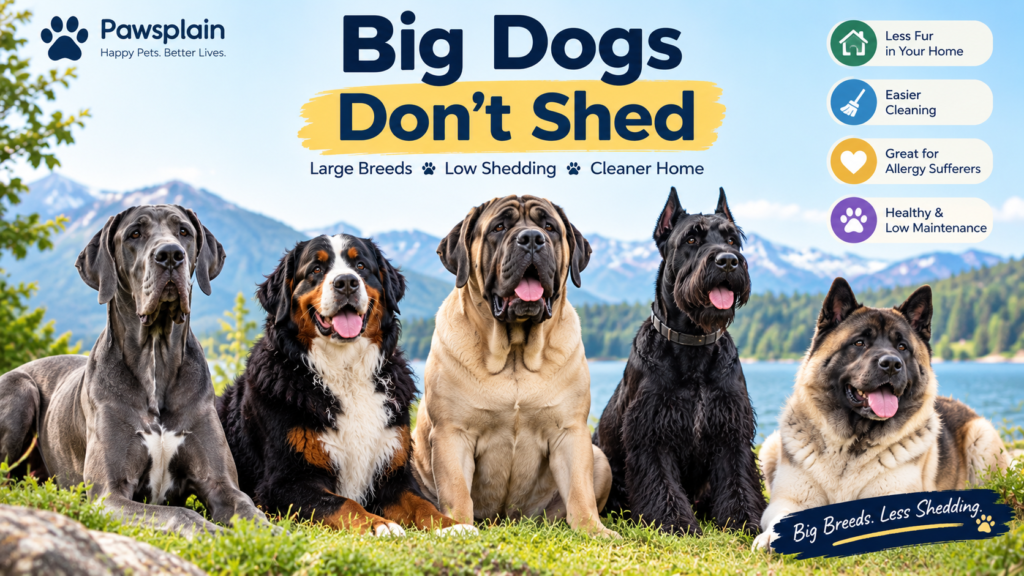
Big dogs that don’t shed are ideal for people who love large, loyal companions but want less dog hair around their homes. Although no dog is completely guaranteed to be shed-free, several breeds have coats that release very little loose hair compared with heavy-shedding dogs. Popular choices include the Standard Poodle, Giant Schnauzer, Portuguese Water Dog, and Bouvier des Flandres.
These dogs come in different sizes, personalities, and activity levels. Some are energetic working dogs, while others make affectionate family companions. However, low shedding does not always mean easy grooming. Many of these breeds need regular brushing, trimming, and professional coat care.
In this guide, you’ll discover 10 large dogs that shed very little, learn about their characteristics, and find out which breed may suit your lifestyle best. For more insight here big dogs that rarely shed
What Are Big Dogs That Don’t Shed?
Big dogs that don’t shed are large breeds that naturally lose relatively little hair around the house. Unlike breeds with thick double coats that release substantial amounts of fur during seasonal shedding, many low-shedding dogs have curly, wiry, or continuously growing coats that retain loose hairs.
This can make cleaning easier and reduce the amount of fur left on carpets, sofas, and clothing.
However, there is an important difference between a low-shedding dog and a completely non-shedding dog. All dogs lose some hair naturally, even when the amount is difficult to notice.
Low-shedding breeds may also be worth considering for people with dog allergies, but no breed is completely hypoallergenic. Allergic reactions can be caused by proteins in a dog’s dander, saliva, and urine, not just loose hair.
10 Best Big Dogs That Don’t Shed Much
Here are 10 large or medium-to-large breeds worth considering if you want a dog that leaves relatively little loose hair around your home.
1. Standard Poodle
The Standard Poodle is one of the most popular choices for people searching for a large, low-shedding dog. Recognized for its curly coat, athletic body, and exceptional intelligence, this breed combines an elegant appearance with an energetic personality.
Standard Poodles stand more than 15 inches tall at the shoulder, and many are substantially taller. Their curly coats tend to retain loose hair rather than releasing it throughout the home.
Why choose a Standard Poodle?
- Low shedding: Its curly coat generally releases very little loose hair.
- Intelligence: It often learns commands and routines quickly.
- Active personality: It enjoys walking, swimming, playing, and training.
- Versatility: It can adapt to different households when its needs are met.
Standard Poodles need regular brushing to prevent painful mats. Many owners arrange professional grooming every four to six weeks, depending on the coat length and style.
They also require daily exercise and mental stimulation. If you want a clever, athletic companion and can commit to regular grooming, the Standard Poodle is an excellent option.
2. Giant Schnauzer
The Giant Schnauzer is a large, muscular working dog known for its distinctive beard, bushy eyebrows, and wiry coat. It is a popular consideration for people who want a substantial dog that sheds relatively little.
This breed is intelligent, alert, loyal, and energetic. Its working background means it benefits from structured activities and consistent training.
Key characteristics include: Big Dogs That Don’t Shed
- A wiry, relatively low-shedding coat.
- A strong and athletic body.
- High intelligence and a willingness to learn.
- A protective nature and strong attachment to its family.
Although the Giant Schnauzer does not typically leave as much loose hair as many heavy-shedding breeds, its coat requires regular brushing and trimming. Professional grooming can help maintain its texture and appearance.
This breed also needs substantial daily exercise, early socialization, and consistent boundaries. It is generally better suited to experienced dog owners than to people who want an easygoing pet with minimal training requirements.
3. Portuguese Water Dog
The Portuguese Water Dog is an athletic breed originally developed to help fishermen. It has a curly or wavy coat that usually sheds very little, making it a good choice for active households looking for a large companion.
These dogs are intelligent, enthusiastic, and often love swimming and retrieving toys. They can be wonderful family pets when properly trained and exercised.
What makes this breed special?
- A low-shedding curly or wavy coat.
- A strong swimming ability.
- An intelligent and responsive temperament.
- An energetic personality suited to outdoor activities.
Portuguese Water Dogs require regular brushing and coat trimming to prevent tangles. They also need daily exercise, playtime, and activities that challenge their minds.
This breed may suit families who enjoy hiking, walking, swimming, or other outdoor adventures. It may be less suitable for people who spend most of their time away from home and cannot provide sufficient companionship.
4. Bouvier des Flandres
The Bouvier des Flandres is a sturdy, large herding dog with a rough coat, impressive beard, and powerful build. Originally developed for farm work, it is known for its strength, intelligence, and loyal personality.
Its dense coat tends to shed less visibly than the coats of many heavy-shedding breeds. However, regular maintenance is essential because loose hair and dirt can become trapped in the coat.
Reasons to consider a Bouvier des Flandres: Big Dogs That Don’t Shed
- A strong, substantial body.
- A relatively low-shedding coat.
- A devoted and watchful temperament.
- Good potential for training and structured activities.
Bouviers benefit from daily walks, socialization, and opportunities to use their intelligence. Their coats need frequent brushing and periodic trimming to prevent matting.
This breed can be a rewarding companion for owners who appreciate large working dogs and have enough time for training, exercise, and grooming.
5. Airedale Terrier
The Airedale Terrier is the largest terrier breed and is known for its wiry coat, long face, and confident personality. It offers a combination of athletic ability, intelligence, and relatively low shedding.
Airedales are curious, energetic, and often playful. They enjoy exploring, learning commands, and participating in activities that keep them mentally and physically engaged.
Main advantages: Big Dogs That Don’t Shed
- A wiry coat that generally sheds less than many traditional double coats.
- An athletic build suitable for active households.
- Intelligence and enthusiasm for training.
- A bold, lively personality.
Their coats need regular brushing and trimming. Some owners choose hand-stripping to maintain the traditional wiry texture, while others prefer clipping.
Airedales also have typical terrier instincts, which can make training around distractions challenging. Early socialization and consistent positive reinforcement help develop good manners.
If you want a medium-to-large dog that is playful and active without excessive loose hair, the Airedale Terrier deserves consideration.
6. Irish Water Spaniel
The Irish Water Spaniel is a distinctive sporting breed with a curly liver-colored coat and a strong affinity for water. Its coat generally sheds relatively little compared with many breeds that have loose, heavy undercoats.
This dog is intelligent, athletic, and enthusiastic about retrieving games, swimming, and outdoor adventures.
Important features include: Big Dogs That Don’t Shed
- A curly coat with relatively low shedding.
- Strong swimming and retrieving instincts.
- An energetic and intelligent temperament.
- A need for regular activity and engagement.
Although its coat may leave less hair around the house, it still requires brushing and trimming to prevent tangles. Its ears also need routine attention, particularly after swimming.
The Irish Water Spaniel can be a great match for active owners who enjoy outdoor activities and have time for regular training and grooming.
7. Afghan Hound
The Afghan Hound is a tall, graceful breed famous for its long, silky coat and elegant appearance. Despite having abundant hair, it is generally considered a relatively low-shedding breed.
This demonstrates that coat length alone does not determine how much hair a dog leaves around the home.
Why consider an Afghan Hound?
- A tall, athletic body.
- A long, flowing coat.
- Relatively low visible shedding with appropriate care.
- An independent and dignified personality.
The biggest consideration is grooming. The Afghan Hound’s long coat can tangle and mat easily, so frequent brushing and careful maintenance are essential.
Afghan Hounds also have a strong chasing instinct and may be less responsive when distracted by moving animals. Secure exercise areas and patient training are important.
This breed is best suited to owners who appreciate its appearance and can commit to its demanding coat care and exercise needs.
8. Komondor
The Komondor is a large Hungarian livestock guardian recognized by its unusual, corded coat. Its long, rope-like appearance makes it one of the most distinctive breeds available.
As its coat develops, the hair forms cords that need specialized care. It typically releases relatively little loose hair into the home, but that does not mean it is easy to maintain.
Key characteristics include: Big Dogs That Don’t Shed
- A large, powerful body.
- A distinctive corded coat.
- Strong livestock-guardian instincts.
- An independent and protective temperament.
Komondors require careful coat maintenance to keep their cords clean and properly separated. The coat must also dry thoroughly after bathing to prevent trapped moisture and unpleasant odors.
Their guardian instincts make early socialization particularly important. They need secure surroundings, appropriate training, and owners who understand the responsibilities of managing a large protective dog.
The Komondor is a distinctive option for experienced owners, but it is not necessarily the best match for every family.
9. Soft Coated Wheaten Terrier
The Soft Coated Wheaten Terrier is generally smaller than the giant breeds on this list, but it is a medium-to-large companion with a soft, wavy coat that typically sheds relatively little.
Wheatens are known for their cheerful, playful personalities. They often enjoy being around their families and participating in daily activities.
Why owners may love this breed: Big Dogs That Don’t Shed
- A soft coat with relatively low shedding.
- An affectionate and lively personality.
- An energetic nature suited to active households.
- A size that is easier to manage than some giant breeds.
The coat needs frequent brushing because tangles and mats can develop quickly. Regular trimming is also helpful for keeping the hair manageable.
Wheatens benefit from daily exercise, early socialization, and positive-reinforcement training. Their playful nature makes them appealing to many households, but their grooming requirements should not be overlooked.
10. Black Russian Terrier
The Black Russian Terrier is a large working breed with a dense, coarse coat and a powerful build. Developed for working and guarding duties, it is known for its intelligence, confidence, and protective instincts.
Its coat generally sheds less visibly than those of many heavy-shedding dogs, although individual dogs may differ.
Notable characteristics include: Big Dogs That Don’t Shed
- A large and muscular body.
- A dense, relatively low-shedding coat.
- A loyal and protective temperament.
- A need for consistent training and exercise.
Regular brushing and professional grooming help prevent mats and keep the coat healthy. The breed also benefits from early socialization, structured activities, and responsible handling.
Because Black Russian Terriers are strong and naturally protective, they are generally better suited to owners who can provide consistent training and understand the needs of large working dogs.
Comparison of Large Dogs That Shed Very Little
| Breed | Shedding level | Grooming needs | Exercise needs |
|---|---|---|---|
| Standard Poodle | Very low | High | High |
| Giant Schnauzer | Low | High | High |
| Portuguese Water Dog | Low | High | High |
| Bouvier des Flandres | Low | High | Moderate to high |
| Airedale Terrier | Low | Moderate to high | High |
| Irish Water Spaniel | Low | High | High |
| Afghan Hound | Relatively low | Very high | Moderate to high |
| Komondor | Low visible shedding | Specialized | Moderate |
| Soft Coated Wheaten Terrier | Low | High | Moderate to high |
| Black Russian Terrier | Relatively low | High | Moderate to high |
Shedding and exercise levels vary between individual dogs. These are general breed tendencies, not guarantees.
How to Choose the Right Large Low-Shedding Dog
Finding the right dog means considering your lifestyle as well as its coat.
Consider Your Daily Routine
Some breeds need long walks, vigorous exercise, and training sessions, while others may be satisfied with a more moderate routine.
- For active households: Consider the Portuguese Water Dog or Irish Water Spaniel.
- For people who enjoy training: The Standard Poodle may be a strong option.
- For experienced owners: The Giant Schnauzer and Black Russian Terrier may be suitable.
- For owners who appreciate long coats: The Afghan Hound may be worth considering if you have time for grooming.
Every dog needs appropriate exercise, companionship, and mental stimulation.
Check the Grooming Commitment
A low-shedding coat often requires more hands-on maintenance than a short coat that sheds heavily.
Before choosing a breed, ask yourself: Big Dogs That Don’t Shed
- Can I brush my dog regularly?
- Can I afford professional grooming when needed?
- Do I have time to prevent tangles and mats?
- Can I maintain a consistent coat-care routine?
If you want a large dog that needs almost no grooming, most low-shedding breeds will not meet that expectation.
Think About Children and Other Pets
Many large, low-shedding dogs can become excellent family companions with appropriate socialization and training. However, breed characteristics and individual temperament matter.
Children should always be taught how to interact respectfully with dogs, and interactions should be supervised. Introductions to other pets should also be managed carefully.
Protective working breeds may require more experienced handling than breeds generally known for being adaptable companions.
For more guidance, explore our related articles on [large dog breeds], [best family dog breeds], [best dogs for first-time owners], and [best house dogs].

Are Big Dogs That Don’t Shed Hypoallergenic?
Some low-shedding breeds are often recommended to people who experience dog allergies, but no dog breed is completely hypoallergenic.
Dog allergens can be found in skin flakes, saliva, and urine. Reducing loose hair in the home may help with cleaning, but it does not guarantee fewer allergy symptoms.
If you have allergies, spend time around the specific breed before bringing a dog home and consult a healthcare professional about your symptoms.
The Standard Poodle, Giant Schnauzer, and Portuguese Water Dog are commonly considered by people seeking large dogs with relatively low-shedding coats.
Do Low-Shedding Dogs Need Less Grooming?
No. Low shedding and low grooming are two different things.
Curly coats can trap loose hair, wiry coats may require specialized trimming, and long coats can develop tangles. Corded coats require a different maintenance routine altogether.
A good coat-care routine may include: Big Dogs That Don’t Shed
- Brushing: Remove trapped hair and prevent mats where brushing is appropriate.
- Trimming: Keep the coat manageable and comfortable.
- Bathing: Clean the coat as needed and dry it thoroughly.
- Ear care: Check ears regularly, particularly after swimming.
- Skin checks: Look for irritation, persistent itching, or unusual hair loss.
The correct approach depends on the breed. A professional groomer can help you establish a suitable schedule.
Frequently Asked Questions
What is the best big dog that doesn’t shed?
The Standard Poodle is one of the best-known choices because it combines a very low-shedding coat with intelligence and athletic ability. Portuguese Water Dogs and Giant Schnauzers are also popular options for people seeking larger, low-shedding companions.
Which large dog sheds the least?
The Standard Poodle is often considered among the lowest-shedding large breeds. However, shedding varies between individual dogs, and coat care plays an important role in keeping loose hair under control.
Are there any dogs that do not shed at all?
No breed should be guaranteed to shed absolutely no hair. Some dogs release very little loose hair, but small amounts of natural hair loss can still occur.
Are large low-shedding dogs good for families?
Many can make excellent family companions. Standard Poodles and Portuguese Water Dogs may suit active families, while powerful guardian breeds may require more experienced handling. Training, supervision, and the individual dog’s temperament are important.
Are big dogs that don’t shed easy to maintain?
Not always. Many have curly, wiry, or long coats that require frequent brushing and professional grooming. Consider both the time and ongoing cost of coat care before choosing a breed.
Which big low-shedding dog is best for beginners?
A Standard Poodle may be worth considering for a first-time owner who can provide daily exercise, positive training, and regular grooming. The best choice depends on your experience, routine, and household.
The Bottom Line
Big dogs that don’t shed can be excellent companions for people who love large breeds but want less loose hair around the home. The Standard Poodle, Giant Schnauzer, Portuguese Water Dog, Bouvier des Flandres, and Airedale Terrier are among the options worth exploring.
Before choosing your dog, consider its temperament, exercise needs, adult size, and grooming requirements. Remember that low shedding does not mean no grooming, and no dog is guaranteed to be allergy-free.
With the right breed and consistent care, you can enjoy the companionship of a large, loyal dog while keeping loose hair around your home more manageable.
[…] A white coat can be beautiful, but appearance should only be one part of choosing a dog. Large breeds can have significant exercise, grooming, training, and space requirements, so the right match depends on your household and lifestyle. For more insight here big dogs don’t shed […]