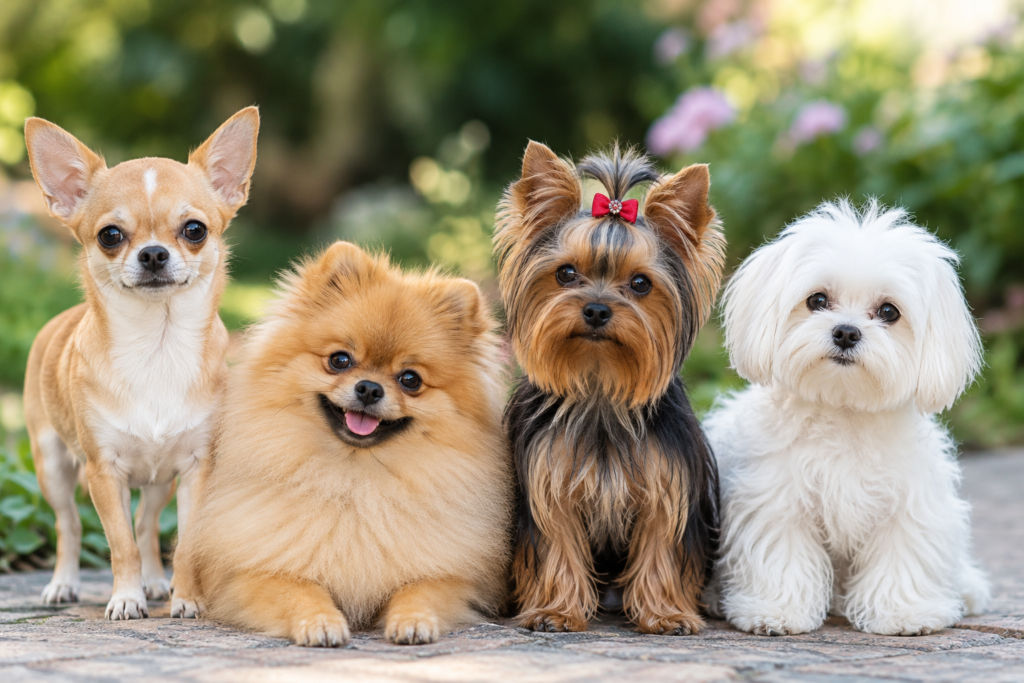
Miniature dogs are small in size but often have enormous personalities. From the tiny Chihuahua to the fluffy Pomeranian and intelligent Miniature Schnauzer, these dogs can make wonderful companions for the right household.
Their compact size makes many miniature and toy breeds suitable for apartments and smaller homes. However, being small does not mean they are maintenance-free. Miniature dogs still need proper nutrition, training, socialization, exercise, grooming, and regular veterinary care. The American Kennel Club notes that small dogs can have very different personalities and activity levels, so choosing a breed should be based on lifestyle rather than size alone. For more insight here american dog breeds
What Are Miniature Dogs?
“Miniature dogs” is a general term for very small dog breeds and smaller varieties of established breeds. Some belong to the AKC Toy Group, while others, such as the Miniature Schnauzer, belong to different breed groups.
Small dogs can range from energetic terriers to calm companion breeds. Some are excellent lap dogs, while others were developed for hunting, guarding, or other working purposes.
Their small bodies can make them easier to manage in limited living spaces, but they can also be physically vulnerable. Owners should take extra care around stairs, high furniture, larger dogs, and rough play.
Best Miniature Dog Breeds
Here are some popular miniature and very small dog breeds worth considering:
| Breed | General Personality | Grooming | Activity |
|---|---|---|---|
| Chihuahua | Alert, confident, loyal | Low to moderate | Moderate |
| Pomeranian | Playful, intelligent, energetic | High | Moderate |
| Maltese | Affectionate, gentle, lively | High | Moderate |
| Miniature Pinscher | Bold, energetic, independent | Low | High |
| Miniature Schnauzer | Intelligent, friendly, alert | Moderate to high | Moderate to high |
| Shih Tzu | Affectionate, outgoing | High | Low to moderate |
| Yorkshire Terrier | Confident, affectionate, lively | High | Moderate |
| Papillon | Intelligent, active, friendly | Moderate | High |
| Pekingese | Calm, independent, affectionate | High | Low to moderate |
| Toy Poodle | Intelligent, active, trainable | High | Moderate to high |
The AKC lists numerous small breeds across different groups, including Chihuahua, Pomeranian, Maltese, Miniature Pinscher, Papillon, Pekingese, Toy Poodle, Shih Tzu, and Yorkshire Terrier.
1. Chihuahua
The Chihuahua is one of the smallest recognized dog breeds and is famous for having a personality much bigger than its body.
Chihuahuas can have smooth or long coats and come in many colors and patterns. They are generally alert, confident, and strongly attached to their owners.
Despite their tiny size, they should not be treated like toys. Chihuahuas benefit from proper training and socialization, and their small bodies mean they can be vulnerable to accidental injuries.
They can be excellent companions for apartments and city living, although homes with very young children may need extra supervision because of the breed’s delicate size.
2. Pomeranian
The Pomeranian is a fluffy miniature dog with a distinctive double coat and lively personality.
Pomeranians are intelligent, alert, playful, and often very attached to their families. Their small size makes them popular with people living in apartments, but they still need daily activity and mental stimulation.
The beautiful coat requires regular brushing to prevent tangles and maintain its appearance.
Pomeranians can also be vocal, so early training is useful if you want to prevent excessive barking.
3. Maltese
The Maltese is a small companion breed recognized for its long, flowing white coat and affectionate personality.
These dogs are generally friendly, playful, and people-oriented. Their coat can require considerable maintenance because long hair can become tangled without regular brushing.
Despite their elegant appearance, Maltese dogs are playful and enjoy spending time with their owners. They can adapt well to smaller homes when provided with appropriate exercise and companionship.
4. Miniature Pinscher
The Miniature Pinscher, often called the Min Pin, is a small but extremely energetic dog.
Unlike some miniature breeds that prefer relaxing on a lap, the Miniature Pinscher can be athletic, curious, and independent. The AKC describes the breed as active and athletic despite its small size.
This breed benefits from regular exercise, training, and mental stimulation. Its short coat is relatively easy to maintain, making grooming simpler than with many long-haired miniature dogs.
5. Miniature Schnauzer
The Miniature Schnauzer is a compact, sturdy breed with a distinctive beard and eyebrows.
It is the smallest of the three Schnauzer varieties and generally weighs no more than 20 pounds. Despite its miniature size, the breed has a strong, athletic build rather than a fragile appearance.
Miniature Schnauzers are intelligent and enjoy learning. Their wiry coat requires regular grooming, and many owners use professional grooming services to maintain the breed’s characteristic appearance.
They can be a good choice for owners who want a small dog with an active and confident personality.
6. Shih Tzu
The Shih Tzu is a small companion dog known for its long coat, expressive face, and affectionate nature.
These dogs generally enjoy spending time with their people and can adapt well to apartment living. Their long coat requires regular brushing and grooming, especially when kept long.
Although Shih Tzus are small, they still benefit from daily walks and interactive play.
7. Yorkshire Terrier
The Yorkshire Terrier, or Yorkie, is a tiny terrier with a confident personality.
Yorkies are affectionate with their families but can also be energetic and alert. Their silky coat is beautiful but requires consistent grooming.
Because of their small size, owners should supervise interactions with larger dogs and young children. With proper socialization and training, Yorkies can become confident and enjoyable companions.
8. Papillon
The Papillon is a small, elegant dog recognized for its distinctive butterfly-shaped ears.
Don’t let its delicate appearance fool you. Papillons are intelligent, active, and eager to learn.
They can perform well in obedience and agility activities and usually enjoy mental challenges. This makes them a good choice for owners who want a miniature dog that is more active and trainable.
9. Pekingese
The Pekingese is an ancient-looking companion breed with a distinctive flat face, long coat, and dignified personality.
Pekingese dogs generally do not require a large yard and can adapt to apartment life. They enjoy walks but are not typically built for intense physical activity.
Their long coat requires regular grooming, while their small size means owners should take care during play and around larger dogs.
10. Toy Poodle
The Toy Poodle is one of the smallest Poodle varieties and is known for intelligence and trainability.
Toy Poodles can be active and enjoy learning tricks, obedience exercises, and other activities. Their curly coat sheds very little, but it requires regular grooming to prevent overgrowth and matting.
For owners who want a tiny dog that enjoys training and mental challenges, the Toy Poodle can be an excellent option.
Are Miniature Dogs Good for Apartments?
Many miniature dogs can live successfully in apartments because they require less physical space than large breeds. However, small size does not automatically mean low energy.
A Miniature Pinscher, Papillon, or some terriers may need considerably more activity than a quieter companion breed.
Apartment owners should consider:
- Daily walks
- Indoor play
- Mental stimulation
- Barking tendencies
- Access to safe outdoor areas
- Grooming requirements
- The dog’s individual temperament
The AKC notes that many small dogs can be suitable for apartment life, but breed personality and activity requirements still need to be considered.
Exercise Needs of Miniature Dogs
Miniature dogs still need regular physical activity.
Depending on the breed, exercise may include:
- Short daily walks
- Indoor games
- Fetch
- Training sessions
- Puzzle toys
- Obedience exercises
- Agility or other appropriate dog sports
Small dogs should not be forced into excessive exercise simply because they are energetic. Their size, age, health, and breed characteristics should determine the appropriate level of activity.
Training Miniature Dogs
One common mistake is assuming that a small dog does not need training.
Miniature dogs need basic obedience, socialization, and household manners just like larger dogs. The AKC specifically recommends giving toy breeds opportunities for training, learning, play, and exploration.
Important skills include:
- Sit
- Stay
- Come
- Leave it
- Walking politely on a leash
- Crate training
- House training
- Appropriate social behavior
Positive, consistent training is usually the best approach.
Grooming Miniature Dogs
Grooming requirements vary significantly between breeds.
Short-haired dogs such as Chihuahuas may need relatively little coat maintenance, while breeds such as Maltese, Shih Tzu, Pomeranians, Yorkshire Terriers, and Toy Poodles require considerably more attention.
Regular grooming may include:
- Brushing
- Bathing
- Nail trimming
- Ear cleaning
- Dental care
- Professional haircuts when needed
A low-shedding dog is not necessarily a low-maintenance dog. For example, Poodles shed very little but still require regular coat care.
Health and Safety for Miniature Dogs
Because of their small bodies, miniature dogs can be more vulnerable to accidental injuries.
Owners should be careful with:
- High furniture
- Stairs
- Open doors
- Large dogs
- Rough play
- Crowded areas
- Being accidentally stepped on
Using ramps or pet stairs can help reduce the need for large jumps from furniture. Careful supervision is especially important when a small dog is playing with a much larger dog.
Regular veterinary checkups, appropriate nutrition, dental care, vaccinations, parasite prevention, and weight management are also important parts of responsible ownership.
Are Miniature Dogs Good With Children?
Some miniature dogs can be excellent family companions, but not every small breed is appropriate for very young children.
The biggest concern is often the dog’s physical size. A child may accidentally drop, step on, or injure a tiny dog.
Families should teach children to:
- Handle dogs gently
- Avoid pulling ears or tails
- Leave the dog alone while eating or sleeping
- Ask before picking up the dog
- Respect the dog’s personal space
Always supervise young children around small dogs.
Do Miniature Dogs Need Less Food?
Yes, miniature dogs generally require much less food than large breeds, but their diet still needs to be nutritionally balanced.
Avoid overfeeding simply because a dog looks small or cute. Extra weight can place unnecessary stress on a small dog’s body.
Food portions should be based on the dog’s age, size, activity level, health, and the specific food being fed. A veterinarian can provide individualized guidance.
How to Choose the Right Miniature Dog
The best miniature dog is not necessarily the smallest one. Instead, choose a breed whose personality and care requirements match your lifestyle.
Consider:
Activity Level
If you enjoy active walks and training, a Papillon or Miniature Pinscher may be more suitable than a very relaxed companion breed.
Grooming
If you prefer simple coat care, consider a short-haired breed. Long-coated breeds can require significant grooming.
Temperament
Some small dogs are calm and affectionate, while others are confident, energetic, independent, or vocal.
Children
Families with young children should consider sturdier small breeds and always supervise interactions.
Training
Choose a breed whose learning style and personality fit your experience level.
Frequently Asked Questions About Miniature Dogs
What is the smallest miniature dog?
The Chihuahua is one of the smallest recognized dog breeds. However, individual size varies, and extremely small “teacup” dogs are not a separate breed category recognized by the AKC.
Are miniature dogs easy to take care of?
Some are relatively easy to care for, but their needs vary greatly. Small size can make handling easier, but miniature dogs still need training, exercise, grooming, nutrition, and veterinary care.
Are miniature dogs good apartment pets?
Many are. However, apartment suitability depends on the breed’s exercise requirements, barking tendencies, temperament, and individual personality.
Do miniature dogs need exercise?
Yes. Small dogs still need regular physical and mental activity. The amount depends on the breed, age, health, and individual dog.
Which miniature dogs have low shedding?
Some breeds, including Toy Poodles, Miniature Schnauzers, and certain other small breeds, shed very little. Low shedding does not mean no grooming is required.
Are miniature dogs good for first-time owners?
Some can be excellent for first-time owners, but breed temperament and care requirements should be considered carefully. A small dog is not automatically easier to train or care for.
Conclusion
Miniature dogs can be wonderful companions for apartments, families, couples, and individuals who want a small but engaging pet. Chihuahua, Pomeranian, Maltese, Miniature Pinscher, Miniature Schnauzer, Shih Tzu, Yorkshire Terrier, Papillon, Pekingese, and Toy Poodle are among the many small breeds worth considering.
The most important thing is to look beyond appearance. Consider temperament, exercise, grooming, training, health, and your family’s lifestyle before choosing a miniature dog. Small dogs may have tiny bodies, but they still need responsible care, proper socialization, and plenty of love.
[…] The American Kennel Club recognizes mixed-breed dogs through its Canine Partners program, allowing eligible mixed breeds to participate in many AKC activities and earn titles. For more insigh here miniature dogs […]