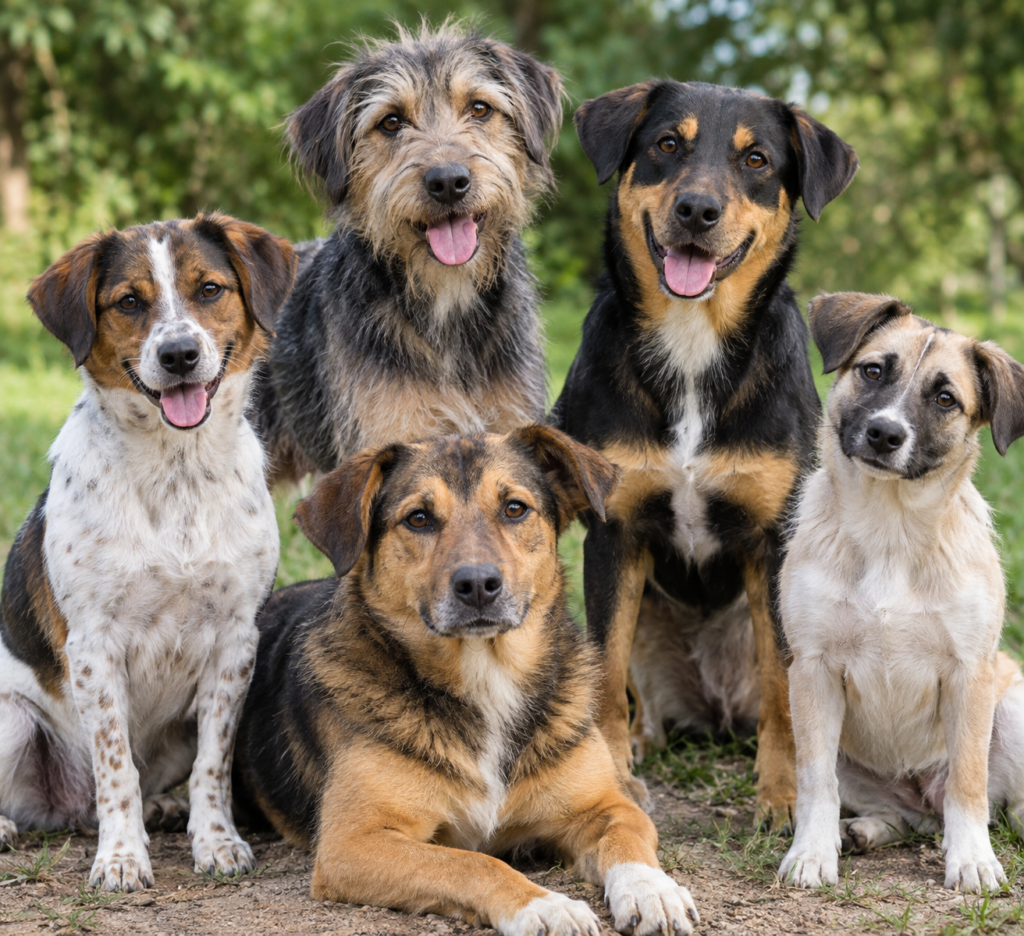
Mixed breed dogs are among the most diverse and interesting dogs in the world. Unlike purebred dogs, which are bred within established breed lines, mixed breed dogs have ancestry from two or more breeds or from a broader combination of canine backgrounds.
Some mixed breed dogs have two clearly known parent breeds, such as a Labradoodle, Goldendoodle, or Cockapoo. Others have several generations of mixed ancestry, making their exact background difficult to determine.
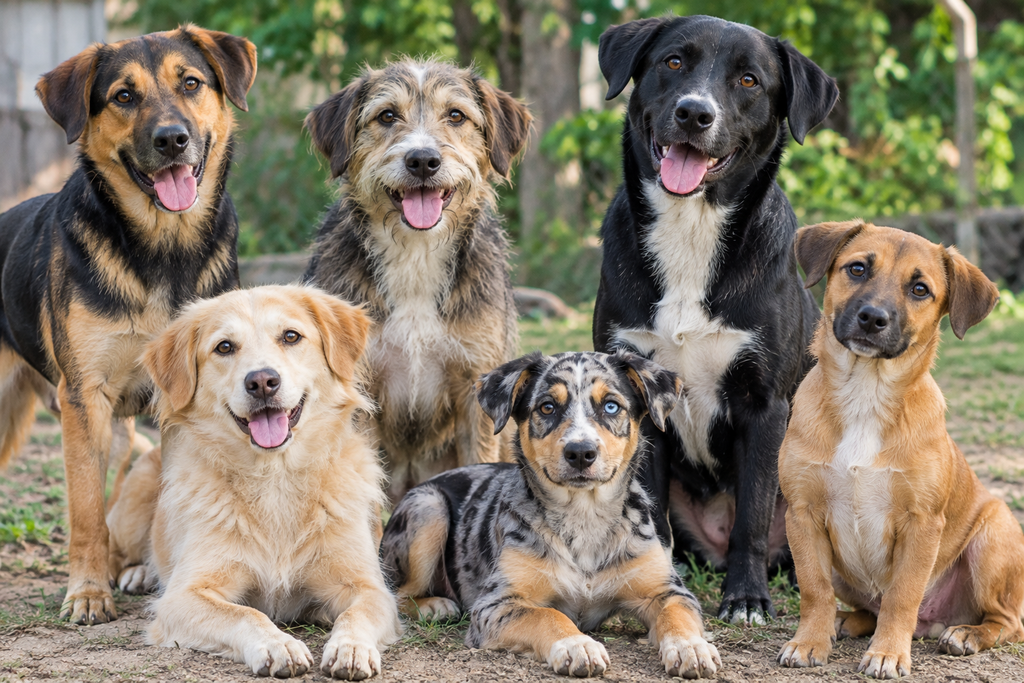
This diversity means mixed breed dogs can have almost any combination of size, coat, color, body shape, energy level, and personality. Even puppies from the same litter can sometimes develop noticeably different characteristics.
Most importantly, a mixed breed dog should be judged as an individual. Breed ancestry can provide useful clues, but training, socialization, environment, genetics, and individual temperament all contribute to how a dog develops. For more insigh here canine mixed breeds
What Are Mixed Breed Dogs?
A mixed breed dog is generally a dog whose ancestry includes more than one breed or whose lineage does not fit a single recognized breed standard.
Mixed breed dogs may be described as:
- Mixed breeds
- Crossbreeds
- Crossbred dogs
- Mutts
- Designer mixes
- Breed mixes
These terms can have slightly different meanings. A dog from two known purebred parents may be described as a crossbreed, while a rescue dog with several unknown ancestors is often simply called a mixed breed.
The American Kennel Club (AKC) has a Canine Partners program specifically for mixed-breed dogs. Eligible mixed breeds can participate in numerous AKC sports and earn titles.
Popular Mixed Breed Dogs
There are countless possible combinations of dog breeds. Some mixes have become especially well known.
Labradoodle
A Labradoodle is generally a Labrador Retriever and Poodle cross.
These dogs can be intelligent, active, and social. Their coat can range from relatively straight to curly, and grooming requirements vary considerably between individual dogs.
Because Labrador Retrievers and Poodles can both be energetic breeds, Labradoodles often benefit from daily exercise and mental stimulation.
Goldendoodle
The Goldendoodle combines Golden Retriever and Poodle ancestry.
Goldendoodles are commonly kept as companion dogs and may be friendly and people-oriented. Their size and coat type can vary depending on their parents and breeding.
Regular exercise, training, socialization, and coat care are important parts of responsible ownership.
Mixed Breed Dogs Cockapoo
The Cockapoo is a Cocker Spaniel and Poodle mix.
Cockapoos are generally small to medium-sized, although their size can vary depending on the Poodle parent. They are often active, affectionate, and playful.
Their coat may require regular brushing and grooming.
Mixed Breed Dogs Cavapoo
The Cavapoo is usually a Cavalier King Charles Spaniel and Poodle cross.
These dogs are often relatively small and are commonly kept as companion animals. However, their appearance and personality can vary because they inherit genes from two different breeds.
Mixed Breed Dogs Pomsky
A Pomsky is a Pomeranian and Siberian Husky mix.
Because the parent breeds are very different in size and appearance, Pomskies can vary significantly. Some may have Husky-like markings, while others may look more strongly like a Pomeranian.
They can be energetic and vocal, so training and socialization are important.
Maltipoo
The Maltipoo combines Maltese and Poodle ancestry.
Maltipoos are generally small companion dogs. Depending on their genetics, they can have curly, wavy, or relatively straight coats.
Their small size does not eliminate the need for exercise and training.
What Do Mixed Breed Dogs Look Like?
One of the most noticeable characteristics of mixed breed dogs is their variety.
A mixed breed may inherit:Mixed Breed Dogs
- The body shape of one parent
- Facial characteristics from another
- A combination of coat colors
- Different ear shapes
- Curly, wavy, or straight hair
- Short, medium, or long coats
- Different adult sizes
The outcome is not always predictable.
For example, two puppies from the same mixed-breed litter can inherit different combinations of genes and eventually look quite different from each other.
Mixed Breed Dog Personality
There is no single personality type shared by all mixed breed dogs.
A dog’s behavior can be influenced by:Mixed Breed Dogs
- Genetics
- Parent breeds
- Early socialization
- Training
- Environment
- Age
- Previous experiences
- Individual temperament
This is why owners should avoid assuming that a dog will behave exactly like one of its suspected parent breeds.
For adult rescue dogs, observing their actual behavior can provide particularly useful information about their personality and activity level.
Are Mixed Breed Dogs Good Family Pets?
Many mixed breed dogs can make excellent family companions.
However, suitability depends on the individual dog rather than simply the label “mixed breed.”
Families should consider:Mixed Breed Dogs
- Energy level
- Size
- Temperament
- Training needs
- Grooming requirements
- Behavior around children
- Behavior around other pets
- Daily exercise requirements
A calm adult mixed breed may fit a quiet household, while a highly energetic young dog may be better suited to an active family.
Training Mixed Breed Dogs
Mixed breed dogs need training just like purebred dogs.
Basic training can include:Mixed Breed Dogs
- Name recognition
- Sit
- Stay
- Come
- Leave it
- Leash walking
- House training
- Crate training when appropriate
- Appropriate social behavior
Positive reinforcement can help make training consistent and rewarding.
Mixed breed dogs can also participate in many organized dog activities. According to the AKC, eligible mixed breeds enrolled in Canine Partners can participate in sports such as agility, obedience, rally, scent work, tracking, and Fast CAT.
Mixed Breed Dogs Exercise Requirements
Mixed breed dogs have very different exercise requirements.
A mix with ancestry from energetic working or sporting breeds may need considerable daily exercise. Another mixed breed may be much more relaxed.
Activities can include:Mixed Breed Dogs
- Daily walks
- Fetch
- Hiking
- Swimming when appropriate
- Interactive games
- Puzzle toys
- Obedience training
- Agility
- Scent work
Exercise should be appropriate for the dog’s age, physical condition, size, and individual needs.
Mental stimulation is also important. Training games and puzzle toys can help keep intelligent or energetic dogs occupied.
Grooming Mixed Breed Dogs
Grooming needs depend primarily on the dog’s individual coat.
A short-haired mixed breed may require only occasional brushing, while a dog with a long, thick, or curly coat may need frequent brushing and professional grooming.
Regular grooming can include:
- Brushing
- Bathing
- Nail trimming
- Ear cleaning
- Dental care
- Coat trimming
- Checking for mats and skin problems
A mixed breed should not automatically be considered low-maintenance. Coat genetics can produce substantial grooming requirements.
Are Mixed Breed Dogs Healthier?
One of the most common claims about mixed breed dogs is that they are automatically healthier than purebred dogs. Research does not support such a simple conclusion.
A UC Davis study involving more than 27,000 veterinary cases examined 24 inherited disorders and found that 13 showed no significant difference between mixed and purebred dogs. Some conditions were more common among purebred dogs, while one was more common among mixed-breed dogs.
More recent research summarized by the AKC from the Dog Aging Project also found that common health conditions can occur at similar rates in mixed and purebred dogs. Individual genetics, lifestyle, diet, and other factors matter.
Therefore, mixed breed does not mean disease-proof.
Responsible owners should provide regular veterinary examinations, appropriate nutrition, vaccinations, parasite prevention, dental care, exercise, and preventive health care.
Genetic Testing for Mixed Breed Dogs
DNA testing can provide information about a dog’s ancestry and can sometimes identify specific genetic variants.
However, a DNA test should not be viewed as a complete prediction of a dog’s personality or future health.
A dog’s health is influenced by many factors, including genetics, environment, nutrition, lifestyle, age, and veterinary care.
If a genetic test identifies a potentially important health concern, discussing the result with a veterinarian is appropriate.
Mixed Breed Dogs vs. Purebred Dogs
| Feature | Mixed Breed Dogs | Purebred Dogs |
|---|---|---|
| Ancestry | Two or more breed backgrounds | Defined breed lineage |
| Appearance | Often variable | Generally more predictable |
| Temperament | Individual variation can be substantial | Breed tendencies are more established |
| Size | Can vary widely | Usually more predictable |
| Health | Individual genetic risks vary | Breed-specific risks can be researched |
| Training | Depends on individual traits | Breed tendencies may help guide training |
| Dog sports | Eligible for many activities | Eligible for breed-specific and general activities |
Neither category automatically determines whether a dog will be a good companion. The individual dog’s needs and the owner’s ability to meet them are important.
Benefits of Mixed Breed Dogs
Mixed breed dogs can offer several advantages.
Variety
There is enormous diversity in mixed breed dogs. Owners can find dogs with different sizes, coat types, activity levels, and personalities.
Individual Personality
Every dog is an individual, and mixed breeds can develop distinctive personalities that are not easily described by a single breed label.
Adoption Opportunities
Many shelters and rescue organizations have mixed breed dogs of different ages and sizes.
Dog Sport Potential
Mixed breeds can participate in numerous activities. AKC Canine Partners provides eligible dogs with opportunities to earn titles in several sports and training programs.
Things to Consider Before Getting a Mixed Breed Dog
Before bringing a mixed breed dog home, think about more than appearance.
Activity Level
Can you provide enough exercise every day?
Size
If adopting a puppy, remember that its eventual adult size may not always be easy to predict.
Grooming
Find out whether the dog’s coat requires frequent brushing or professional grooming.
Temperament
Observe how the dog interacts with people, other animals, and its surroundings.
Health
Ask for available veterinary records and information about existing health concerns.
Training
Consider how much time you can dedicate to obedience training and socialization.
Adopting a Mixed Breed Dog
Mixed breed dogs are widely represented in shelters and rescue organizations.
When considering adoption, an adult dog can offer one useful advantage: its size and many aspects of its personality are already visible.
Ask the shelter or rescue organization about:
- Medical history
- Vaccinations
- Spay or neuter status
- Energy level
- Behavior around children
- Behavior around dogs and cats
- Training history
- Known fears
- Feeding requirements
A responsible adoption process focuses on matching the dog’s needs with the household.
Common Myths About Mixed Breed Dogs
Myth 1: Every mixed breed is healthier
Not necessarily. Mixed breed dogs can develop inherited and non-inherited health conditions.
Myth 2: Mixed breeds cannot participate in competitions
This is incorrect. Eligible mixed breeds can participate in many AKC sports through the Canine Partners program.
Myth 3: You can always predict a mixed dog’s adult appearance
Not always. Genetic inheritance can produce considerable variation.
Myth 4: Every mixed breed has the same temperament
There is no universal mixed-breed personality. Individual genetics, upbringing, socialization, and experience all matter.
Myth 5: Small mixed breeds do not need exercise
Small dogs still need appropriate physical activity and mental stimulation. Their requirements depend on their individual characteristics.
Frequently Asked Questions
What are mixed breed dogs?
Mixed breed dogs have ancestry from two or more breeds or from a broader combination of canine lineages.
What are some popular mixed breed dogs?
Labradoodles, Goldendoodles, Cockapoos, Cavapoos, Maltipoos, and Pomskies are some well-known examples.
Are mixed breed dogs good pets?
Yes, many mixed breed dogs make excellent pets. Their suitability depends on their individual temperament, health, activity level, and compatibility with the household.
Are mixed breed dogs easier to train?
Not necessarily. Trainability depends on the individual dog and its genetic background, motivation, socialization, and training experience.
Are mixed breed dogs healthier than purebred dogs?
There is no universal answer. Research has found that some health conditions occur at similar rates in mixed and purebred dogs, while differences exist for certain disorders.
Can mixed breed dogs compete in dog sports?
Yes. Eligible mixed breed dogs enrolled through AKC Canine Partners can participate in numerous AKC activities and earn titles.
Can a mixed breed dog be a good apartment dog?
Yes, depending on its size, energy level, barking tendencies, and individual temperament. A mixed breed’s label alone does not determine whether it will adapt well to apartment living.
Conclusion
Mixed breed dogs come in an extraordinary range of sizes, appearances, personalities, and abilities. Some have two clearly known parent breeds, while others have complex ancestry that may never be completely identified.
Popular crosses such as Labradoodles, Goldendoodles, Cockapoos, Cavapoos, and Maltipoos demonstrate just how varied mixed breed dogs can be. At the same time, shelter and rescue dogs with unknown ancestry can make equally wonderful companions.
The most important consideration is not simply what breeds are in a dog’s DNA. Look at the individual dog’s temperament, health, exercise requirements, grooming needs, training needs, and compatibility with your lifestyle.
With proper nutrition, veterinary care, training, socialization, exercise, and affection, a mixed breed dog can become a loyal and rewarding member of the family.
[…] Popular small brown dogs include the Chihuahua, Dachshund, Pomeranian, Toy Poodle, Cavalier King Charles Spaniel, Yorkshire Terrier, and Miniature Pinscher. Some are energetic and athletic, while others are primarily companion dogs. For more insight here mixed breed dogs […]