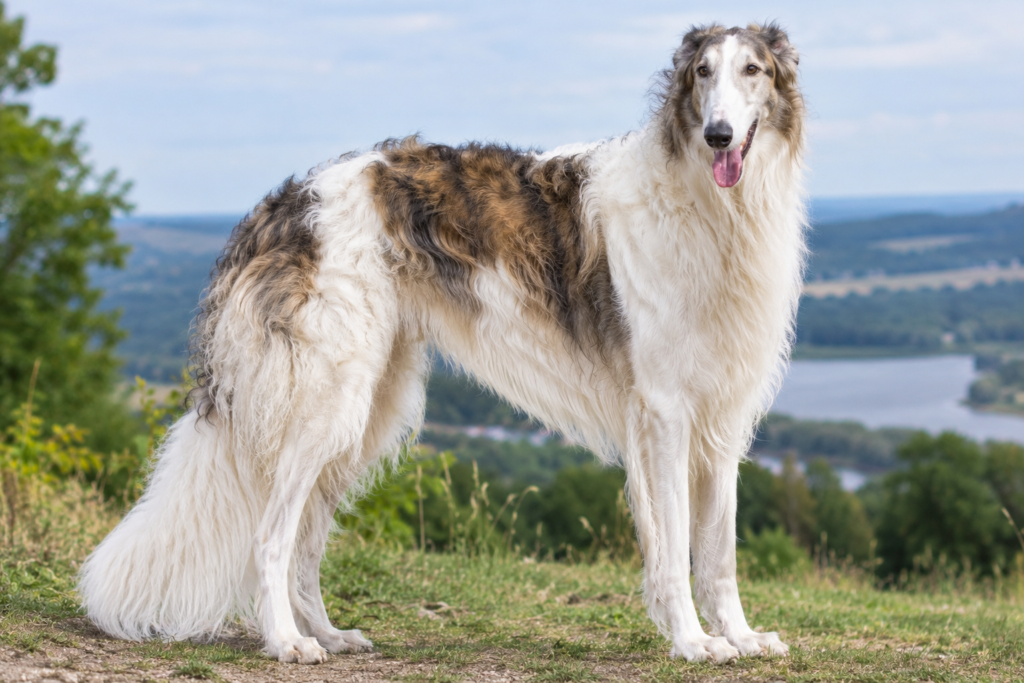
The Russian Wolfhound, now commonly known as the Borzoi, is an elegant Russian sighthound originally developed to pursue wolves and other fast-moving game. Despite its impressive size and hunting ability, the breed is often calm, gentle, affectionate, and somewhat independent at home. A Russian Wolfhound needs regular exercise, secure outdoor space, patient training, and consistent coat care. For more insigh here magyar vizsla puppies
What Is a Russian Wolfhound?
Russian Wolfhound is the historic English name for the dog now officially known in many countries as the Borzoi. The breed has a long association with Russian hunting traditions and aristocracy. The Royal Kennel Club describes the Borzoi as the “wolfhound of the Imperial Russian aristocracy,” while the breed was developed as a coursing hound capable of pursuing fast prey by sight.
The name Borzoi became the official name used by the American Kennel Club in 1936, replacing Russian Wolfhound. The word is associated with a Russian term meaning swift or fast.
Quick Facts
- Other name: Borzoi
- Origin: Russia
- Breed type: Sighthound
- Original purpose: Coursing wolves and other fast-moving game
- Size: Giant
- Coat: Long and silky
- Temperament: Sensitive, independent, calm, affectionate
- Exercise: Regular exercise with safe opportunities to run
- Grooming: Regular brushing
- Lifespan: Generally over 10 years according to the Royal Kennel Club
Russian Wolfhound Appearance
The Russian Wolfhound has one of the most recognizable silhouettes in the dog world. Its long, narrow head, deep chest, graceful curves, lean body, and flowing coat give it an aristocratic appearance.
The Royal Kennel Club describes the ideal Borzoi as balanced, graceful, dignified, and elegant. The breed standard also emphasizes courage, power, and great speed.
Typical features include:
- Long, narrow head
- Dark, intelligent eyes
- Small ears that usually lie back when relaxed
- Long, powerful neck
- Deep chest
- Lean, muscular body
- Long, curved tail
- Long silky coat
- Feathering on the hindquarters and tail
The American Kennel Club standard permits any color or combination of colors.
How Big Does a Russian Wolfhound Get?
The Borzoi is a giant breed, although its lean build can make it appear lighter than other dogs of similar height.
According to the AKC standard, mature males should be at least 28 inches at the withers, while mature females should be at least 26 inches. The AKC gives a typical male weight range of about 75–105 pounds, with females generally weighing around 15–20 pounds less.
Because Borzois are tall and fast-growing, puppies need careful management during development. Owners should focus on steady, healthy growth rather than trying to make a puppy reach its adult size quickly.
Russian Wolfhound Temperament
The Russian Wolfhound has a fascinating combination of athletic ability and quiet home behavior.
The Royal Kennel Club describes the breed as sensitive, alert, and aloof. The AKC also describes Borzois as calm, agreeable, independent, and affectionate with their families.
At home, many Borzois can be surprisingly relaxed.
They may:
- Rest quietly for long periods
- Enjoy affection from familiar people
- Follow family members around the home
- Show an independent streak
- Remain reserved around strangers
- Become extremely focused when something catches their attention
This is not typically a dog that needs constant entertainment inside the house.
Are Russian Wolfhounds Good Family Dogs?
A well-socialized Borzoi can be a loving family companion. The breed can form strong bonds with its owners and is generally gentle with people it knows.
However, its large size and sensitive temperament mean children should learn how to interact respectfully with the dog. Young children should always be supervised around a large dog. The AKC specifically notes that Borzois do not tolerate rough handling particularly well.
A good family environment provides:
- Calm interaction
- Consistent boundaries
- Respectful handling
- Daily activity
- A comfortable resting area
- Supervision around young children
An accidental movement from a giant dog can also knock over a small child, even when the dog has no intention of causing harm.
Russian Wolfhound Exercise Needs
The Borzoi may look like a relaxed house dog, but its athletic background should never be forgotten.
These dogs were bred to chase fast-moving prey across open terrain. They need regular exercise and opportunities to stretch their legs. The AKC recommends a securely fenced area where a Borzoi can run freely for around 30 minutes or more each day.
Good activities can include:
- Secure off-leash running
- Long walks
- Controlled play
- Lure coursing
- Obedience activities
- Safe exploration
The most important rule is secure containment.
A Borzoi should not be allowed to run loose in an unsecured area because its instinct to chase moving animals can be extremely strong.
Can a Russian Wolfhound Live in an Apartment?
It depends on the individual household, but the breed’s size and exercise needs make housing an important consideration.
The Royal Kennel Club lists a large home and large garden as typical characteristics for the breed.
An apartment can be challenging because:
- The dog is very large.
- Safe running opportunities are important.
- The breed has a strong chase instinct.
- Regular outdoor exercise is necessary.
A large home alone, however, does not replace exercise. A Borzoi still needs opportunities to walk, explore, and move safely outside.
Training a Russian Wolfhound
Training a Borzoi can be different from training a highly biddable working breed.
The breed is intelligent, but it is also independent. The AKC notes that Borzois can be stubborn and that patience, consistency, and positive reinforcement are particularly useful.
Start training with simple skills:
- Name recognition
- Sit
- Come
- Leash walking
- Waiting
- Leave it
- Settling calmly
- Handling for grooming
Keep sessions short and interesting.
A Borzoi may understand a command perfectly well but decide that it has something more interesting to do. That independent nature is part of the breed rather than something owners should try to eliminate completely.
What Works Best?
Positive reinforcement is usually the most useful approach.
Reward behaviors you want to see and avoid turning training into a constant battle of wills.
Patience is particularly important with recall. Even a well-trained Borzoi may instinctively chase something that suddenly moves.
Russian Wolfhound Grooming
The Borzoi’s long, silky coat is beautiful but requires regular maintenance.
The Royal Kennel Club lists grooming as more than once a week, while AKC guidance recommends brushing every day or two to help control loose hair and maintain the coat.
A grooming routine can include:
- Brushing every day or two
- Checking for tangles
- Regular nail care
- Ear cleaning when needed
- Checking the paws
- Occasional bathing
- Trimming excess hair between paw pads when appropriate
The silky texture of the coat tends to resist dirt, so frequent bathing is generally unnecessary.
Grooming a Puppy
Start grooming lessons when the dog is young.
Let the puppy become comfortable with:
- A brush touching the coat
- Having its paws handled
- Ear checks
- Nail care
- Gentle restraint
- Standing calmly for inspection
Short, positive sessions can prevent grooming from becoming stressful later.
Do Russian Wolfhounds Shed?
Yes. Borzois shed, and owners should expect loose hair around the home.
Regular brushing helps remove dead hair before it ends up on floors, furniture, and clothing. AKC information notes that intact females may shed after heat cycles, while males and spayed females generally experience an annual heavier shed.
Keeping a consistent brushing routine is much easier than waiting until the coat becomes heavily tangled.
Russian Wolfhound and Other Pets
This is an area where owners need to be particularly careful.
The Borzoi is a sighthound with a strong instinct to chase moving animals. Historically, the breed was developed specifically to pursue fast prey by sight.
A Borzoi may live successfully with another dog, especially with appropriate socialization, but small pets require additional caution.
Potential household companions can include:
- Other dogs
- Cats, depending on the individual dog
- Small animals, with significant caution
Never assume that a Borzoi will automatically ignore a small animal simply because they were raised together.
Supervision and secure management are essential.

Russian Wolfhound Puppies
Borzoi puppies are adorable, but they grow into very large, athletic dogs.
Puppyhood should focus on:
- Gentle socialization
- Basic training
- Appropriate exercise
- Good nutrition
- Handling practice
- Safe exploration
- Learning calm behavior
Because the breed grows substantially, owners should avoid excessive forced exercise while the puppy is developing.
A puppy should have plenty of rest between periods of play and exploration.
Feeding a Russian Wolfhound
A growing Borzoi needs a nutritionally complete diet appropriate for its developmental stage. Feeding amounts should be adjusted according to age, body condition, growth, activity, and the specific food being used.
Good habits include:
- Follow appropriate puppy-feeding guidance.
- Keep clean water available.
- Avoid sudden dietary changes.
- Monitor body condition.
- Use treats moderately during training.
- Discuss growth with your veterinarian.
Large-breed puppies should not be encouraged to grow excessively fast. Your veterinarian can help determine whether the puppy’s growth and body condition are appropriate.
Russian Wolfhound Health and Responsible Ownership
Responsible ownership begins with choosing a healthy puppy and maintaining appropriate veterinary care throughout the dog’s life.
The Royal Kennel Club maintains a breed-specific health standard for Borzois, and prospective owners should ask breeders about relevant health screening and veterinary records.
When speaking with a breeder, ask:
- What health screening has been performed on the parents?
- Can I see the relevant documentation?
- Has the puppy received veterinary examinations?
- What vaccinations has the puppy received?
- What parasite-control treatments have been given?
- How has the puppy been socialized?
- Can I meet the puppy with its mother?
- What food is the puppy currently eating?
Health documentation should be treated as an important part of choosing a puppy, not an optional extra.
Russian Wolfhound and Cold Weather
The breed’s history is closely connected with Russia and harsh outdoor hunting conditions. Its long coat provides insulation, but individual dogs still need appropriate protection from extreme weather.
A dog should always have access to:
- Clean water
- A comfortable resting area
- Shelter from extreme temperatures
- Protection from severe weather
Do not assume that a long coat makes a dog completely resistant to heat or cold.
Are Russian Wolfhounds Good for First-Time Owners?
They can be rewarding, but they are not necessarily the easiest choice for someone who has never owned a dog.
The main challenges include:
- Giant adult size
- Independent personality
- Strong chase instinct
- Secure exercise requirements
- Long coat
- Need for patient training
- Potential difficulty with recall around distractions
Someone prepared to learn about the breed and provide appropriate management can have a wonderful relationship with a Borzoi.
What Owners Commonly Get Wrong
One of the biggest misunderstandings about the Russian Wolfhound is assuming that its calm indoor behavior means it does not need exercise.
The opposite is closer to the truth.
A Borzoi can be peaceful and relaxed indoors while still needing opportunities to run safely. Its body was developed for speed, and its mind remains influenced by its sighthound heritage.
Another mistake is allowing a Borzoi off leash in an unsecured area. A sudden squirrel, rabbit, cat, or other moving animal can trigger the chase instinct.
Activities Russian Wolfhounds May Enjoy
Borzoi can participate in several activities that suit their natural abilities.
Lure Coursing
Lure coursing is particularly appropriate because it simulates the pursuit of moving prey. Borzois can demonstrate their speed, agility, and natural hunting style through the sport.
Other activities may include:
- Obedience
- Rally
- Agility
- Long walks
- Secure running
- Sighthound events
The best activities are those that provide exercise without ignoring the dog’s individual age, fitness, and temperament.
Frequently Asked Questions
Is a Russian Wolfhound the same as a Borzoi?
Yes. Russian Wolfhound is the historic English name for the breed now commonly called the Borzoi. The American Kennel Club adopted the name Borzoi in 1936.
Are Russian Wolfhounds aggressive?
The breed is not generally characterized as an aggressive family dog. Borzois are typically sensitive, alert, and somewhat aloof, with an affectionate side toward their families. Proper socialization and responsible handling are still important.
Do Russian Wolfhounds need a lot of exercise?
They need regular exercise and safe opportunities to run. Although many are calm indoors, their sighthound heritage means they benefit from activities that allow them to move freely in secure areas.
Can a Russian Wolfhound live with cats?
Some can, but there is no guarantee. Borzois have a strong sight-based chase instinct, so careful introductions, supervision, and management are essential around cats and other small animals.
Are Russian Wolfhounds easy to train?
They are intelligent but independent. Training usually works best when it is patient, consistent, positive, and engaging rather than harsh or repetitive.
Conclusion
The Russian Wolfhound, better known today as the Borzoi, is a graceful, athletic, and intelligent sighthound with a fascinating Russian history. Its calm and affectionate nature can make it a wonderful companion, but its strong chase instinct, giant size, exercise needs, and independent personality require responsible ownership. With patient training, regular grooming, secure exercise, and plenty of respectful companionship, the Russian Wolfhound can be an elegant and deeply rewarding family dog.
[…] The Russian Wolfhound dog breed, now widely known as the Borzoi, is a graceful Russian sighthound famous for its long, silky coat, elegant body, and remarkable speed. Originally developed to hunt wolves and other fast-moving game, the Borzoi combines athletic ability with a generally calm and dignified personality at home. For more insigh here russian wolfhound […]
[…] Although its appearance may seem delicate, this large sighthound is strong, athletic, and independent. Before bringing one home, it is worth learning about its history, personality, daily care, and suitability for family life. For more insight here russian wolfhound […]