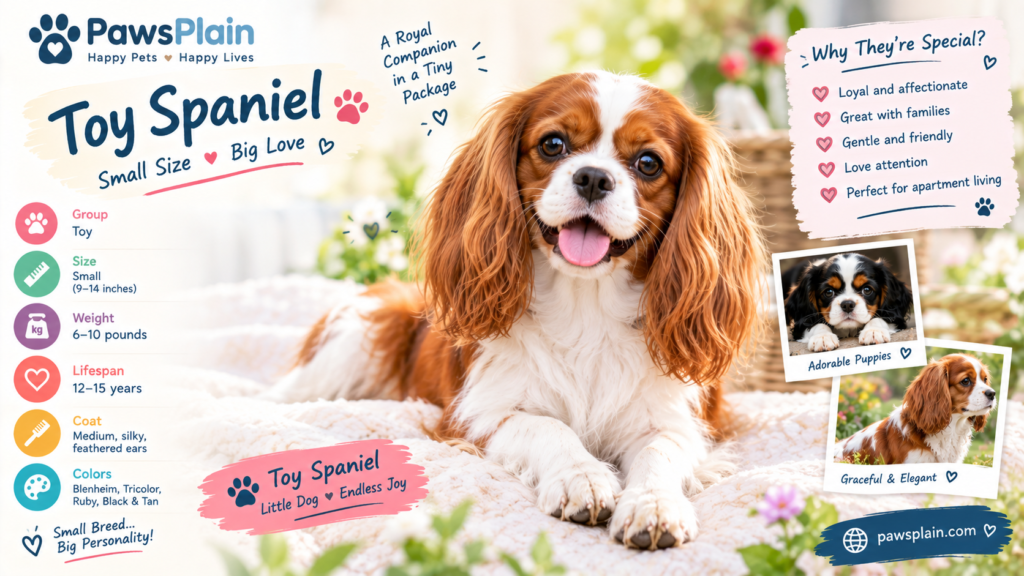
The Toy Spaniel is a name commonly associated with several small spaniel breeds, but when discussing the breed recognized by the American Kennel Club as the English Toy Spaniel, it refers to a compact, affectionate companion dog with a fascinating royal history. In Britain, the breed is commonly known as the King Charles Spaniel. It should not be confused with the Cavalier King Charles Spaniel, which is a separate breed.
Known for its large expressive eyes, rounded head, silky coat, and gentle personality, the English Toy Spaniel was developed primarily as a companion rather than a working hunting dog. Today, it is especially appealing to people looking for a small, loving dog that enjoys spending time with its family. Quick Facts For more insight here kooikerhondje
| Feature | Details |
|---|---|
| Breed Name | English Toy Spaniel |
| Also Known As | King Charles Spaniel |
| Origin | England, with older spaniel influences from Europe and Asia |
| Breed Group | Toy Group |
| Adult Weight | About 8–14 pounds |
| Coat | Long, silky and flowing |
| Temperament | Affectionate, gentle, intelligent and companionable |
| Energy Level | Low to moderate |
| Best For | Families, couples and individuals |
| Lifespan | Varies by individual |
| AKC Recognition | 1886 |
The AKC’s current official standard describes the English Toy Spaniel as a compact, essentially square toy dog with a short-nosed, domed head, silky coat and affectionate demeanor. The desirable adult weight is approximately 8–14 pounds.
History of the
The English Toy Spaniel has a long connection with British royalty. Small spaniels were popular companion dogs among European aristocrats, and the breed became particularly associated with King Charles II of England during the 17th century.
King Charles II was known for keeping several small spaniels around him. These dogs were welcomed into royal environments and eventually became strongly associated with the monarchy.
Over the centuries, toy spaniels changed in appearance. Smaller heads, shorter muzzles and more rounded skulls became characteristic of the English Toy Spaniel. Influences from small Asian companion breeds, including the Japanese Chin and Pug, are believed to have contributed to these changes.
The breed was officially recognized by the American Kennel Club in 1886, making it one of the earliest toy breeds recognized by the organization.
What Does a Toy Spaniel Look Like?
The English Toy Spaniel has a distinctive appearance that makes it easy to recognize.
Its body is compact and sturdy despite its small size. The head is large relative to the body, with a rounded or domed skull and a short muzzle. Large, dark, expressive eyes contribute greatly to the breed’s characteristic appearance.
The ears are set high and are covered with long feathering. The coat is silky and flowing, particularly around the ears, chest, legs and tail.
Toy Spaniel Colors
The English Toy Spaniel is recognized in four main color varieties:
- King Charles: Black and tan
- Prince Charles: Tricolor
- Blenheim: Red and white
- Ruby: Solid red
These traditional names are strongly connected to the breed’s history and British royal associations.
Temperament
The English Toy Spaniel is primarily a companion dog and generally enjoys being close to its people. The AKC describes the breed as merry, affectionate, bright and willing to please.
Many Toy Spaniels enjoy:
- Sitting beside their owners
- Relaxing indoors
- Receiving attention
- Short play sessions
- Gentle walks
- Spending time with family members
Although small and often calm inside the home, this breed is still a spaniel and should not be treated like a decorative dog. Individual dogs can have playful and energetic personalities.
Are Good Family Dogs?
They can be excellent family companions when their needs are understood.
Their small size makes them suitable for many homes, including apartments. However, young children should always be taught how to handle a small dog carefully. Because the Toy Spaniel is relatively small, rough play or accidental falls can cause injuries.
Families looking for a dog that enjoys companionship and indoor living may find this breed particularly appealing.
Exercise Needs
The English Toy Spaniel generally does not require the intense exercise associated with larger sporting breeds. However, daily movement is still important.
A suitable routine may include:
- Short daily walks
- Indoor play
- Gentle games
- Basic obedience exercises
- Mental stimulation
Toy dogs are often adaptable to apartment living, but they still benefit from regular activity and interaction. The AKC notes that toy breeds can adapt to a wide range of lifestyles while still having plenty of personality and energy.
Training a
Toy Spaniels are intelligent and can learn basic commands, but training should be gentle and consistent.
Useful commands include:
- Sit
- Stay
- Come
- Down
- Leave it
- Wait
Positive reinforcement is generally a good approach. Reward desired behavior with treats, praise or play rather than relying on harsh corrections.
Early socialization can also help a puppy become comfortable around different people, sounds, environments and other appropriately introduced dogs.
Grooming Requirements
The Toy Spaniel’s beautiful coat requires regular maintenance.
Brushing several times a week can help prevent tangles and remove loose hair. Particular attention should be given to the feathered ears, legs and other areas where long hair can become knotted.
A grooming routine can include:
- Regular brushing
- Ear checks
- Nail trimming
- Dental care
- Occasional bathing
- Checking the feathering for mats
Regular dental care is especially useful for small companion breeds because maintaining oral hygiene is an important part of overall dog care.
Does the Shed?
Yes. The English Toy Spaniel has a silky coat and can shed.
Regular brushing helps manage loose hair and keeps the coat looking neat. Owners should not expect this breed to be completely non-shedding.
Health
Like all dog breeds, English Toy Spaniels can experience health problems. Responsible breeding, veterinary care, appropriate nutrition and maintaining a healthy weight can all contribute to a dog’s overall well-being.
Because the breed has a short muzzle and characteristic rounded head, owners should pay attention to breathing, overheating and general comfort, particularly in hot weather.
Routine veterinary examinations can help identify problems early.
Potential health concerns should always be discussed with a veterinarian and a responsible breeder who performs appropriate health screening.

Toy Spaniel Feeding a Toy Spaniel
Because the English Toy Spaniel is a small breed, portion control is important. Even a relatively small amount of excess food can contribute to unhealthy weight gain in a tiny dog.
A good feeding routine should consider:
- The dog’s age
- Weight
- Activity level
- Health condition
- Type of food
- Veterinary recommendations
Puppies generally require food formulated for growth, while adult dogs need a balanced diet appropriate for their size and activity level.
Fresh water should always be available.
Puppies
puppies are extremely small and require careful handling.
A new puppy should receive:
- A safe sleeping area
- Age-appropriate nutrition
- Veterinary care
- Early socialization
- Gentle training
- Regular grooming
- Safe opportunities for exercise
Puppy-proofing the home is particularly important because small dogs can easily get into spaces that larger dogs cannot reach.
Toy Spaniel vs. Cavalier King Charles Spaniel
One of the biggest sources of confusion is the difference between the English Toy Spaniel and the Cavalier King Charles Spaniel.
They are separate breeds, although they share historical connections.
The English Toy Spaniel generally has a more compact body, a domed head and a shorter muzzle. The Cavalier was developed as a revival of the longer-faced type of the historical toy spaniels.
The AKC also specifically distinguishes the English Toy Spaniel from the Cavalier King Charles Spaniel.
Is a Good for Apartment Living?
Yes, the English Toy Spaniel can adapt well to apartment life because of its small size and companion-oriented personality.
However, apartment suitability does not mean the dog needs no activity. Daily walks, play and interaction remain important for physical and mental well-being.
Is the Good for First-Time Owners?
The breed can be a good choice for someone who wants a small companion dog and is prepared to provide regular grooming, training and attention.
New owners should understand that small dogs still need boundaries and training. Consistent house training, socialization and basic obedience can make everyday life much easier.
Pros and Cons of Owning a Toy Spaniel
Pros
- Small and manageable size
- Affectionate companion
- Beautiful silky coat
- Adaptable to indoor living
- Strong historical character
- Generally enjoys human companionship
Cons
- Requires regular coat care
- Can be sensitive
- Small size means careful handling is necessary
- Can become overly dependent on owners without proper independence training
- Potential breed-related health concerns require responsible care
Frequently Asked Questions
Is a Toy Spaniel the same as a Cavalier King Charles Spaniel?
No. The English Toy Spaniel and Cavalier King Charles Spaniel are different breeds, although they share historical origins.
How big does a Toy Spaniel get?
The AKC standard lists a desirable adult weight of approximately 8–14 pounds.
What colors do Toy Spaniels come in?
The recognized varieties are King Charles, Prince Charles, Blenheim and Ruby.
Are Toy Spaniels good indoor dogs?
Yes. Their small size and companion-oriented nature make them well suited to indoor living, provided they receive appropriate exercise and mental stimulation.
Do need a lot of grooming?
Their long, silky coat needs regular brushing to remain clean and free from tangles.
Are Toy Spaniels good with children?
They can be good family companions, but young children should always be supervised and taught to handle such a small dog gently.
Final Thoughts
The English Toy Spaniel, often called the King Charles Spaniel in Britain, is a small dog with an extraordinary history and a distinctly royal appearance. Its compact body, silky coat, expressive eyes and affectionate personality have made it a treasured companion for centuries.
For owners who want a small, loving dog that enjoys indoor companionship, the Toy Spaniel can be an excellent choice. However, responsible ownership still means providing proper grooming, nutrition, training, socialization and veterinary care. With the right environment and attention, this elegant little spaniel can become a devoted and entertaining member of the family.
Conclusion
The Toy Spaniel is a charming, affectionate, and elegant companion dog that combines a rich royal history with a loving personality. Its small size, beautiful silky coat, and gentle nature make it suitable for many indoor homes. With regular grooming, proper nutrition, gentle training, daily activity, and responsible veterinary care, a Toy Spaniel can be a loyal and wonderful family companion for years to come.
Leave a Reply