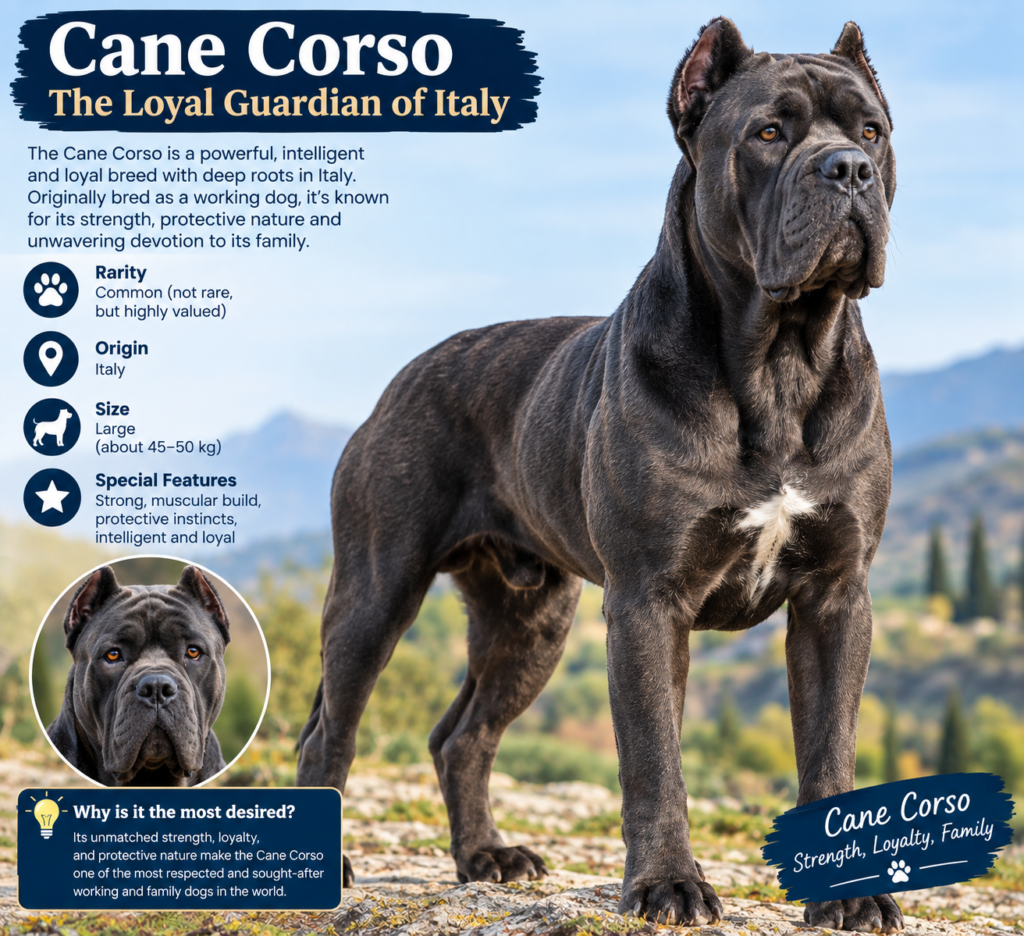
Have you ever looked at a dog and wondered, “What breed is this?” Dog breed identification can be surprisingly difficult. Some dogs have obvious features associated with a specific breed, while others may be mixed breeds with characteristics from several different dogs.
A dog’s size, body shape, head, ears, coat, color, tail, and movement can all provide useful clues. However, appearance alone cannot always establish a dog’s exact breed, particularly when the dog has an unknown or mixed heritage. Research from the University of Florida notes that visual breed assessments for dogs without known pedigrees may not always be accurate.
The American Kennel Club also maintains an official breed identification guide and breed database that can help owners compare dogs with recognized breed characteristics. For more insight here canine breed identification
What Does “What Breed Is This?” Mean?
When someone asks “What breed is this dog?”, they are usually trying to identify the dog’s breed based on its physical appearance or known history.
For a purebred dog with reliable registration or pedigree records, breed identification can be straightforward. For a rescue dog or mixed-breed dog, however, the answer may be much less certain.
A dog can look strongly like a particular breed without actually being purebred. Likewise, mixed-breed dogs can inherit physical traits that make them resemble several different breeds.
How to Identify a Dog Breed
There are several important characteristics to examine when trying to identify a dog.
1. Look at the Dog’s Size
Start by estimating the dog’s size.
Consider: What Breed Is This
- Height at the shoulder
- Body length
- Weight
- Bone structure
- Leg length
- Overall proportions
For example, a very small dog could belong to a toy breed such as a Chihuahua, while a large, heavy dog could belong to a mastiff-type breed.
Size alone, however, is not enough to identify a breed because many breeds overlap in size.
2. Examine the Head Shape
The head can provide important breed clues.
Look at: What Breed Is This
- Muzzle length
- Skull width
- Stop between the forehead and muzzle
- Jaw shape
- Cheek structure
- Nose size
- Facial wrinkles
A long, narrow muzzle can suggest a sighthound or some other long-headed breed, while a broad head and short muzzle may be associated with certain bulldog or brachycephalic breeds.
These are clues rather than proof.
3. Check the Ears
A dog’s ears can be especially useful when comparing possible breeds.
Common ear types include: What Breed Is This
- Upright ears
- Drop ears
- Semi-erect ears
- Rose ears
- Button ears
- Long hanging ears
For example, breeds such as German Shepherd Dogs typically have upright ears, while breeds such as Basset Hounds are known for long, hanging ears.
4. Study the Coat
The coat is one of the easiest features to observe.
Ask:
Is the coat short, medium, long, curly, wiry, silky, double-coated, or hairless?
The AKC categorizes recognized breeds by different coat types, including curly, wavy, rough, corded, hairless, short, long, smooth, silky, and wiry coats.
Coat texture can narrow down the possibilities considerably.
Short-Coated Dogs
Short coats are found in breeds such as:
- Labrador Retriever
- Beagle
- Boxer
- Doberman Pinscher
- Great Dane
Long-Coated Dogs
Long or flowing coats can be seen in breeds such as:
- Yorkshire Terrier
- Shih Tzu
- Afghan Hound
- Collie
- Maltese
Curly or Wavy Coats
Curly or wavy coats occur in breeds such as:
- Poodle
- Portuguese Water Dog
- Irish Water Spaniel
- Curly-Coated Retriever
Hairless Dogs
Hairless breeds include:
- Xoloitzcuintli
- American Hairless Terrier
- Chinese Crested
- Peruvian Inca Orchid
Coat type is useful, but mixed-breed dogs can have unusual coat combinations.
5. Look at the Coat Color and Pattern
Color can provide another clue.
Dogs may have: What Breed Is This
- Solid coats
- Black-and-tan markings
- Brindle patterns
- Merle patterns
- Sable coats
- Spotted coats
- White markings
- Tricolor patterns
However, color should never be used alone to identify a breed.
The same color pattern can occur in multiple breeds. The AKC maintains breed-specific information about recognized colors and markings, showing why coat color needs to be considered alongside other physical characteristics.
6. Examine the Tail
The shape and carriage of a dog’s tail can also help.
Look for: What Breed Is This
- Long or short tail
- Straight or curved tail
- Feathered or smooth tail
- High or low carriage
- Naturally bobbed tail
Some breeds have distinctive tail characteristics, but tail appearance can vary within breeds and may also be affected by injury or docking.
7. Look at the Body Shape
Body proportions are another important clue.
Ask whether the dog has: What Breed Is This
- A long body
- A compact body
- Long legs
- Short legs
- Deep chest
- Broad chest
- Narrow waist
- Heavy bone
- Light athletic structure
A Dachshund, for example, has a very different body shape from a Greyhound. A Border Collie also has a different overall structure from a Mastiff.
Breed standards describe the ideal physical traits, movement, and temperament expected for each recognized breed.
8. Consider the Dog’s Behavior
Behavior can provide additional clues, but it should not be treated as definitive proof of breed.
Think about whether the dog tends to be: What Breed Is This
- Highly energetic
- Protective
- Independent
- Social
- Playful
- Strongly prey-driven
- Interested in retrieving
- Interested in herding
- Very alert
- Calm and relaxed
Many breeds were historically developed for specific jobs, including hunting, herding, guarding, retrieving, and companionship. Those original purposes can influence typical breed tendencies.
However, individual dogs can behave differently from breed stereotypes.
Can You Identify a Dog Breed From a Photo?
Sometimes a photograph can provide useful clues, but a photo cannot always establish a dog’s exact breed.
A good identification photo should ideally show: What Breed Is This
- The entire body
- Side profile
- Face
- Ears
- Tail
- Legs
- Coat texture
- Approximate size
Multiple photographs from different angles are usually more useful than a single close-up.
Even experienced people can disagree when identifying mixed-breed dogs from photographs.
What Breed Is This if the Dog Is a Mixed Breed?
This is where breed identification becomes more complicated.
A mixed-breed dog may inherit traits from several breeds. For example, a dog could have:
- The coat of one breed
- The ears of another
- The body shape of another
- The temperament of several breeds
The American Kennel Club’s mixed-breed program does not require owners to list the specific breed makeup of a mixed-breed dog.
Therefore, saying that a mixed dog “looks like a Labrador” does not necessarily mean the dog is a Labrador Retriever.
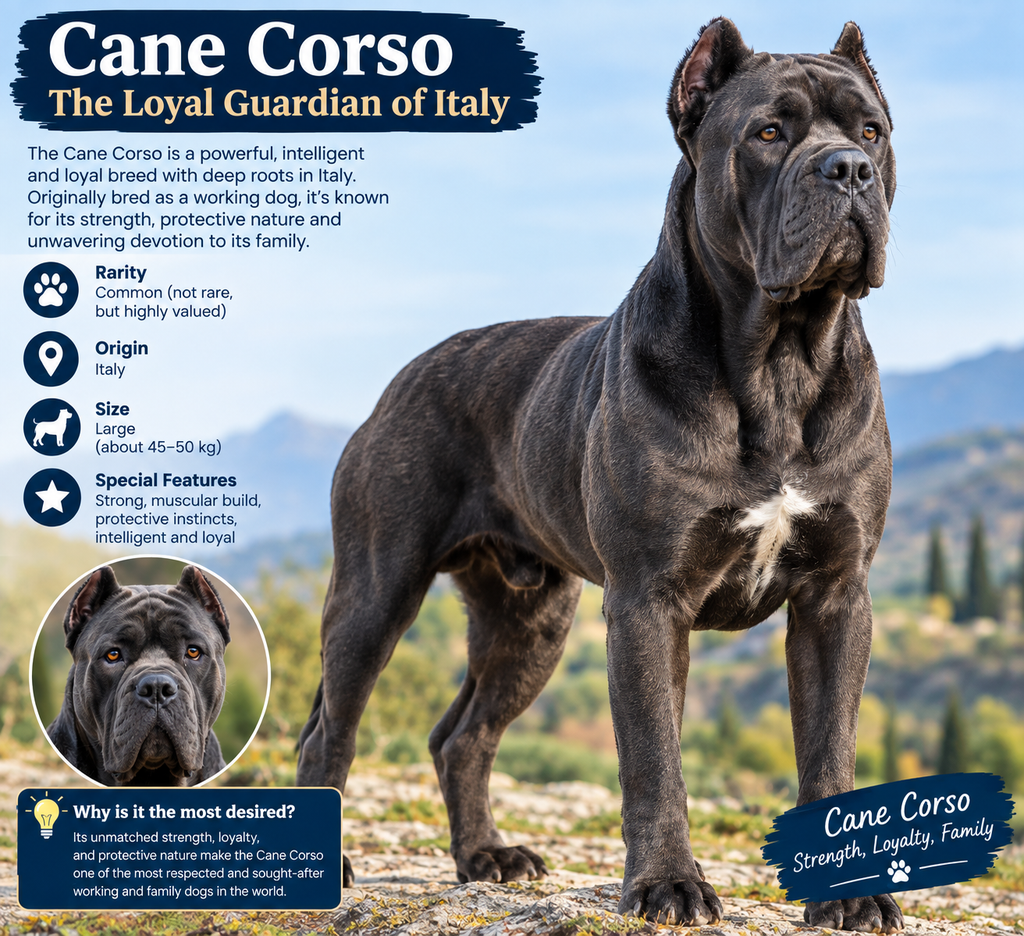
What About Dog DNA Tests?
DNA testing can be useful for learning about a dog’s genetic ancestry, but consumers should understand exactly what a particular test provides.
Not every canine DNA test is designed to determine breed.
For example, the AKC’s own DNA Profiling program is designed for genetic identity and parentage verification, rather than determining a dog’s breed.
If breed ancestry is your goal, choose a test specifically designed for canine breed identification and understand its methodology and limitations.
Pedigree vs. Visual Identification
There is an important difference between identifying a dog by appearance and documenting its breed ancestry.
Visual Identification
This involves comparing: What Breed Is This
- Appearance
- Coat
- Size
- Head
- Ears
- Tail
- Body structure
- Behavior
It can provide an educated guess.
Pedigree
A pedigree documents a dog’s recorded ancestry.
For a registered purebred dog, pedigree information provides substantially stronger evidence of breed identity than visual appearance alone.
Common Mistakes When Identifying Dog Breeds
Mistake 1: Relying Only on Color
Many breeds share the same colors and patterns.
Mistake 2: Assuming Size Proves Breed
Several unrelated breeds can have similar heights and weights.
Mistake 3: Treating Behavior as Proof
A dog’s personality is influenced by genetics, training, socialization, environment, and individual temperament.
Mistake 4: Assuming Every Rescue Dog Is Purebred
Many shelter and rescue dogs are mixed breeds.
Mistake 5: Trusting One Photo
A single photograph can hide important physical characteristics.
A Simple Dog Breed Identification Checklist
If you’re asking “What breed is this?”, use this checklist:
- Estimate the dog’s size.
- Examine the head shape.
- Look at the muzzle length.
- Check the ears.
- Study the coat texture.
- Identify the coat color and markings.
- Examine the tail.
- Look at body proportions.
- Consider typical behavior without relying on stereotypes.
- Compare the dog with recognized breed standards.
- Check pedigree or registration information if available.
- Consider an appropriate DNA test for mixed-breed ancestry.
The AKC’s breed identification resources are designed specifically to help people compare recognized breeds and their characteristics.
Why Accurate Breed Identification Matters
Knowing a dog’s likely breed or breed mix can help owners research:
- Exercise needs
- Grooming requirements
- Training approaches
- Typical adult size
- Potential breed-associated health concerns
- Behavioral tendencies
- Suitable activities
However, breed identification should not be used as the only way to predict an individual dog’s behavior.
Every dog is an individual.
Frequently Asked Questions
What breed is this dog?
The answer depends on the dog’s physical characteristics and, when available, its pedigree or genetic information. A photograph can provide clues, but it may not establish an exact breed.
How can I tell what breed my dog is?
Look at its size, head, ears, coat, color, body proportions, tail, and movement. Compare those characteristics with reliable breed standards.
Can you tell a dog’s breed from a picture?
A picture can help narrow down possible breeds, but visual identification is not always reliable, particularly for mixed-breed dogs.
How accurate is visual dog breed identification?
Accuracy varies. Dogs with unknown or mixed ancestry can be difficult to identify visually, and research has found that visual breed assessments are not always accurate.
Can a DNA test tell me my dog’s breed?
Some canine DNA tests are specifically designed to estimate breed ancestry. However, not every DNA test provides breed information, so check what the particular test is designed to measure.
What is the easiest way to identify a purebred dog?
Reliable registration and pedigree records provide stronger evidence than appearance alone. Breed standards can then be used to compare the dog’s physical characteristics.
Can two different breeds look almost identical?
Yes. Some breeds share similar body shapes, coat colors, and facial features. This is one reason breed identification can be challenging.
Conclusion
When you’re asking “What breed is this?”, there is rarely one feature that provides the complete answer. A reliable identification process considers the dog’s size, head, ears, coat, color, tail, body structure, and overall appearance.
For purebred dogs with documented ancestry, registration and pedigree records provide much stronger evidence than visual guessing. For mixed-breed dogs, identification may remain an estimate unless appropriate genetic information is available.
The most important thing is to avoid treating a visual guess as a certainty. Use several physical characteristics, compare them with reliable breed standards, and consider documented ancestry when available. With the right approach, you can narrow down the possibilities and learn much more about the dog in front of you.
[…] The American Kennel Club has highlighted several breeds with particularly unusual physical characteristics, including the Norwegian Lundehund, Chinese Shar-Pei, Xoloitzcuintli, Bergamasco Sheepdog, Neapolitan Mastiff, Komondor, and Chinese Crested. For more insight here what breed is this […]