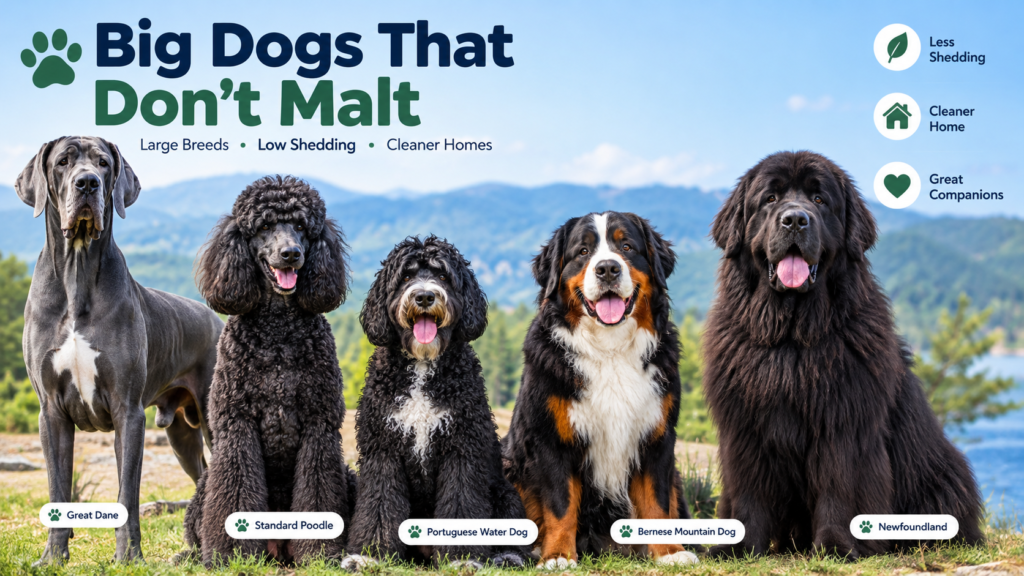
Big dogs that don’t malt are an excellent choice for people who love large, friendly companions but want less loose fur around their homes. Although no dog is completely free from shedding, several large breeds naturally lose very little hair compared with heavy-shedding dogs. Popular options include the Standard Poodle, Portuguese Water Dog, Giant Schnauzer, and Bouvier des Flandres.
These dogs come in different sizes, personalities, and activity levels, so choosing the right breed means considering more than just its coat. Grooming needs, exercise requirements, temperament, and compatibility with your family are also important.
In this guide, you’ll discover 10 large, low-shedding dog breeds, what makes each one special, and how to choose the best companion for your lifestyle. For more insight here dogs fluffy
What Does “Malt” Mean When Talking About Dogs?
The word malt is commonly used in British English to describe the process of shedding or losing hair. When people search for big dogs that don’t malt, they usually want large dogs that leave less fur on furniture, clothing, carpets, and floors.
Some breeds have curly or wiry coats that hold loose hair instead of releasing it around the house. However, these coats often require regular brushing, trimming, or professional grooming.
It is also worth understanding that low-shedding dogs are not necessarily hypoallergenic. Dog allergies can be triggered by proteins found in dander, saliva, and urine, so even a dog that sheds very little may cause an allergic reaction.
10 Big Dogs That Don’t Malt Much
The following breeds are known for their relatively low-shedding coats. Individual dogs may shed differently, and every breed needs appropriate coat care.
1. Standard Poodle
The Standard Poodle is one of the best choices for anyone looking for a large dog that does not shed much. Known for its curly coat, intelligence, and elegant appearance, this breed combines a beautiful look with an energetic and affectionate personality.
Standard Poodles generally stand over 15 inches tall at the shoulder, with many measuring around 21–27 inches. Their size makes them suitable for people who want a substantial dog without the constant loose fur associated with many heavy-shedding breeds.
Why choose a Standard Poodle?
- Low shedding: Its curly coat retains much of the loose hair.
- High intelligence: It often learns commands and training routines quickly.
- Active personality: It enjoys walks, games, swimming, and mental challenges.
- Versatile companion: It can suit many households when its exercise and social needs are met.
The main consideration is grooming. Regular brushing helps prevent painful mats, and professional trimming is usually needed every several weeks.
Standard Poodles are a particularly strong option for owners who want a clever, trainable dog and are prepared to maintain its coat.
2. Portuguese Water Dog
The Portuguese Water Dog is an athletic, medium-to-large breed traditionally associated with helping fishermen. It has a curly or wavy coat that typically sheds relatively little, making it appealing to people who want an active dog without excessive loose hair.
This breed is muscular, intelligent, and enthusiastic. It often enjoys swimming, retrieving toys, hiking, and other outdoor activities.
Key characteristics: Big Dogs That Don’t Malt
- Low-shedding curly or wavy coat.
- Strong swimming ability and love of water.
- Intelligent nature and good potential for training.
- High exercise needs and an energetic temperament.
Portuguese Water Dogs need regular brushing and coat trimming to prevent tangles. Their active nature also means they benefit from daily physical exercise and activities that challenge their minds.
They can make wonderful companions for active individuals and families, particularly those who enjoy spending time outdoors.
3. Giant Schnauzer
The Giant Schnauzer is a powerful, confident working dog with a distinctive beard, eyebrows, and wiry coat. It is one of the larger low-shedding breeds and may suit experienced owners who want an intelligent, loyal, and protective companion.
According to the American Kennel Club, males typically stand 25.5–27.5 inches tall and weigh 75–95 pounds. Females are generally smaller.
Why it stands out: Big Dogs That Don’t Malt
- A wiry coat that usually sheds relatively little.
- Strong intelligence and trainability.
- A loyal and watchful personality.
- A muscular build suited to demanding activities.
However, this breed requires more than occasional walks. Consistent training, early socialization, regular exercise, and mental stimulation are essential. Its coat also needs brushing and professional maintenance to stay in good condition.
The Giant Schnauzer is not necessarily the easiest choice for a first-time dog owner, but it can be an excellent companion in a structured, active household.
4. Bouvier des Flandres
The Bouvier des Flandres is a large, sturdy herding breed with a thick, rough coat and a distinctive beard. Originally developed as a working farm dog, it is known for its strength, intelligence, and devoted temperament.
Its dense coat tends to release less loose hair around the home than the coats of many heavy-shedding breeds. Nevertheless, the coat requires regular maintenance to prevent tangles and mats.
Main benefits include: Big Dogs That Don’t Malt
- A substantial, powerful build.
- A relatively low-shedding coat.
- A loyal and attentive personality.
- Strong working instincts and trainability.
Bouviers need regular exercise, socialization, and training. Their thick coats also require frequent brushing and occasional professional grooming.
This breed may be a good match for owners who appreciate large working dogs and can commit to both physical activity and coat care.
5. Irish Water Spaniel
The Irish Water Spaniel is a distinctive sporting dog with a curly liver-colored coat, a tapered tail, and a love of water. It is one of the larger water-dog breeds that generally sheds less than many dogs with straight, loose undercoats.
This breed is intelligent, playful, and athletic. It typically enjoys retrieving games, swimming, long walks, and other activities that keep it busy.
Reasons to consider this breed: Big Dogs That Don’t Malt
- A curly coat with relatively low shedding.
- Strong swimming and retrieving instincts.
- An energetic, intelligent personality.
- Potential as an active family companion with proper training.
Its coat needs regular brushing and trimming to avoid matting. Owners should also provide enough exercise and enrichment to prevent boredom.
The Irish Water Spaniel is best suited to households that enjoy an active lifestyle and can provide consistent attention.
6. Airedale Terrier
The Airedale Terrier is the largest of the terrier breeds and is recognized by its wiry coat, long face, and confident personality. It is a good option for people who want a medium-to-large dog that sheds relatively little.
Airedales are intelligent, energetic, curious, and often playful. They may enjoy hiking, running, training exercises, and interactive games.
What makes the Airedale Terrier special?
- A wiry coat that generally sheds less than many smooth or double-coated breeds.
- An athletic body and energetic personality.
- Intelligence that supports a range of training activities.
- A bold, curious nature.
Regular brushing and appropriate coat maintenance help keep its fur healthy. Some owners use professional hand-stripping or clipping to maintain the coat’s texture and appearance.
Airedales need daily exercise and consistent training. Their independent terrier instincts mean they may require extra patience when learning to respond reliably around distractions.
7. Afghan Hound
The Afghan Hound is a tall, graceful dog known for its long, flowing coat. Despite its impressive hair length, it is generally considered a relatively low-shedding breed.
Its appearance is very different from that of curly-coated dogs, demonstrating that low shedding can occur with several coat types.
Key features include: Big Dogs That Don’t Malt
- A tall, elegant body.
- Long, silky hair.
- Relatively low visible shedding when properly maintained.
- An independent personality and strong running ability.
The Afghan Hound requires considerable grooming. Its long hair can become tangled easily, so frequent brushing and careful coat care are essential.
It also has a strong instinct to chase moving animals and may be less responsive than some other breeds when distracted. Secure exercise areas and patient training are particularly important.
Choose this breed if you appreciate its distinctive appearance and can commit to regular grooming and suitable exercise.
8. Komondor
The Komondor is a large Hungarian livestock guardian known for its striking corded coat. Its long, rope-like appearance makes it one of the most recognizable large dog breeds in the world.
Rather than having a typical loose coat that is brushed into shape, the Komondor develops cords that require specialized maintenance as they mature.
Why consider a Komondor?
- A distinctive corded coat that generally leaves relatively little loose hair around the home.
- A substantial build and strong guardian instincts.
- A protective, independent temperament.
- A coat unlike that of almost any other breed.
The Komondor is not a low-maintenance dog simply because it sheds less. Its coat needs careful separation and drying to prevent moisture, dirt, and odors from becoming trapped.
This breed also needs responsible handling, early socialization, and secure surroundings. Its guardian instincts can make it challenging for inexperienced owners or households that frequently welcome unfamiliar visitors.
9. Soft Coated Wheaten Terrier
The Soft Coated Wheaten Terrier is usually smaller than the giant breeds on this list, but its medium-to-large size and soft, flowing coat make it worth considering.
Its single coat typically sheds relatively little. The hair can grow long and become tangled, so regular brushing and trimming are important.
Notable qualities:Big Dogs That Don’t Malt
- A soft, wavy coat with relatively low shedding.
- An affectionate and playful personality.
- An energetic nature that suits active households.
- A friendly appearance and engaging character.
Wheatens need regular exercise, consistent training, and early socialization. Their coats can mat easily if brushing is neglected, particularly around the legs, chest, and ears.
For owners who want a cheerful companion and do not require a giant-sized dog, this breed may be a practical option.
10. Black Russian Terrier
The Black Russian Terrier is a large, powerful working breed with a dense, coarse coat. It was developed for working and guarding duties and is known for its strength, intelligence, and protective nature.
Its coat generally sheds less noticeably than those of many heavy-shedding breeds, but it requires consistent grooming to prevent mats and maintain a tidy appearance.
Important characteristics: Big Dogs That Don’t Malt
- A large, muscular body.
- A thick coat that typically sheds relatively little.
- A confident and protective temperament.
- A need for structured training and regular exercise.
Black Russian Terriers are not ideal for every household. Their size, strength, and guarding instincts make early socialization and responsible training particularly important.
Owners should be prepared for regular brushing, professional coat maintenance, and plenty of mental and physical activity.
Quick Comparison of Big Dogs That Don’t Malt
| Dog breed | Shedding | Grooming needs | Activity level |
|---|---|---|---|
| Standard Poodle | Very low | High | High |
| Portuguese Water Dog | Low | High | High |
| Giant Schnauzer | Low | High | High |
| Bouvier des Flandres | Low | High | Moderate to high |
| Irish Water Spaniel | Low | High | High |
| Airedale Terrier | Low | Moderate to high | High |
| Afghan Hound | Low to moderate | Very high | Moderate to high |
| Komondor | Low visible shedding | Specialized | Moderate |
| Soft Coated Wheaten Terrier | Low | High | Moderate to high |
| Black Russian Terrier | Low to moderate | High | Moderate to high |
These are general breed tendencies, not guarantees. Individual dogs may shed more or less, and coat condition, genetics, and grooming affect how much hair is left around the house.
How to Choose the Best Large Low-Shedding Dog
Choosing among big dogs that don’t malt requires looking at your daily routine, home environment, and experience with dogs.
1. Consider Your Activity Level
Some low-shedding dogs are energetic working breeds that need plenty of exercise, while others may be satisfied with a more moderate routine.
- For active owners: Consider the Portuguese Water Dog, Irish Water Spaniel, or Airedale Terrier.
- For owners who enjoy training: The Standard Poodle can be an excellent option.
- For experienced owners: The Giant Schnauzer and Black Russian Terrier may suit households prepared for structured training.
Remember that every dog needs daily movement, social interaction, and mental stimulation.
2. Think About Grooming Requirements
Low shedding does not mean low maintenance. Curly, wiry, and corded coats can require more care than short coats.
Before choosing a breed, ask yourself: Big Dogs That Don’t Malt
- Can you brush your dog regularly?
- Can you arrange professional grooming when needed?
- Are you prepared to prevent tangles and mats?
- Can you manage the cost and time involved in coat maintenance?
If you want less hair around the house but are unwilling to spend time grooming, a low-shedding breed may not meet all your expectations.
3. Consider Your Family and Home
Large dogs need enough room to move comfortably, although temperament and exercise routines are also important.
Families with children should choose a dog with a suitable temperament, teach children to interact respectfully, and supervise their time together.
Some breeds, particularly livestock guardians and protective working dogs, require more careful socialization and experienced handling. An individual dog’s personality matters just as much as its breed.
4. Understand Dog Allergies
People often search for low-shedding breeds because someone in their household has allergies. However, no dog is guaranteed to be allergy-free.
Before bringing a dog home, spend time around the specific breed if possible and consult a healthcare professional if allergies are a concern.
The Standard Poodle and Portuguese Water Dog are often considered by people seeking larger dogs that shed relatively little, but individual reactions can vary.
Do Big Dogs That Don’t Malt Need Less Grooming?
Not necessarily. In fact, many low-shedding breeds need more coat maintenance than dogs that shed heavily.
Breeds with curly coats can develop mats when loose hair becomes trapped. Wiry-coated dogs may need trimming or hand-stripping, while corded breeds require specialized coat care.
A useful grooming routine may include: Big Dogs That Don’t Malt
- Regular brushing: Prevent tangles and remove trapped loose hair.
- Scheduled trimming: Keep coats manageable and comfortable.
- Bathing when appropriate: Clean the coat without leaving it damp for too long.
- Ear and nail care: Check ears and trim nails as part of normal maintenance.
- Routine health checks: Watch for irritated skin, unusual hair loss, or persistent itching.
The exact routine depends on the breed and the individual dog’s coat.
Are Large Low-Shedding Dogs Good Family Pets?
Many can be excellent family companions, but suitability depends on temperament, training, exercise, and the household environment.
Standard Poodles may appeal to families looking for an intelligent and versatile dog. Portuguese Water Dogs can suit active households, while Soft Coated Wheaten Terriers may appeal to people who prefer a playful, medium-to-large companion.
More powerful breeds, such as Giant Schnauzers and Black Russian Terriers, may require experienced handling and particularly consistent training.
Before choosing a dog, consider its adult size, energy level, socialization needs, grooming requirements, and compatibility with other pets.
For more guidance, explore our related articles on [best family dog breeds], [large dog breeds], [best dogs for first-time owners], and [best house dogs].
Frequently Asked Questions
What is the biggest dog that does not shed much?
The Bouvier des Flandres, Komondor, and Black Russian Terrier are among the larger breeds known for relatively low shedding. The Black Russian Terrier can be especially substantial, but its coat still requires regular grooming.
Which large dog sheds the least?
The Standard Poodle is one of the most popular choices for very low shedding. Portuguese Water Dogs and Giant Schnauzers are also commonly considered by people looking for large, low-shedding companions.
Are there any dogs that do not malt at all?
No dog can be guaranteed to shed absolutely no hair. Some breeds shed very little, but individual dogs can still lose hair naturally. Regular grooming helps manage loose fur.
Are big low-shedding dogs hypoallergenic?
No breed is completely hypoallergenic. Low-shedding coats may reduce the amount of loose hair around a home, but allergens can still be present in dander, saliva, and urine.
Are low-shedding dogs expensive to maintain?
They can be. Professional grooming, coat products, food, training, and veterinary care all contribute to the cost of owning a large dog. Some breeds need frequent grooming appointments, so consider ongoing maintenance before choosing one.
Which big dog is best for a first-time owner?
A Standard Poodle may be worth considering because of its intelligence and trainability, provided you can meet its exercise and grooming needs. The best choice depends on your experience, schedule, household, and willingness to train and care for the dog.
The Bottom Line
Big dogs that don’t malt can be wonderful companions for people who want a large dog without excessive loose hair around their homes. The Standard Poodle, Portuguese Water Dog, Giant Schnauzer, Bouvier des Flandres, and several other breeds offer relatively low-shedding coats with different personalities and care requirements.
Before making your decision, look beyond shedding and consider grooming, exercise, training, temperament, and family compatibility. Remember that low shedding does not mean no grooming, and no breed is guaranteed to be allergy-free.
With the right match and consistent care, a large, low-shedding dog can become a loyal, loving member of your family for years to come.
[…] However, rarely shedding does not mean completely hair-free. Many low-shedding dogs need more grooming, because loose hairs can remain trapped in the coat instead of falling onto your furniture and floors. For more insight here big dogs that dont malt […]