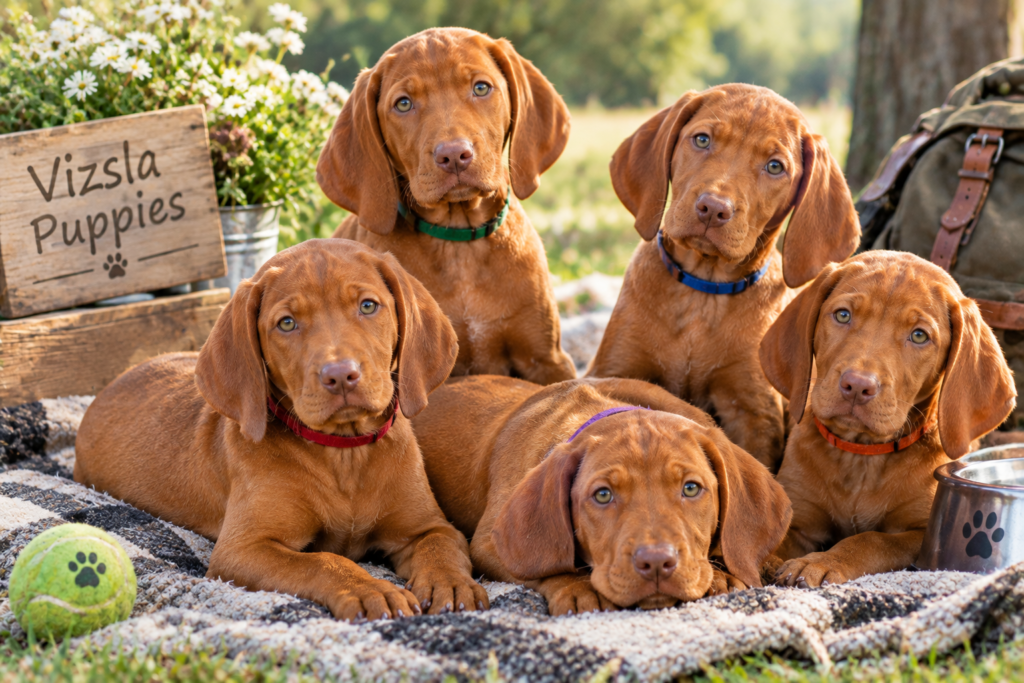
Vizsla puppies are affectionate, intelligent, energetic dogs that form exceptionally strong bonds with their families. They are beautiful sporting dogs with short russet-gold coats, but their athletic nature means they need much more than food and a comfortable bed. Proper socialization, positive training, age-appropriate exercise, and plenty of companionship help a Vizsla puppy develop into a confident and well-mannered adult.
What Are Vizsla Puppies Like?
Vizslas originated as hunting dogs and were developed to point and retrieve game on land and in water. The Royal Kennel Club describes them as lively, intelligent, obedient, sensitive, affectionate, and easily trained. These qualities can make a puppy extremely rewarding to raise, but they also mean that young Vizslas need regular interaction and guidance. For more insigh here blue hungarian vizsla
A typical Vizsla puppy is:
- Energetic and playful
- Very people-oriented
- Intelligent and eager to learn
- Sensitive to harsh treatment
- Curious about new surroundings
- Naturally athletic
- Likely to follow its owners around the house
The close attachment of the breed has earned Vizslas the nickname “Velcro dogs.” They often prefer staying close to their people rather than spending long periods alone.
Vizsla Puppy Appearance
Young Vizslas have the same elegant overall type seen in adults, although their bodies and proportions change significantly as they mature. The breed has a short, straight, dense, smooth and shiny coat.
The recognized coat color is russet gold, with small white markings on the chest and feet permitted under the Royal Kennel Club standard.
Adult males are typically 57–64 cm tall and females 53–60 cm, with an adult weight range of approximately 20–30 kg. Puppies should not be expected to match adult measurements while they are growing.
Vizsla Puppy Temperament
One of the biggest attractions of Vizsla puppies is their affectionate personality. They generally enjoy being around their family and can be enthusiastic participants in everyday activities.
However, affection does not mean they are naturally calm.
A Vizsla puppy can quickly become bored if it does not receive enough appropriate activity and mental stimulation. The breed was developed for active work, so owners should expect a dog that wants to explore, learn, play, and interact.
Are Vizsla Puppies Good Family Dogs?
They can be excellent family companions when their needs are understood.
A good family environment should provide:
- Consistent training
- Supervised interaction with children
- Daily mental stimulation
- Age-appropriate physical activity
- Plenty of human companionship
- Clear household rules
Because Vizslas can be energetic and excitable, young children should always be supervised around a puppy. Teaching the puppy not to jump, mouth hands, or become overly excited during play is especially useful.
Bringing a Vizsla Puppy Home
The first days in a new home can be overwhelming. A puppy suddenly has new people, sounds, smells, rooms, and routines to understand.
Keep the first few days relatively predictable.
Helpful first-day essentials
Prepare:
- A comfortable sleeping area
- Puppy-safe food and water bowls
- A properly fitted collar or harness
- A lightweight leash
- Safe puppy toys
- A crate or secure resting area if you plan to crate train
- Puppy-safe cleaning supplies
- Grooming equipment
- Identification and microchip information
Give the puppy time to investigate its new environment rather than introducing everything at once.
A quiet routine can make the transition easier.
Feeding Vizsla Puppies
Growing puppies need a nutritionally complete diet appropriate for their age and expected adult size. Feeding amounts vary according to the puppy’s food, age, growth, activity level, and individual needs.
Rather than following a single universal amount, use the feeding guidance provided for the specific food and discuss your puppy’s growth with your veterinarian.
Good feeding habits
- Keep fresh water available.
- Feed a consistent puppy diet.
- Avoid frequent unnecessary food changes.
- Use small food rewards during training without overfeeding.
- Monitor body condition as the puppy grows.
- Ask your veterinarian about the appropriate feeding schedule.
Do not assume that giving a highly active puppy extra food is always better. Healthy growth is more important than trying to make a puppy grow as quickly as possible.
Exercise Needs of Vizsla Puppies
Exercise is one of the most important areas to understand before bringing home a Vizsla.
Adult Vizslas are highly active dogs, and the Royal Kennel Club lists their exercise requirement as more than two hours per day once mature. Puppies, however, are still developing and should not simply be given an adult dog’s exercise routine.
Young puppies benefit from short, controlled periods of movement, play, exploration, and training rather than prolonged forced exercise.
Avoid turning a growing puppy into a running partner too early.
Better puppy activities include:
- Short walks appropriate for the puppy’s age
- Gentle play
- Sniffing and exploring
- Basic obedience exercises
- Food puzzles
- Recall games
- Supervised free movement in a safe area
The Hungarian Vizsla Club also emphasizes that puppies need both physical and mental exercise and warns against excessive strenuous activity while their bones and joints are still developing.
Training Vizsla Puppies
Vizslas are intelligent and generally eager to please, making early training particularly worthwhile. The AKC recommends consistent, positive training methods beginning in puppyhood.
Start with simple behaviors such as:
- Responding to their name
- Coming when called
- Sitting
- Walking calmly on a leash
- Waiting briefly for food
- Settling on a mat
- Leaving objects alone
- Appropriate play behavior
Keep training sessions short and enjoyable.
A puppy that succeeds repeatedly is more likely to stay engaged than one that is pushed through long, frustrating sessions.
Why Positive Training Works
Vizslas can be sensitive dogs. Harsh corrections can damage trust and may make training more difficult.
Instead:
- Ask for a simple behavior.
- Reward the puppy when it responds correctly.
- Repeat the exercise.
- Gradually increase the difficulty.
- Finish while the puppy is still interested.
The goal is not simply obedience. Early training teaches the puppy how to communicate with people and make appropriate choices.
Socializing Vizsla Puppies
Socialization is about helping a puppy develop confidence around normal parts of life.
Introduce your puppy gradually and positively to:
- Different people
- Friendly, well-behaved dogs
- Household sounds
- Different floor surfaces
- Car rides
- Grooming and handling
- Collars and leashes
- Safe outdoor environments
- Everyday sights and sounds
The AKC notes that early socialization is important for helping sensitive Vizslas become confident and comfortable in different situations.
Socialization does not mean forcing a nervous puppy into an overwhelming situation. If the puppy looks frightened, increase distance and make the experience easier.
Grooming Vizsla Puppies
One advantage of the Vizsla is its relatively simple coat. The breed has a short, smooth coat that generally requires much less maintenance than long-haired breeds. The Royal Kennel Club lists grooming as once a week for the Hungarian Vizsla.
Basic grooming can include:
- Weekly brushing
- Regular nail checks
- Routine ear checks
- Dental care
- Occasional bathing when necessary
- Checking the skin and coat after outdoor adventures
Puppyhood is the perfect time to make grooming normal.
Start with very short sessions. Touch the puppy’s paws, ears, mouth area, and body gently, rewarding calm behavior.
The AKC recommends introducing puppies gradually to grooming procedures such as brushing, nail care, teeth cleaning, and ear cleaning so these activities become easier as the dog grows.
Common Mistakes With Vizsla Puppies
The biggest mistake new owners can make is assuming that a tired puppy simply needs more and more physical exercise.
A Vizsla puppy also needs mental stimulation, training, rest, and companionship.
Other common mistakes include:
- Expecting adult-level exercise from a young puppy
- Using harsh training methods
- Skipping early socialization
- Leaving the puppy alone for excessively long periods
- Ignoring jumping and mouthing behavior
- Giving too much freedom too soon
- Failing to teach calm behavior
- Treating every unwanted behavior as a lack of obedience
A balanced routine is much more effective than trying to exhaust the puppy every day.
How to Keep a Vizsla Puppy Mentally Stimulated
Mental exercise can be surprisingly tiring for an intelligent puppy.
Try activities such as:
- Name-recognition games
- Simple scent games
- Food puzzles
- Basic obedience
- Finding hidden treats
- Learning new tricks
- Safe exploration
- Short recall exercises
For example, you can hide a few pieces of the puppy’s normal food in an easy-to-find location and encourage the puppy to use its nose. Keep these games simple at first and supervise the puppy.
Are Vizsla Puppies Good for Apartments?
The answer depends heavily on the owner’s lifestyle.
Vizslas are energetic sporting dogs and generally do best with owners who can provide substantial daily activity and interaction. The Royal Kennel Club lists a large home and garden among the breed’s typical characteristics, while the AKC emphasizes the breed’s substantial exercise and mental-stimulation needs.
An apartment does not automatically make responsible ownership impossible, but simply having an indoor space is not enough.
An apartment-based owner would need to provide appropriate outdoor activity, training, enrichment, and companionship every day.
Can Vizsla Puppies Be Left Alone?
Vizslas often form extremely close bonds with their owners. The AKC notes that their strong attachment can contribute to problems when they are left alone for extended periods.
Puppies should gradually learn that being alone is safe.
Start with very short periods and increase the duration gradually when the puppy is comfortable. Avoid suddenly leaving a young puppy alone for an entire day.
A predictable routine, safe resting area, enrichment, and gradual independence training can help.
Health and Choosing a Vizsla Puppy
When choosing a puppy, health history matters as much as appearance.
The Royal Kennel Club’s current health standard lists hip dysplasia, elbow dysplasia, eye screening, and gonioscopy among the health testing considerations for Hungarian Vizslas.
Potential puppy owners should ask breeders for appropriate health information and documentation rather than relying only on verbal assurances.
Questions to ask a breeder
- Can I see the puppy with its mother?
- What health screening has been completed on the parents?
- Can I see the relevant health certificates?
- What vaccinations and parasite treatments has the puppy received?
- What food is the puppy currently eating?
- How has the puppy been socialized?
- What veterinary records will come with the puppy?
- What support is available after the puppy goes home?
A responsible breeder should be comfortable discussing the puppy’s background and care.
Vizsla Puppies and Other Pets
Vizslas were developed as hunting dogs, so their natural interest in moving animals should not be ignored. The AKC notes that the breed can have a strong prey drive and that individual temperament, training, and introductions influence how well a Vizsla lives with smaller pets.
If your home already has another pet, introductions should be gradual and supervised.
Never assume that a young puppy will automatically understand how to behave around cats, rabbits, birds, or other small animals.
Frequently Asked Questions
Are Vizsla puppies easy to train?
Vizsla puppies are intelligent and generally eager to please, which can make training rewarding. They respond best to consistent, positive methods and benefit from starting basic training during puppyhood.
Are Vizsla puppies good family dogs?
They can be excellent family companions for active households. Their affectionate nature and strong connection with people are major advantages, but families must also be prepared for their energy, training needs, and desire for companionship.
How much exercise does a Vizsla puppy need?
Puppies need age-appropriate activity rather than the prolonged exercise expected of adults. Short walks, gentle play, exploration, and mental activities are generally more appropriate while a puppy is growing. Strenuous forced exercise should be avoided until the dog is physically mature.
Do Vizsla puppies shed?
Yes. Vizslas have short coats and do shed, although their grooming needs are relatively low compared with many long-coated breeds. Regular brushing can help remove loose hair.
Are Vizsla puppies very affectionate?
Yes. Strong attachment to their owners is one of the breed’s defining characteristics. Many Vizslas prefer to remain close to their people and are known for their affectionate, people-oriented nature.
Conclusion
Vizsla puppies are affectionate, intelligent, athletic, and highly people-oriented dogs that can become wonderful companions for the right family. They need positive training, early socialization, age-appropriate exercise, mental stimulation, and plenty of companionship as they grow. Their short coat makes grooming relatively easy, but their high energy and strong attachment mean they require more daily involvement than a low-maintenance breed. With patience, consistency, and responsible care, a Vizsla puppy can grow into a confident, loyal, and well-mannered adult dog.
Conclusion
Vizsla puppies are affectionate, intelligent, energetic, and highly people-oriented dogs that can make wonderful family companions. They need early socialization, positive training, age-appropriate exercise, mental stimulation, and plenty of companionship as they grow. With proper care, patience, and consistent guidance, a Vizsla puppy can develop into a loyal, confident, and well-mannered adult dog.
[…] A Vizsla puppy is affectionate, intelligent, energetic, and strongly attached to its family. Originally developed in Hungary as a versatile hunting dog, the Vizsla combines athletic ability with a gentle, people-focused personality. Raising one successfully means providing positive training, early socialization, age-appropriate exercise, mental stimulation, and plenty of companionship. For more insigh here vizsla puppies […]