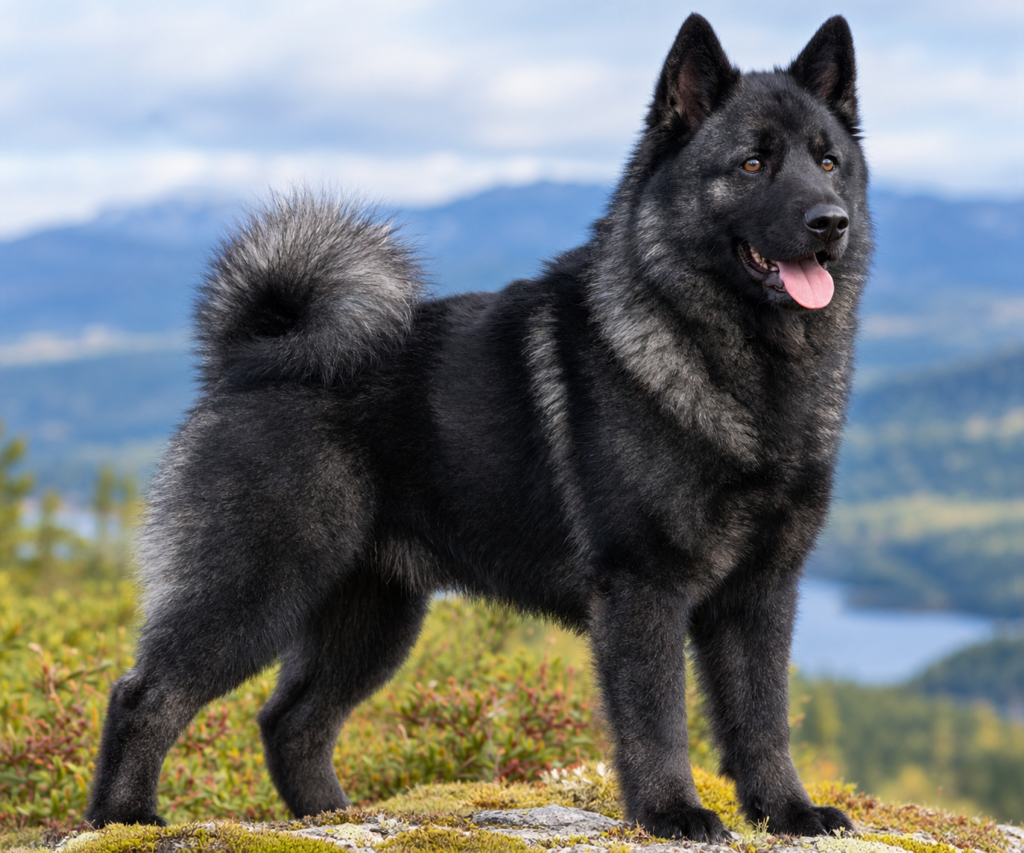
The Elkhound Black, officially known as the Black Norwegian Elkhound, is a rare Norwegian hunting dog admired for its shiny black coat, pointed ears, curled tail, and energetic personality. This medium-sized breed is intelligent, devoted to its family, and naturally alert. Originally developed for tracking game in challenging outdoor environments, it can make a wonderful companion for active owners who understand its exercise, training, and grooming needs.
Although it shares some characteristics with the better-known gray Norwegian Elkhound, the black variety has its own distinctive appearance and breed history. Learning about its temperament, health, and daily care can help you decide whether this unusual dog is the right fit for your home. For more insight here norwegian elkhound breeds
What Is an Elkhound Black?
The Elkhound Black is a Spitz-type dog originating in Norway. Its traditional Norwegian name is Norsk Elghund Sort. The breed was developed as a hunting and tracking companion, particularly for working in wooded landscapes and following large game.
It is the smaller of the two Norwegian Elkhound varieties commonly discussed, with a compact, muscular body designed for stamina and outdoor activity.
Here are some important facts about this breed:
- Origin: Norway
- Breed type: Spitz and Nordic hunting dog
- Coat color: Shiny black, sometimes with small white markings on the chest or toes
- Coat type: Short, dense, weather-resistant double coat
- Height: Approximately 17–19 inches at the shoulder
- Temperament: Alert, devoted, energetic, and independent
- Exercise needs: Regular walks, outdoor activities, and mental stimulation
- Grooming needs: Routine brushing and extra care during seasonal shedding
- Primary historical role: Hunting and tracking large game
Measurements can vary by sex and breed standard. The Swedish Kennel Club’s Nordic breed guide provides additional information about the breed’s appearance and history.
History and Origin
The Black Norwegian Elkhound has a long connection with the rural landscapes of Norway and neighboring Scandinavian regions. It developed from local Spitz-type dogs and became established as a distinct variety during the nineteenth century.
Hunters valued these dogs for their stamina, alertness, and ability to track game. They were used in hunting elk and other large animals, working alongside people in forests and rugged terrain.
During the late nineteenth and early twentieth centuries, the black variety was more common in parts of Norway. However, breeding efforts increasingly favored the gray Norwegian Elkhound, and the black variety became much less common.
Dedicated enthusiasts later worked to preserve the breed. Today, it remains relatively rare outside Scandinavia, making it an interesting choice for people who appreciate less familiar dog breeds.
Its working background still influences its modern behavior. The breed enjoys outdoor activity, responds to interesting scents, and benefits from having purposeful tasks rather than spending every day without stimulation.
Appearance and Physical Characteristics
The Black Norwegian Elkhound has a compact, balanced body and a confident posture. Although it is not a giant breed, its muscular build gives it an athletic appearance.
Size and Weight
Adult males typically stand around 18–19 inches tall, while females are generally around 17–18 inches. Exact measurements depend on the standard being followed and the individual dog.
Some breed information sources list adult weights around 44–50 pounds, although individual dogs may fall outside this range.
Its medium size makes it easier to accommodate than many giant working breeds, but its energy level means it still needs enough room and opportunities to exercise.
Coat and Color
The most recognizable feature is the glossy black coat. Unlike the gray Norwegian Elkhound, which has a characteristic gray coat with darker guard hairs, the black variety is predominantly black.
A small amount of white on the chest or toes may be acceptable under breed standards.
Its double coat helps protect it from cold weather and outdoor conditions. The dense undercoat provides insulation, while the outer coat offers additional protection.
Ears, Tail, and Body Shape
The breed has erect, pointed ears that give it an alert expression. Its tail curls firmly over its back, creating the familiar silhouette associated with Nordic Spitz dogs.
The body is muscular and well proportioned, with strong legs suitable for walking over uneven terrain. These features reflect the breed’s history as a working hunting companion.
Temperament and Personality
The Elkhound Black is generally described as devoted, courageous, alert, and energetic. It can develop a close relationship with its family while maintaining an independent streak.
Because it was bred for outdoor work, it may be more interested in exploring its surroundings than sitting quietly all day. Consistent training and regular activity help channel this energy into positive behavior.
Is It a Good Family Dog?
This breed can be a good family companion when properly socialized and trained. Many individuals enjoy spending time with familiar people and participating in family activities.
However, its energetic nature may be challenging for households that prefer a very low-activity dog.
Families should consider the following:
- Teach children to interact with dogs gently and respectfully.
- Supervise interactions between dogs and young children.
- Provide daily exercise and opportunities for exploration.
- Establish clear household rules and consistent routines.
- Give the dog a quiet place to rest without disturbance.
Every dog has an individual temperament, so early experiences, socialization, and responsible handling all matter.
Does It Bark a Lot?
The Black Norwegian Elkhound can be vocal. Its hunting background makes it naturally alert, and it may bark when excited, bored, or responding to unfamiliar sounds.
Training can help manage unnecessary barking. Reward quiet behavior, provide adequate exercise, and investigate the cause rather than relying on punishment.
A dog that receives sufficient activity and attention is generally easier to manage than one that spends long periods bored or isolated.
Exercise and Activity Requirements
Regular exercise is essential for this energetic working breed. Walks, hikes, scent games, and structured play can help maintain physical fitness and provide mental stimulation.
A healthy adult may benefit from around an hour of daily activity, adjusted according to age, fitness, and veterinary advice. Some individuals may need more.
Useful activities include:
- Morning and evening walks
- Hiking on suitable trails
- Supervised scent-tracking games
- Reward-based training sessions
- Interactive toys and food puzzles
- Secure outdoor play
Puppies need age-appropriate activity, with care taken to avoid excessive repetitive impact while their bodies are developing.
Because this dog has hunting instincts, use a leash in unsecured areas. A secure fence is helpful, and recall training should be practiced consistently rather than treated as a guarantee that the dog will ignore an interesting scent.
Grooming and Coat Care
The short double coat is relatively straightforward to maintain, but it still needs regular attention. Loose undercoat can accumulate around the home, especially during seasonal shedding.
How Often Should You Brush It?
Brush the coat several times a week as a starting point, increasing the frequency when shedding becomes heavier.
A simple grooming routine includes:
- Brush gently to remove loose hair and dirt.
- Use an appropriate grooming tool for the double coat.
- Check the skin for irritation, lumps, or unusual changes.
- Inspect the ears and clean them when necessary with a veterinarian-approved product.
- Trim the nails regularly.
- Brush the teeth with dog-safe toothpaste.
Bathing is usually needed only when the dog becomes dirty or develops an odor. Avoid excessive bathing, which can dry out the skin.
Should you shave the coat? Generally, no. The double coat provides insulation and weather protection. Shaving it unnecessarily can interfere with its normal function and coat regrowth.
Does the Black Norwegian Elkhound Shed?
Yes. The breed sheds, and loose undercoat can become especially noticeable during seasonal coat changes. Regular brushing helps remove dead hair and keeps the coat in better condition.
This breed should not be considered hypoallergenic. People with allergies should spend time around the dog before deciding to bring one home.
Feeding and Nutrition
A balanced diet supports healthy muscles, energy levels, skin, and coat condition. Choose a complete dog food appropriate for the dog’s age, size, activity level, and individual health needs.
Follow these feeding guidelines:
- Measure food portions rather than guessing.
- Divide daily food into suitable meals.
- Keep fresh drinking water available.
- Limit excessive treats and table scraps.
- Monitor body condition and adjust portions when needed.
- Consult a veterinarian about nutritional concerns.
Because active dogs can gain or lose weight depending on their routine, monitor the dog’s body condition rather than relying only on the number printed on a food package.
A healthy feeding plan should support an athletic body without allowing excess weight to place unnecessary stress on the joints.
Training and Socialization
The Black Norwegian Elkhound is intelligent, but its independent working background can make training challenging at times. Short, consistent sessions with rewards generally work better than harsh corrections.
Start training early and focus on useful everyday skills.
Essential Training Skills
Teach your dog to:
- Respond to its name.
- Walk calmly on a leash.
- Come when called in safe environments.
- Settle quietly at home.
- Accept grooming and veterinary handling.
- Remain calm around unfamiliar people and dogs.
Reward-based training helps build trust and makes learning more enjoyable.
Why Early Socialization Matters
Introduce puppies gradually to different people, sounds, environments, surfaces, and suitable dogs. Keep experiences positive and avoid overwhelming the puppy.
Since the breed has hunting instincts, practice attention and recall around distractions in controlled environments. Continue using a leash whenever the surroundings are not secure.
Mental stimulation is just as useful as physical activity. Scent games, puzzle feeders, and basic obedience exercises can help reduce boredom-related behaviors.
Common Health Concerns
The Black Norwegian Elkhound can be a hardy dog, but no breed is completely free from health risks. Responsible owners should arrange regular veterinary examinations and discuss health screening with breeders.
Potential concerns seen in Norwegian Elkhounds and other dogs include:
- Hip dysplasia: A developmental joint condition that can cause discomfort and mobility problems.
- Progressive retinal atrophy: An inherited eye condition that can lead to gradual vision loss.
- Weight gain: Excess weight may affect mobility and overall health.
- Skin problems: Irritation, lumps, or other skin changes may require veterinary assessment.
- Dental disease: Plaque and gum problems can develop without regular dental care.
These conditions are not inevitable, and the risk for an individual black variety dog depends on its genetics and health history. Ask a veterinarian or responsible breeder which screenings are appropriate for the breed and the puppy’s parents.
Seek veterinary advice if you notice persistent limping, changes in vision, unusual thirst, appetite changes, or a significant change in behavior.
Regular vaccinations, parasite prevention, dental care, and a balanced diet are important parts of preventive health care.
Is the Elkhound Black Suitable for Apartment Living?
Apartment living may be possible for an individual dog if its exercise, training, and companionship needs are met. However, its energy level and tendency to bark deserve careful consideration.
A house with a securely fenced yard can make outdoor activity more convenient, but a yard alone does not provide enough exercise or mental stimulation.
Before choosing this breed for an apartment, consider whether you can:
- Provide daily walks and structured activity.
- Train the dog to manage barking.
- Offer enrichment when it stays indoors.
- Provide enough companionship throughout the day.
- Access safe outdoor spaces regularly.
If you have limited time for exercise or prefer a consistently quiet, low-energy companion, another breed may suit your lifestyle better.
Black Norwegian Elkhound vs. Gray Norwegian Elkhound
Although these dogs share a name and some historical characteristics, the black and gray varieties have distinctive appearances.
| Feature | Black Norwegian Elkhound | Gray Norwegian Elkhound |
|---|---|---|
| Coat color | Predominantly black | Gray with darker guard hairs |
| General build | Compact and muscular | Compact and sturdy |
| Historical role | Hunting and tracking | Hunting and tracking |
| Coat care | Regular brushing | Regular brushing, often with substantial seasonal shedding |
| Availability | Relatively rare outside Scandinavia | More widely recognized |
Both varieties are energetic working dogs that need training, exercise, and companionship. Their individual needs can vary, so meet the dog and learn about its temperament before making a decision.
Pros and Cons
Advantages
- Loyal and devoted to familiar people
- Athletic and well suited to active households
- Intelligent and capable of learning new skills
- Distinctive glossy black appearance
- Practical coat length for routine brushing
Challenges
- Can be vocal without appropriate training
- Needs regular physical and mental activity
- May show independent or stubborn behavior
- Sheds despite having a short outer coat
- May chase wildlife or other small moving animals
- Can be difficult to find in some countries
The breed is most suitable for owners who appreciate an active dog and are prepared to meet its needs consistently.
Frequently Asked Questions
1. Is the Elkhound Black a Separate Breed?
The Black Norwegian Elkhound is recognized as a distinct Nordic breed variety, with its own history and breed standard. It is not simply a gray Norwegian Elkhound with an unusually dark coat.
2. How Big Does a Black Norwegian Elkhound Get?
Adults generally stand around 17–19 inches at the shoulder. Weight varies, but some breed references give a typical range of approximately 44–50 pounds.
3. Is This Dog Good With Children?
It can be a suitable family companion when well socialized and trained. All interactions with young children should be supervised, and children should learn to respect the dog’s space.
4. Does the Black Norwegian Elkhound Shed?
Yes. Its double coat sheds, sometimes heavily during seasonal changes. Regular brushing helps manage loose hair.
5. Is It Easy to Train?
It is intelligent and capable of learning, but its independent nature can require patience. Consistent, reward-based training is recommended.
6. Is the Breed Rare?
Yes, it is relatively uncommon outside its native Scandinavian region. Finding a responsible breeder may require additional research and patience.
7. Can It Live in a Warm Climate?
It can live in warmer regions with careful management. Provide shade, fresh water, good ventilation, and exercise during cooler parts of the day. Avoid strenuous activity in hot weather and watch for signs of overheating.
The Bottom Line
The Elkhound Black is a distinctive Norwegian hunting dog with a glossy black coat, athletic build, and devoted personality. Its intelligence and outdoor enthusiasm can make it a rewarding companion for active owners who have time for exercise, training, and regular grooming.
Although the breed may be less familiar than the gray Norwegian Elkhound, its history and working abilities make it an interesting choice for dog enthusiasts. Before choosing one, research responsible breeders, ask about health screening, and consider whether its activity level and vocal nature suit your household.
With consistent training, preventive veterinary care, balanced nutrition, and plenty of companionship, a Black Norwegian Elkhound can enjoy a healthy and fulfilling life as a family companion.
[…] A Basset Hound puppy can make a wonderful family companion when given proper training, nutrition, exercise, socialization, and veterinary care. Their calm nature often makes them appealing to families, but their stubborn streak means owners need patience and consistency. For more insigh here elkhound black […]