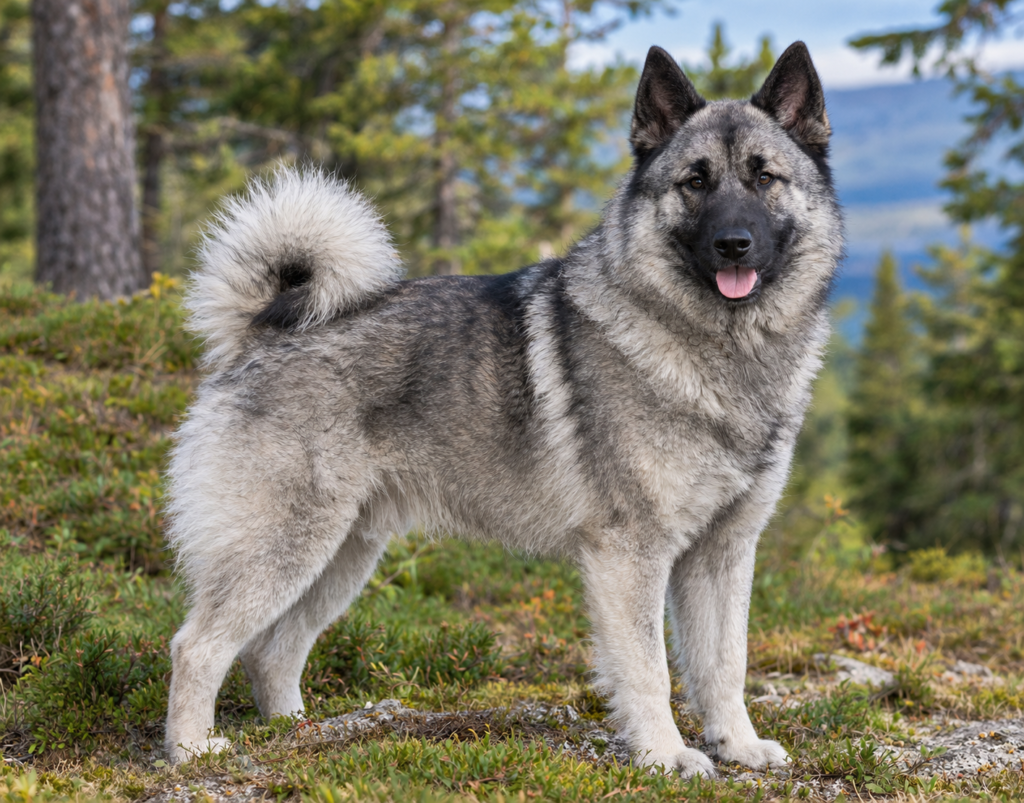
The Norwegian Elkhound is an ancient Scandinavian dog breed known for its distinctive gray coat, compact body, curled tail, and fearless personality. Despite its name, this breed was traditionally used for hunting large game such as moose rather than being a single-purpose companion dog.
Strong, energetic, intelligent, and independent, the Norwegian Elkhound is best suited to owners who can provide regular exercise, training, and mental stimulation. Its combination of endurance and loyalty has helped make it one of Norway’s best-known native dog breeds. For more insigh here wolfhound deerhound
Norwegian Elkhound BreedsHistory of the Norwegian Elkhound
The Norwegian Elkhound has a long history in Scandinavia. Dogs resembling the breed have been associated with Norway for centuries, where they worked alongside hunters in challenging forests and mountainous areas.
The breed was developed to help locate and track large game. Rather than simply following a scent quietly, an Elkhound could alert hunters to the animal’s location with its characteristic barking.
Its endurance, courage, and ability to work in cold conditions made it valuable to hunters. These qualities remain visible in the breed today.
Norwegian Elkhound Appearance
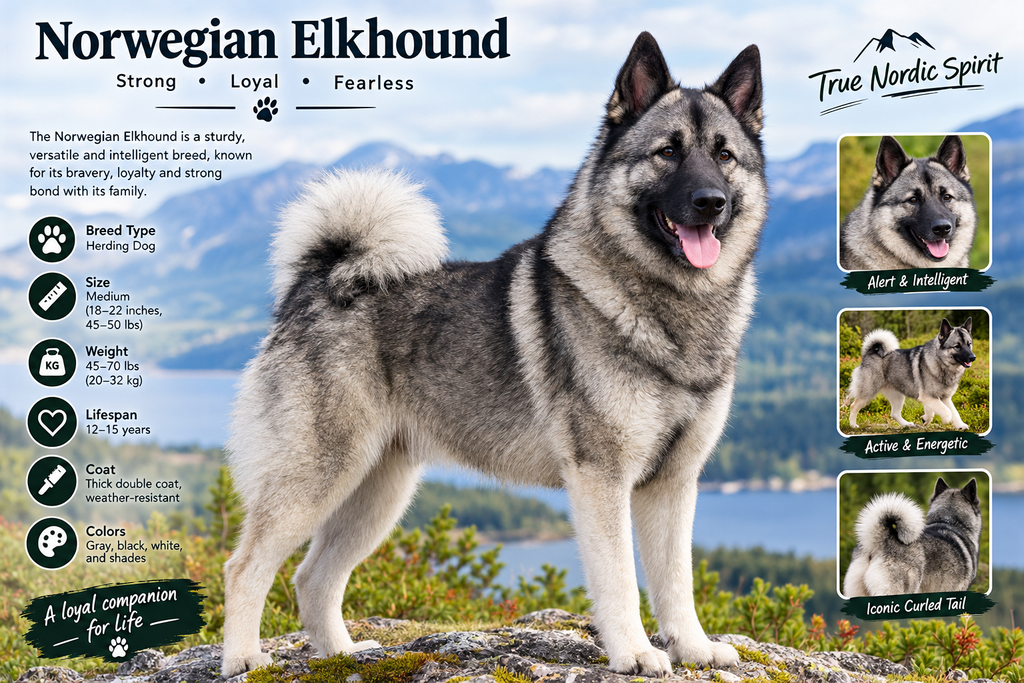
The Norwegian Elkhound has a strong, compact, and athletic body. Its appearance reflects its history as an outdoor working dog.
Key physical characteristics include:
- Medium-sized, sturdy body
- Thick double coat
- Gray coloring with darker markings
- Pointed, upright ears
- Dark eyes
- Curled tail carried over the back
- Broad head
- Strong legs and feet
Its thick coat provides protection against cold Scandinavian weather. The overall appearance is powerful without being excessively heavy.
Norwegian Elkhound Temperament
The Norwegian Elkhound is generally confident, alert, friendly, and intelligent. It can form a strong bond with its family and often enjoys being involved in everyday activities.
However, this is not a passive breed. Elkhounds have an independent working heritage and may sometimes make their own decisions rather than immediately following commands.
They are also naturally alert and can be vocal. Their barking was historically useful during hunting, but modern owners may need to teach appropriate barking behavior.
Are Norwegian Elkhounds Good Family Dogs?
A well-socialized Norwegian Elkhound can be an excellent family companion.
They are typically affectionate with their families and can enjoy playing and participating in outdoor activities. Their energetic personality can make them particularly suitable for active households.
However, early socialization and training are important. Children should always be taught how to interact respectfully with dogs, and interactions between young children and any dog should be supervised.
Norwegian Elkhound Breeds Exercise Requirements
Norwegian Elkhounds are energetic working dogs and require regular physical activity.
Daily activities can include:
- Brisk walks
- Hiking
- Outdoor games
- Obedience training
- Scent-based activities
- Secure off-leash exercise
Simply leaving an Elkhound in a yard may not be enough. The breed benefits from activities that challenge both its body and mind.
Without sufficient stimulation, an energetic dog may become bored and develop unwanted behaviors such as excessive barking or destructive chewing.
Norwegian Elkhound Breeds Training a Norwegian Elkhound
Training should begin early and remain consistent.
Norwegian Elkhounds are intelligent but can have an independent streak. Short, engaging training sessions usually work better than repetitive exercises.
Positive reinforcement can help encourage good behavior. Rewards, praise, and play can make training more enjoyable.
Important skills include:
- Basic obedience
- Leash walking
- Reliable recall
- Socialization
- Impulse control
- Barking management
Because the breed has a hunting background, recall deserves particular attention. An Elkhound may become distracted by wildlife or other moving animals.
Norwegian Elkhound Breeds Grooming a Norwegian Elkhound
The Norwegian Elkhound has a dense double coat that requires regular grooming.
Brushing helps remove loose hair and keeps the coat in good condition. Owners should expect increased shedding during seasonal coat changes.
A grooming routine can include:Norwegian Elkhound Breeds
- Regular brushing
- Nail trimming
- Ear checks
- Dental care
- Occasional bathing
The coat should not normally be shaved because its natural layers provide protection from weather and help regulate the dog’s body temperature.
Norwegian Elkhound Breeds Norwegian Elkhound Shedding
One of the most important things potential owners should know is that Norwegian Elkhounds shed.
Their thick double coat naturally releases loose hair, and seasonal shedding can be especially noticeable. Regular brushing can help manage loose fur around the home.
People looking for a low-shedding dog may therefore want to consider other breeds. Norwegian Elkhound Breeds
Norwegian Elkhound Breeds Norwegian Elkhound Health
Norwegian Elkhound Breeds Like all breeds, Norwegian Elkhounds can be affected by certain health conditions. Responsible breeding, appropriate nutrition, regular exercise, and routine veterinary care can help support a dog’s overall well-being.
Potential owners should choose breeders who prioritize health and follow appropriate veterinary screening recommendations.
Regular veterinary checkups are also important because early detection can make many health problems easier to manage.
Feeding a Norwegian Elkhound
Norwegian Elkhound Breeds A Norwegian Elkhound should receive a complete and balanced diet appropriate for its age, size, activity level, and health.
Active dogs may require different nutritional needs than less-active individuals. Treats should be given in moderation, and food portions should be adjusted to help maintain a healthy body condition.
Norwegian Elkhound Breeds Fresh water should always be available.
If an Elkhound’s weight, diet, or nutritional needs are a concern, a veterinarian can provide individualized guidance.
Norwegian Elkhound and Other Pets
Norwegian Elkhounds can potentially live with other dogs and household pets when properly socialized and introduced.
However, their history as hunting dogs means they may have a natural interest in chasing smaller animals. Individual temperament varies, so owners should use appropriate supervision and controlled introductions.
Training can help teach an Elkhound how to behave around cats and other pets, but instinct should never be ignored.
Norwegian Elkhound as a Working Dog
The Norwegian Elkhound’s working abilities are an important part of its identity.
Historically, these dogs were expected to travel through difficult terrain, track game, remain alert, and communicate with hunters. Their physical endurance and confidence were essential.
Modern Elkhounds may not hunt, but many still enjoy activities that allow them to use these natural abilities. Hiking, scent work, tracking games, obedience, and other canine activities can provide valuable stimulation.
Norwegian Elkhound Living Requirements
A Norwegian Elkhound can adapt to different living situations when its exercise and mental stimulation needs are met.
A home with a securely fenced yard can be especially helpful, but having a yard does not replace daily interaction and exercise.
Owners should also remember that Elkhounds can be vocal. People living in apartments or close to neighbors may need to put extra effort into barking management.
Is the Norwegian Elkhound Right for You?
The Norwegian Elkhound can be a great choice for an active owner who wants an intelligent, energetic, loyal, and independent dog.
It may be a good fit if you:Norwegian Elkhound Breeds
- Enjoy outdoor activities
- Have time for daily exercise
- Like intelligent working breeds
- Are willing to train consistently
- Do not mind regular shedding
- Can provide mental stimulation
It may be less suitable if you want a quiet, very low-energy, or low-maintenance dog.
Frequently Asked Questions
What is a Norwegian Elkhound?
The Norwegian Elkhound is a Scandinavian working breed historically used for hunting large game. It is recognized for its gray double coat, curled tail, upright ears, and energetic personality.
Are Norwegian Elkhounds easy to train?
They are intelligent and capable learners, but their independent nature can make training challenging at times. Consistent positive reinforcement and early socialization are helpful.
Do Norwegian Elkhounds shed a lot?
Yes. Their dense double coat sheds regularly, with heavier shedding during seasonal coat changes.
Are Norwegian Elkhounds good with children?
A properly socialized Elkhound can be a good family companion. Children should always be supervised around dogs and taught appropriate interaction.
How much exercise does a Norwegian Elkhound need?
The breed is energetic and benefits from daily physical activity combined with mental stimulation. Walks, hiking, games, and training activities can all be useful.
Are Norwegian Elkhounds aggressive?
They are generally confident and alert rather than naturally aggressive. Individual temperament varies, and early socialization and responsible training are important.
Conclusion
The Norwegian Elkhound is a fascinating breed with a rich Scandinavian history and a strong working-dog heritage. Its beautiful gray coat, curled tail, intelligence, courage, and energetic personality make it stand out among northern dog breeds.
For the right owner, the Norwegian Elkhound can be a loyal and enjoyable companion. However, prospective owners should be prepared for regular exercise, training, mental stimulation, vocal behavior, and significant shedding. With proper care, socialization, and attention, this remarkable Norwegian breed can become a devoted member of an active family.
[…] The Black Norwegian Elkhound is relatively uncommon outside Scandinavia, which makes it an interesting choice for dog enthusiasts looking for a less familiar Nordic breed. For more insigh here norwegian elkhound breeds […]