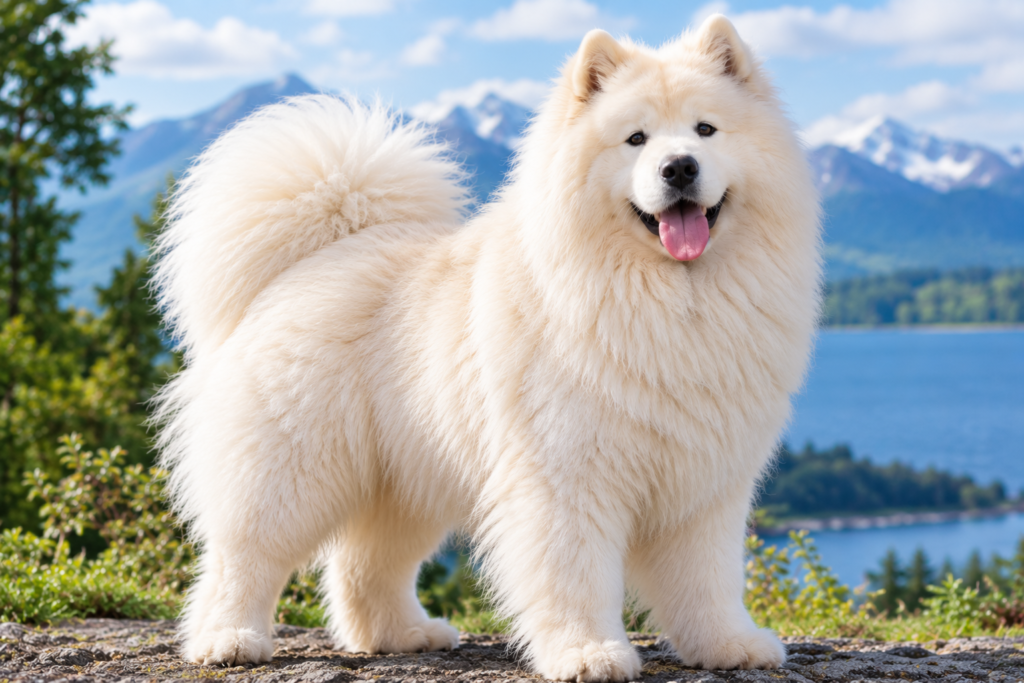
A fluffy dog can be one of the most charming companions to welcome into your home, but that beautiful coat comes with responsibilities. Popular fluffy breeds range from tiny Pomeranians and Bichon Frises to large Samoyeds, Collies, and Great Pyrenees. The right choice depends on your space, activity level, grooming routine, and the dog’s temperament. For more insight here massive fluffy dog breed
What Makes a Dog Fluffy?
“Fluffy” isn’t an official dog breed category. It is a general description for dogs with abundant coats that look soft, thick, long, curly, or plush.
Many fluffy dogs have a double coat, with a dense undercoat beneath a protective outer layer. This type of coat can provide insulation and protection, but it can also mean substantial shedding and regular grooming. Pomeranians and Samoyeds, for example, have especially dense coats, while breeds such as the Bichon Frise have a different curly coat that requires frequent maintenance.
A fluffy appearance can therefore mean very different things from one breed to another.
Before choosing a dog, look at:
- Coat type and texture
- Shedding level
- Brushing requirements
- Professional grooming needs
- Exercise requirements
- Temperament
- Size and living space
- Ability to tolerate being alone
12 Popular Fluffy Dog Breeds
There isn’t one fluffy breed that works for every household. These 12 breeds show just how different fluffy dogs can be.
1. Samoyed
The Samoyed is one of the most recognizable fluffy dogs in the world. Its brilliant white coat, dark eyes, and famous “smile” give it a distinctive appearance.
Samoyeds are social, intelligent, loyal, and energetic. They were developed for demanding work in cold climates and generally enjoy being involved in family activities.
Their coat is also one of their biggest care commitments. Samoyeds have a dense double coat and shed regularly, with heavier periods of shedding during the year. Daily brushing can help manage loose hair.
Good fit: Active families and owners who have time for exercise, training, and grooming.
Common misconception: Their beautiful white coat doesn’t mean they are naturally low-maintenance.
2. Pomeranian
The Pomeranian is a tiny dog with a remarkably full coat. Its small body, fluffy appearance, and lively personality make it one of the most recognizable toy breeds.
Pomeranians are curious, intelligent, affectionate, and energetic. Their profuse double coat needs frequent brushing, and some owners use professional grooming to keep the coat manageable.
Good fit: Apartments, smaller homes, singles, and families prepared to provide training and coat care.
Common misconception: Small size doesn’t mean a Pomeranian needs little attention. They still need exercise, socialization, training, and regular grooming.
3. Bichon Frise
The Bichon Frise looks like a little white powder puff. Its curly coat gives it a distinctly fluffy appearance, while its cheerful personality makes it popular as a companion dog.
Bichons can adapt well to different living environments, including apartments. They are playful and people-oriented, but their coat needs consistent attention. Daily brushing helps prevent mats, and regular trimming is part of maintaining the coat.
Good fit: Apartment dwellers, families, and people wanting a small companion.
Common misconception: Low shedding does not mean low grooming. Loose hair can become trapped in the coat, making regular brushing essential.
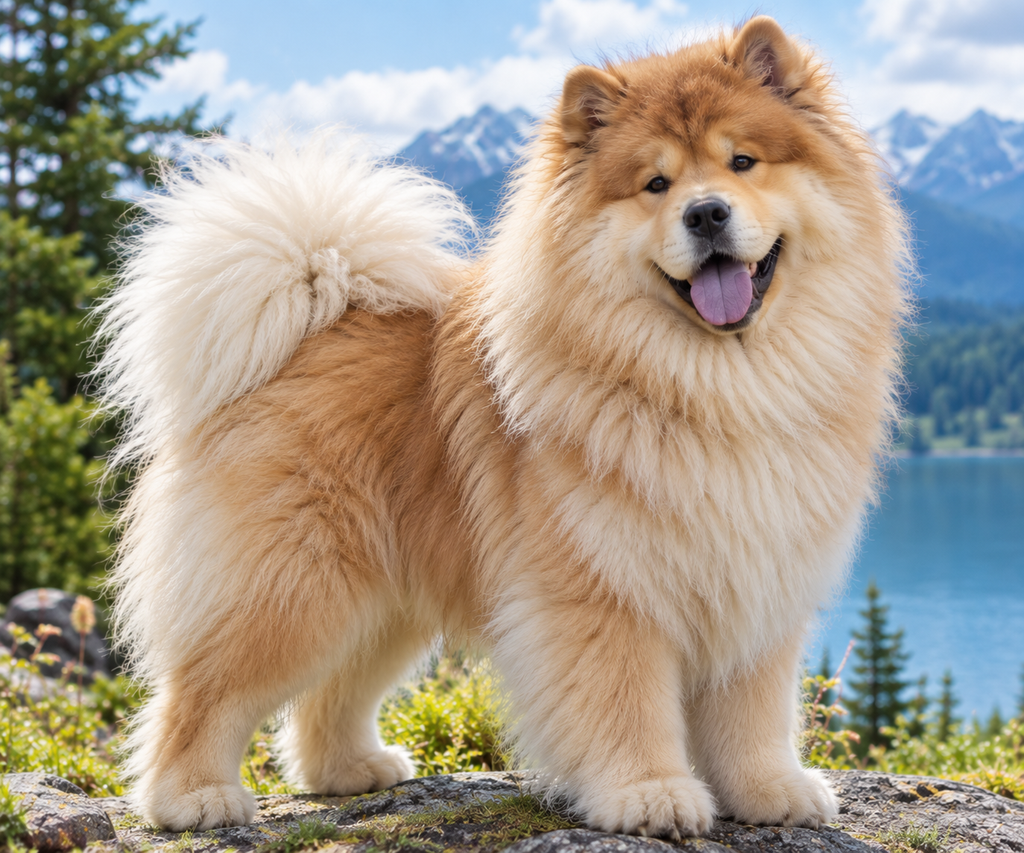
4. Chow Chow
The Chow Chow has a thick coat and a distinctive lion-like appearance. Its fluffy mane around the head and neck can make the breed look even larger than it actually is.
Chow Chows are generally more independent than highly social companion breeds. They can be devoted to their families but often have a more reserved personality.
Their double coat requires regular grooming to prevent it from becoming tangled or neglected.
Good fit: Experienced owners who appreciate an independent dog and understand guardian-type behavior.
5. Keeshond
The Keeshond is a medium-sized fluffy breed with a thick coat and distinctive facial markings.
These dogs are affectionate, energetic, and generally good-natured. Their coat requires frequent brushing, with AKC specifically noting that Keeshonds need daily brushing.
Good fit: Active households that want a social medium-sized companion.
6. Rough Collie
The Rough Collie is famous for its long, flowing coat and elegant appearance. It can be an affectionate family companion and generally benefits from regular walks and interaction.
Its abundant coat sheds and needs consistent brushing to keep it clean and free of tangles.
Good fit: Families and individuals who want an active, people-oriented dog and are willing to maintain a long coat.
7. Great Pyrenees
The Great Pyrenees is a large fluffy dog with a thick, weather-resistant white coat. Unlike small companion breeds, it was developed as a livestock guardian and retains strong protective instincts.
It can be affectionate with its family while also being naturally watchful. Weekly brushing is recommended for maintaining the thick coat.
Good fit: Homes with sufficient space and owners who understand large guardian breeds.
Common misconception: Its gentle-looking appearance doesn’t mean it behaves like a small lap dog. Its size and guarding instincts need to be taken seriously.
8. Old English Sheepdog
The Old English Sheepdog is instantly recognizable because of its shaggy, abundant coat and characteristic appearance.
Its coat requires significant maintenance. AKC notes that grooming needs to reach down to the skin, with regular brushing and additional grooming needed throughout the month.
Good fit: Owners who genuinely enjoy grooming and can handle a large, active dog.
9. Standard Poodle
The Standard Poodle may not have the same straight, fluffy coat as a Samoyed, but its abundant curly coat gives it a plush appearance.
Poodles are intelligent and highly trainable. Their coat is also less likely to shed visibly around the house than many double-coated breeds, but that doesn’t make it maintenance-free. Hair can mat when it isn’t brushed regularly.
Some owners choose professional grooming approximately every four to six weeks, depending on the desired coat length and individual needs.
Good fit: Active owners who want an intelligent dog and can commit to regular grooming.
10. Tibetan Mastiff
The Tibetan Mastiff has an exceptionally impressive double coat and a powerful appearance.
This is a guardian breed rather than a simple cuddly companion. Tibetan Mastiffs are intelligent and independent and can be highly protective of their families and property.
Good fit: Experienced owners who understand independent guardian breeds.
11. Bernese Mountain Dog
The Bernese Mountain Dog has a beautiful long coat and a substantial build. Its fluffy appearance makes it especially popular with people who love large, soft-looking dogs.
Because of its long coat and size, grooming can take considerably more time than grooming a small short-haired dog.
Good fit: Families and owners with enough space, time for regular activity, and willingness to manage a large coat.
12. Newfoundland
The Newfoundland is another large breed that combines substantial size with a thick coat. It was developed as a working dog and is known for its strength and swimming ability.
Its size means that everyday care is on a different scale from caring for a toy breed. Grooming, exercise, food management, and living space all need to be considered before bringing one home.
Good fit: Owners prepared for the practical responsibilities of a giant, heavily coated dog.
Are Fluffy Dogs Hard to Groom?
Some are, but the difficulty depends more on the type of coat than simply how fluffy the dog looks.
A long, dense double coat can collect loose undercoat and become tangled if brushing is neglected. Curly coats can also develop mats when dead hair isn’t removed regularly.
A practical grooming routine may include:
- Regular brushing suited to the coat type
- Checking behind the ears and around the legs for tangles
- Bathing when appropriate
- Keeping nails trimmed
- Checking the skin while brushing
- Professional grooming when the coat or owner requires it
One useful rule is to brush all the way through a dense coat, rather than simply smoothing the hair on top. This is especially relevant for double-coated breeds because loose hair can remain underneath the outer coat.
Do Fluffy Dogs Shed a Lot?
Some do, while others shed relatively little.
Coat appearance alone isn’t enough to predict shedding. Thick double-coated breeds such as Samoyeds and Pomeranians can release considerable amounts of loose undercoat, while Bichon Frises and Poodles generally shed much less visibly.
Fluffy breeds with noticeable shedding
- Samoyed
- Pomeranian
- Rough Collie
- Chow Chow
- Great Pyrenees
- Keeshond
Fluffy-looking breeds with lower visible shedding
- Bichon Frise
- Standard Poodle
Lower shedding doesn’t mean zero maintenance. For example, loose Bichon hair can become trapped within the coat, which is one reason regular brushing is necessary.
How Often Should You Brush a Fluffy Dog?
There is no single schedule that works for every breed.
Some fluffy dogs may need brushing several times a week, while certain dense or long coats benefit from daily attention. Samoyeds, for example, generally require frequent brushing because of their dense double coat. Bichon Frises also benefit from daily brushing to reduce matting.
A simple way to judge your routine is to check whether you can comfortably comb through the coat without repeatedly hitting tangles.
If you regularly find mats close to the skin, your current grooming routine may not be enough.
What Brush Should You Use?
The best brush depends on the individual dog’s coat.
For many long or double-coated dogs, useful tools can include:
- Slicker brush: Helps work through loose hair and surface tangles.
- Metal comb: Useful for checking whether you have brushed through the coat completely.
- Undercoat tools: Can help with dense loose undercoat when used correctly.
- Pin brush: Can be useful for certain long coats.
Don’t automatically reach for the strongest deshedding tool. Dense coats require appropriate technique, and excessive or aggressive brushing can irritate the skin.
If you’re unsure which tool is appropriate, a professional groomer or veterinarian can help you identify the safest option for your dog’s particular coat.
Should You Shave a Fluffy Dog?
Shaving isn’t a simple solution for shedding or warm weather, especially for a double-coated breed.
A double coat has a functional role: the undercoat provides insulation while the outer coat helps protect the skin. AKC advises owners to understand the coat’s purpose rather than assuming that removing it will automatically keep the dog cooler.
Instead of shaving simply because a dog is fluffy, focus on:
- Regular brushing
- Removing loose undercoat
- Providing shade
- Keeping fresh water available
- Avoiding strenuous activity during extreme heat
- Asking a professional groomer or veterinarian for coat-specific advice
If the coat has severe matting, professional advice is especially useful.
Can a Fluffy Dog Live in an Apartment?
Yes, some fluffy breeds can live successfully in apartments, but size and coat aren’t the only factors.
A small Bichon Frise, for example, can adapt well to apartment living, while a large guardian breed has very different space and management requirements. AKC specifically describes the Bichon as adaptable to smaller living spaces.
Before choosing a fluffy dog for an apartment, consider:
- Daily exercise needs
- Barking and vocal behavior
- Adult size
- Ability to tolerate neighbors and household activity
- Grooming space
- Time spent alone
- Access to outdoor exercise
A small dog with high energy can require more daily engagement than a calm larger dog, so don’t judge suitability by size alone.
Are Fluffy Dogs Good Family Pets?
Many fluffy breeds can make excellent family companions, but the word “fluffy” says nothing about temperament.
A Bichon Frise may be playful and highly social, while a Tibetan Mastiff can be much more independent and protective. A Samoyed tends to enjoy human companionship and daily involvement, while a Great Pyrenees retains strong guardian instincts.
For families, consider:
- The dog’s energy level
- The ages of the children
- How much grooming adults can manage
- Whether the dog enjoys frequent handling
- The dog’s size
- Training and socialization needs
- How much time the family spends at home
Children should always be taught how to interact respectfully with dogs, regardless of breed.
A Fluffy Puppy Won’t Always Look the Same as an Adult
One detail new owners sometimes overlook is that puppy coats change.
Puppies start with soft coats, but their adult coat develops as they mature. Depending on the breed, this transition can change the texture, thickness, and even appearance of the dog. AKC notes that puppies commonly begin losing their puppy coat around four to six months, although timing varies substantially between breeds.
Pomeranians are a particularly interesting example: their adult coat can take much longer to develop, sometimes up to two years.
So if you’re choosing a puppy because of its extremely fluffy appearance, remember that puppy fluff isn’t necessarily a preview of the finished adult coat.
How to Choose the Right Fluffy Dog for Your Lifestyle
Instead of asking only, “Which fluffy dog is cutest?” ask what kind of daily life you want with your dog.
For a small home
Consider a smaller companion such as a Bichon Frise or Pomeranian, while still accounting for exercise and grooming.
For an active household
A Samoyed can be appealing for people who want a social, energetic dog and are ready for substantial coat care and daily activity.
For people who dislike loose hair
Look beyond appearance. A Bichon Frise or Standard Poodle may shed less visibly than many traditional double-coated fluffy breeds, but both still require substantial grooming.
For people who want a giant fluffy dog
Great Pyrenees, Newfoundland, Bernese Mountain Dogs, and similar large breeds require considerably more space and practical management than small fluffy companions.
For experienced dog owners
Independent guardian breeds such as the Tibetan Mastiff may require a deeper understanding of canine behavior and boundaries than a typical companion breed.
Frequently Asked Questions
What is the fluffiest dog breed?
Several breeds are famous for exceptionally full coats, including the Samoyed, Chow Chow, Keeshond, Great Pyrenees, Tibetan Mastiff, and Rough Collie. “Fluffiest” is subjective because coat length, density, and texture all affect how fluffy a dog appears.
What fluffy dog sheds the least?
Bichon Frises and Standard Poodles are examples of fluffy-looking breeds that generally shed less visibly than many double-coated breeds. However, low shedding does not mean low grooming. Both require regular coat maintenance.
What is the best fluffy dog for a family?
There isn’t one breed that is right for every family. Bichon Frises can be adaptable and social, while Samoyeds can suit active households that want an involved companion. Larger guardian breeds have different requirements and should be chosen with their temperament and size in mind.
Do fluffy dogs need daily brushing?
Not every fluffy breed requires exactly the same schedule. Some benefit from daily brushing, while others can be maintained with less frequent grooming. The correct schedule depends on coat density, length, texture, and shedding pattern.
Can you shave a fluffy dog in summer?
Shaving is not automatically the right way to help a fluffy dog cope with warm weather, particularly when the dog has a double coat. Regular coat maintenance, shade, water, and sensible activity are generally more appropriate approaches.
The Bottom Line
A fluffy dog is much more than a cute coat. Before choosing one, look at the complete package: temperament, adult size, exercise, shedding, grooming, and how well the breed fits your home. If you choose based on lifestyle rather than appearance alone, you’ll have a much better chance of finding a fluffy companion whose needs match the way you actually live.
[…] If you are searching for dogs fluffy enough to look like walking teddy bears, you have plenty of breeds to choose from. Pomeranians, Bichon Frises, Samoyeds, Keeshonds, Rough Collies, and Great Pyrenees all have eye-catching coats, but their personalities and grooming needs can be very different. For more insight here fluffy dog […]