Learning how to brush a dog’s teeth is one of the most important parts of responsible pet care. Just like humans, dogs can develop plaque, tartar, bad breath, gum inflammation, and other dental problems. Regular tooth brushing helps remove plaque before it hardens and supports better oral health.
The good news is that brushing your dog’s teeth does not have to be difficult. With a suitable dog toothbrush, pet-safe toothpaste, patience, and a gentle approach, you can gradually make dental care a comfortable part of your dog’s daily routine.
In this guide, you will learn how to brush your dog’s teeth step by step, which products to use, how often to brush, and how to help a nervous dog become comfortable with the process. For more insight here how to build confidence in a dog
Why Is Brushing Your Dog’s Teeth Important?
Dental care is essential for keeping your dog healthy and comfortable. Food particles and bacteria naturally collect on teeth, forming a sticky layer called plaque. If plaque is not removed regularly, it can harden into tartar and contribute to gum disease.
Understanding how to brush a dog’s teeth can help prevent common dental problems and improve your pet’s quality of life.
Here are some important benefits of regular brushing:
- Reduces plaque: Brushing removes plaque before it hardens into tartar.
- Supports healthy gums: Regular cleaning helps reduce gum inflammation.
- Improves breath: Removing bacteria and food debris can reduce unpleasant breath.
- Protects teeth: Good dental hygiene helps reduce the risk of dental disease.
- Supports overall health: Healthy teeth and gums make eating and chewing more comfortable.
Dental brushing is not just about keeping your dog’s smile attractive. It is an important part of long-term pet care.
What Do You Need Before Brushing Your Dog’s Teeth?
Before starting, gather the correct supplies. Having everything ready makes the process easier and helps your dog feel more relaxed.
1. Dog Toothbrush
Choose a toothbrush specifically designed for dogs. These brushes often have softer bristles and smaller heads that make it easier to reach different areas of the mouth.
You can choose from several options:
- Small-headed dog toothbrushes
- Double-ended pet toothbrushes
- Soft finger toothbrushes
- Special toothbrushes for small breeds
A soft-bristled toothbrush is generally a good starting option.
2. Dog Toothpaste
Always use toothpaste specifically formulated for dogs. Pet toothpaste comes in different flavors, such as poultry, beef, and peanut butter, which may make brushing more enjoyable.
Never use human toothpaste for your dog. Some human dental products contain ingredients such as xylitol, which is toxic to dogs. Fluoride-containing products may also be unsafe if swallowed.
3. A Few Dog Treats
Small treats can help create a positive experience. Reward your dog after each successful step so that brushing becomes something enjoyable rather than frightening.
4. A Quiet Place
Choose a comfortable location where your dog feels safe. Avoid noisy environments or places with too many distractions.
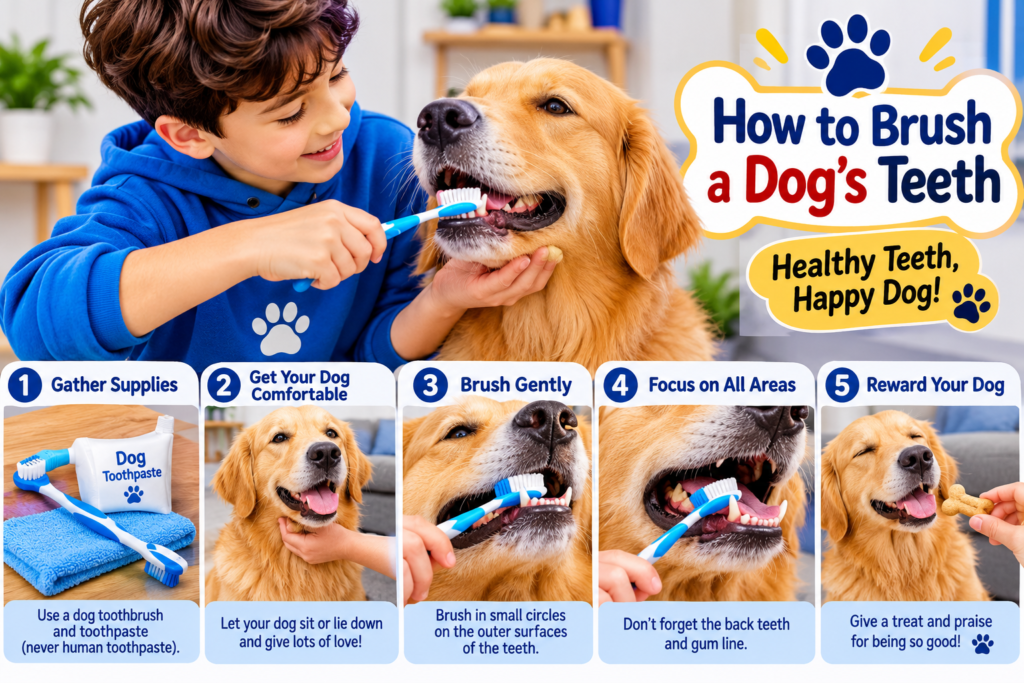
How to Brush a Dog’s Teeth Step by Step
Follow these seven simple steps to make dental care easier and more comfortable.
Step 1: Get Your Dog Comfortable
Before introducing a toothbrush, allow your dog to become comfortable with having its mouth touched.
Gently rub your dog’s cheeks and lips with your fingers. Reward calm behavior with praise or a small treat.
Start with short sessions and avoid forcing your dog to open its mouth. This first step helps build trust and makes future brushing easier.
Step 2: Introduce Dog Toothpaste
Let your dog smell and taste a small amount of pet-safe toothpaste from your finger.
Choose a flavor your dog enjoys. Allowing your pet to explore the toothpaste can make the experience more positive.
Do not rush this stage. Some dogs become comfortable quickly, while others need several days of practice.
Step 3: Start With Your Finger
Once your dog accepts the toothpaste, gently lift its lips and rub your finger along the outside surfaces of a few teeth.
Use slow, gentle movements and keep the first sessions short.
The goal is to help your dog understand that having its teeth touched is safe and comfortable.
Step 4: Introduce the Toothbrush
Place a small amount of dog toothpaste on a soft-bristled toothbrush.
Allow your dog to inspect the toothbrush before putting it near its mouth. Gently lift the lips and begin brushing a few teeth.
You do not need to clean every tooth during the first session.
Step 5: Brush the Outside Surfaces
Hold the toothbrush at approximately a 45-degree angle toward the gumline.
Use small, gentle circular movements to clean the outer surfaces of the teeth. Pay particular attention to the back teeth because plaque can accumulate around these areas.
Most dogs are more comfortable when you begin with the outside surfaces rather than trying to open their mouths widely.
Step 6: Brush All Accessible Teeth
As your dog becomes more comfortable, gradually increase the brushing time.
Focus on:
- Upper canine teeth
- Lower canine teeth
- Back molars
- Premolars
- Areas near the gumline
The outside surfaces are especially important because plaque commonly accumulates there.
Step 7: Reward Your Dog
After brushing, praise your dog and offer a small reward.
Keep your voice calm and friendly. If your dog becomes uncomfortable, stop and try again later.
Consistent positive experiences can help turn tooth brushing into a normal daily activity.
How Often Should You Brush Your Dog’s Teeth?
Ideally, you should brush your dog’s teeth every day. Daily brushing is one of the most effective ways to control plaque buildup and support healthy gums.
If daily brushing is not possible, try to establish a consistent routine and ask your veterinarian for advice about additional dental care.
Here is a simple routine:
| Frequency | Dental care activity |
|---|---|
| Every day | Brush your dog’s teeth |
| Weekly | Check the mouth and gums |
| Regularly | Wash and inspect the toothbrush |
| As recommended | Schedule professional dental examinations |
Remember that dental chews and other oral-care products can support your routine, but they should not replace brushing.
How to Brush a Dog’s Teeth That Does Not Like It
Some dogs dislike having their mouths touched. This is especially common when they have never experienced tooth brushing before.
If your dog resists brushing, patience is more effective than force.
Try these helpful techniques:
Start slowly: Begin by touching your dog’s lips instead of immediately using a toothbrush.
Use tasty toothpaste: Choose a dog-friendly flavor that encourages your pet to accept the product.
Keep sessions short: Brush for just a few seconds initially and gradually increase the time.
Choose the right moment: Try brushing when your dog is relaxed, such as after a walk.
Reward good behavior: Give praise and small treats to create positive associations.
If your dog growls, snaps, cries, or shows signs of pain, stop. Do not force its mouth open. A veterinarian can check for dental problems and recommend a safer approach.
Common Mistakes to Avoid When Brushing Dog Teeth
Even caring dog owners can make mistakes when starting a dental hygiene routine. Avoiding these problems can make brushing safer and more effective.
1. Using Human Toothpaste
Human toothpaste is not designed to be swallowed. Some formulas contain ingredients that can be dangerous for dogs, including xylitol.
Always choose toothpaste specifically made for pets.
2. Brushing Too Hard
Applying too much pressure can irritate your dog’s gums and make brushing uncomfortable.
Use a soft toothbrush and gentle movements.
3. Rushing the Process
Trying to clean every tooth during the first session can frighten your dog.
Introduce brushing gradually and allow your pet to adjust.
4. Ignoring the Back Teeth
The back teeth are important areas to clean because food particles and plaque can accumulate around them.
Gradually work toward brushing all accessible outer surfaces.
5. Brushing Only When Breath Smells Bad
Bad breath can be a sign of dental disease. Waiting until your dog develops unpleasant breath may mean that dental problems are already present.
Make brushing a regular habit instead of treating it as an occasional activity.
Signs Your Dog May Have Dental Problems
Regular brushing helps maintain oral hygiene, but it is also important to recognize possible dental problems.
Watch for these warning signs:
- Persistent bad breath
- Red or swollen gums
- Yellow or brown buildup on teeth
- Bleeding from the gums
- Drooling more than usual
- Difficulty chewing food
- Dropping food while eating
- Pawing at the mouth
- Loose or damaged teeth
If you notice these symptoms, arrange a veterinary examination. Painful or advanced dental disease may require professional treatment.
Important: Do not try to scrape off hardened tartar yourself. Professional dental cleaning may be necessary.
Best Alternatives to Help Maintain Your Dog’s Dental Health
Although brushing is the preferred daily home-care method, some additional products can support your dog’s dental hygiene.
Dental Chews
Dental chews are designed to help reduce plaque and food debris through chewing. Choose an appropriate size and product recommended for your dog’s age and chewing habits.
Dental Wipes
Pet dental wipes can help clean accessible tooth surfaces. They may be useful for dogs that are still learning to accept a toothbrush.
Veterinary Dental Products
Some specially formulated dental diets, water additives, and oral-care products can help support dental health.
Look for products accepted by the Veterinary Oral Health Council (VOHC), where available, and follow the manufacturer’s instructions.
Professional Dental Cleaning
Some dogs develop tartar or gum disease despite regular home care. A veterinarian can examine the mouth and recommend professional cleaning when necessary.
Professional dental procedures are generally performed under anesthesia so that the veterinarian can safely examine and clean the teeth, including areas below the gumline.
How to Make Dog Tooth Brushing a Daily Habit
Building a consistent routine is easier when you connect brushing with activities your dog already enjoys.
Here are some practical suggestions:
- Choose a regular time each day.
- Keep the toothbrush and toothpaste in one convenient place.
- Begin with a few teeth and gradually increase coverage.
- Use the same gentle brushing technique.
- Reward your dog after every successful session.
- Replace the toothbrush when the bristles become worn.
Consistency matters more than trying to complete a long brushing session immediately.
Frequently Asked Questions
1. Can I brush my dog’s teeth with regular toothpaste?
No. You should use toothpaste specifically designed for dogs. Human toothpaste may contain ingredients that are unsafe when swallowed, including xylitol.
2. At what age should I start brushing my dog’s teeth?
You can begin introducing gentle mouth handling and a soft toothbrush when your puppy is young. Early positive experiences help establish good dental habits. Use age-appropriate pet products.
3. How many times a week should I brush my dog’s teeth?
Daily brushing is ideal. It helps remove plaque before it hardens into tartar and supports better oral hygiene.
4. Can I use a human toothbrush on my dog?
A very soft, appropriately sized human toothbrush may work for some dogs, but a toothbrush specifically designed for pets is generally easier to use.
5. What happens if I never brush my dog’s teeth?
Without regular dental care, plaque can accumulate and harden into tartar. This can contribute to gum inflammation, periodontal disease, tooth loss, and oral pain.
6. Should I brush my dog’s teeth if its gums are bleeding?
Stop brushing if you notice bleeding, particularly if it happens repeatedly. Contact your veterinarian because bleeding may indicate gum inflammation, injury, or another dental problem.
7. Can dental treats replace tooth brushing?
No. Dental treats can provide additional support, but they do not replace regular tooth brushing or professional veterinary dental care.
The Bottom Line
Learning how to brush a dog’s teeth is an essential part of keeping your furry companion healthy and comfortable. With a soft toothbrush, dog-safe toothpaste, gentle movements, and plenty of positive encouragement, you can make dental care easier for your pet. Start slowly, establish a daily routine, and pay attention to any signs of dental problems. Remember that regular brushing, appropriate dental products, and professional veterinary checkups work together to protect your dog’s teeth and gums. A few minutes of care every day can make a meaningful difference in your dog’s long-term health.
[…] In this guide, we will explore 15 useful dog training tools, explain how they work, and share tips for choosing the right equipment for your furry companion. For more insight here how to brush a dog’s teeth […]