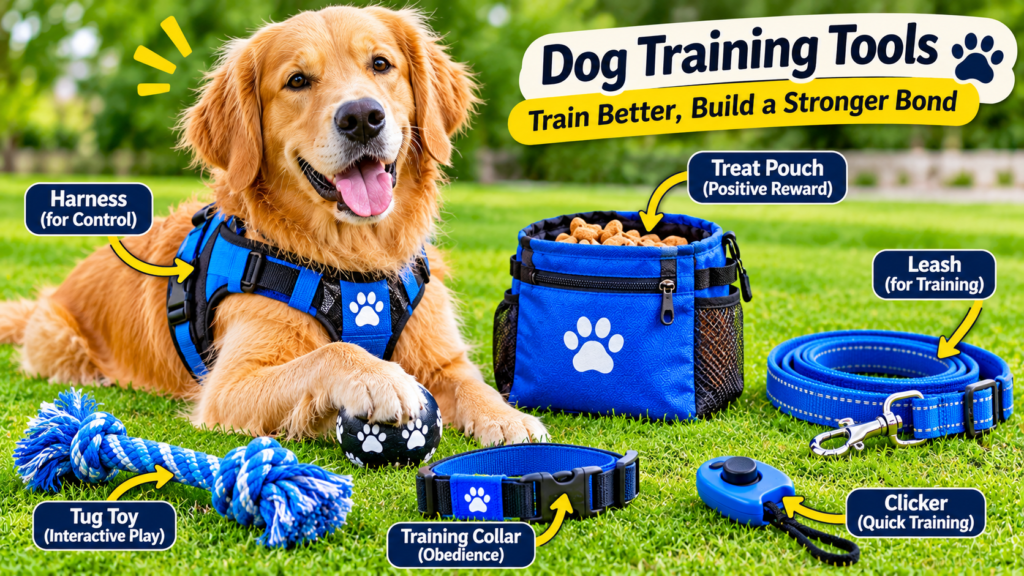
Training a dog becomes easier when you have the right equipment and a consistent approach. The best dog training tools help owners teach basic commands, encourage positive behavior, improve leash manners, and build a stronger relationship with their pets. Whether you have a young puppy or an adult dog, suitable training equipment can make everyday lessons more enjoyable and effective.
From clickers and training treats to harnesses, long lines, and interactive toys, different products serve different purposes. However, buying expensive equipment is not necessary. Choosing safe, comfortable, and practical items that match your dog’s age, size, and personality is much more important.
In this guide, we will explore 15 useful dog training tools, explain how they work, and share tips for choosing the right equipment for your furry companion. For more insight here how to brush a dog’s teeth
Why Are Dog Training Tools Important?
Training equipment helps owners communicate more clearly with their dogs. It can make learning new commands easier, provide rewards for good behavior, and support safe practice in different environments.
Here are some important benefits:
- Better communication: Training equipment helps dogs understand what their owners expect.
- Positive reinforcement: Treats and clickers help reward desirable behavior.
- Improved safety: Proper harnesses and leashes provide better control during walks.
- Consistent training: The same tools can be used to reinforce commands every day.
- Mental stimulation: Interactive toys and puzzles encourage dogs to think and learn.
Remember that equipment alone cannot train a dog. Patience, consistency, and positive reinforcement are essential for successful results.
15 Best Dog Training Tools Every Owner Should Know
1. Dog Training Clicker
A dog training clicker is a small handheld device that makes a distinct clicking sound. It is commonly used in positive reinforcement training to mark the exact moment a dog performs a desired behavior.
For example, when your dog sits after hearing a command, you can click immediately and offer a treat. Over time, your dog learns to associate the sound with a reward.
Best uses: Dog Training Tools
- Teaching basic obedience commands
- Encouraging calm behavior
- Training puppies
- Teaching new tricks
A clicker is inexpensive, lightweight, and easy to carry. It is particularly useful when you want to reward good behavior at the right moment.
2. Dog Training Treats
Training treats are among the most useful rewards for teaching dogs new behaviors. Small, tasty treats encourage dogs to repeat actions that earn positive attention.
Choose treats that are soft, easy to chew, and small enough to eat quickly. This helps prevent long interruptions during training sessions.
Best uses: Dog Training Tools
- Teaching sit and stay commands
- Encouraging recall
- Rewarding loose-leash walking
- Supporting puppy training
Remember to account for training treats in your dog’s daily food allowance to avoid excessive calories.
3. Dog Training Leash
A training leash provides control and safety while helping your dog learn how to walk politely. A standard leash around six feet long is a useful option for many everyday training situations.
Look for a comfortable handle, durable material, and a secure clip that matches your dog’s size.
Best uses: Dog Training Tools
- Teaching leash manners
- Practicing recall at a safe distance
- Walking in public areas
- Building better outdoor habits
Avoid jerking or pulling the leash. Reward your dog for walking calmly beside you.
4. Dog Training Harness
A well-fitted harness distributes pressure across the dog’s body instead of concentrating it around the neck. It can be particularly helpful for dogs that pull or are still learning leash manners.
Choose an adjustable design that allows natural shoulder movement and does not rub against the skin.
Best uses: Dog Training Tools
- Everyday walking
- Puppy leash training
- Outdoor obedience practice
- Helping manage strong dogs
A harness does not automatically stop pulling. Combine it with reward-based walking exercises for better results.
5. Dog Training Whistle
A dog training whistle produces a clear sound that can help communicate commands over longer distances.
Many owners use whistles to develop reliable recall, especially during outdoor activities. Start by pairing the whistle sound with a reward so your dog learns that responding brings something positive.
Best uses: Dog Training Tools
- Recall training
- Outdoor obedience
- Distance communication
- Working-dog exercises
Use a consistent whistle pattern and avoid unnecessarily loud sounds near your dog’s ears.
6. Target Stick
A target stick is a useful training aid with a small target at one end. Dogs can learn to touch the target with their nose, helping owners guide them through different exercises.
It is especially useful for teaching dogs to move into specific positions without physically pushing or pulling them.
Best uses: Dog Training Tools
- Teaching tricks
- Improving body awareness
- Introducing agility exercises
- Practicing positioning commands
Reward your dog whenever it touches the target correctly.
7. Dog Training Pouch
A training pouch keeps treats and small training supplies within easy reach. This makes it easier to reward your dog immediately when it performs the desired behavior.
Choose a pouch with a secure closure, comfortable belt, and enough space for treats and waste bags.
Best uses:
- Puppy obedience lessons
- Outdoor training
- Walking practice
- Reward-based exercises
A good pouch helps keep training organized and reduces unnecessary interruptions.
8. Interactive Puzzle Toys
Puzzle toys encourage dogs to use their brains to discover hidden rewards. These toys can provide mental stimulation and help prevent boredom.
Different designs offer different levels of difficulty, so begin with an easy puzzle before introducing more challenging activities.
Best uses: Dog Training Tools
- Mental enrichment
- Problem-solving practice
- Reducing boredom
- Encouraging independent play
Always supervise your dog when introducing a new puzzle toy.
9. Long Training Line
A long training line gives dogs more freedom while allowing owners to maintain a connection during practice.
Lines around 15–30 feet can be useful for recall training in suitable open spaces.
Best uses: Dog Training Tools
- Recall practice
- Outdoor obedience
- Distance exercises
- Safe exploration
Use a long line in an open area away from roads and obstacles. Never allow it to wrap around your hands or legs.
10. Dog Training Mat
A training mat can help teach dogs to settle in a specific location. It is often used for place training, relaxation exercises, and teaching dogs to remain calm around visitors.
Start by rewarding your dog for stepping onto the mat. Gradually introduce a cue such as “place” or “bed.”
Best uses: Dog Training Tools
- Place training
- Teaching calm behavior
- Indoor obedience
- Relaxation exercises
Choose a comfortable mat with a non-slip bottom that is easy to clean.
11. Agility Training Equipment
Agility equipment helps dogs develop coordination, confidence, and physical fitness. Common items include tunnels, weave poles, low jumps, and balance equipment.
These activities can also strengthen communication between dogs and their owners.
Best uses:
- Physical exercise
- Confidence building
- Improving coordination
- Advanced obedience activities
Start with low-impact obstacles and adjust activities to your dog’s age, health, and physical ability.
12. Dog Training Gate
A training gate helps manage access to different areas of your home. It can be particularly useful when introducing a new puppy or teaching household boundaries.
Gates provide a practical way to separate dogs from unsafe areas while allowing supervised interaction.
Best uses: Dog Training Tools
- Puppy management
- House training routines
- Preventing access to restricted rooms
- Managing multiple pets
Choose a secure gate that is appropriate for your dog’s height and jumping ability.
13. Dog Training Treat Dispenser
A treat dispenser releases food rewards during play or training. Some models require dogs to interact with the device to receive treats.
These products can encourage problem-solving and make reward-based activities more interesting.
Best uses: Dog Training Tools
- Mental stimulation
- Independent enrichment
- Food-based games
- Reward activities
Choose a durable, easy-to-clean model that is suitable for your dog’s chewing habits.
14. Dog Training Books
Training books can help owners understand canine behavior and learn effective teaching techniques.
A good guide explains positive reinforcement, body language, common behavior challenges, and practical obedience exercises.
Best uses: Dog Training Tools
- Learning basic training methods
- Understanding dog behavior
- Improving owner confidence
- Developing consistent routines
Look for educational resources written by qualified dog trainers or veterinary behavior professionals.
15. Dog Training Treat Toy
Treat-dispensing toys combine rewards and play to encourage dogs to interact with their environment. They can be filled with suitable treats or food to create an engaging activity.
These toys are especially useful for dogs that enjoy chewing and solving simple challenges.
Best uses: Dog Training Tools
- Reward-based enrichment
- Encouraging independent play
- Mental stimulation
- Reducing boredom
Always select a size and material appropriate for your dog’s chewing strength.
How to Choose the Best Dog Training Tools
Choosing the right equipment depends on your dog’s age, breed, size, personality, and training goals. A small puppy may need different supplies than a large adult dog.
Consider these factors before purchasing:
1. Dog Size: Select equipment that fits your dog’s body comfortably. A harness that is too tight can cause rubbing, while an oversized one may allow your dog to escape.
2. Material Quality: Choose durable, non-toxic materials that are easy to clean and safe for everyday use.
3. Comfort: Training equipment should allow your dog to move naturally without causing pain or discomfort.
4. Training Goals: Decide whether you want to teach basic commands, improve leash manners, practice recall, or provide mental stimulation.
5. Safety: Inspect leashes, clips, toys, and harnesses regularly for damage.
Dog Training Tools for Puppies
Puppies benefit from simple equipment that makes learning enjoyable. Starting with appropriate supplies can help establish good habits from an early age.
Some useful puppy training essentials include: Dog Training Tools
- A lightweight puppy leash
- A comfortable adjustable harness
- Small puppy training treats
- A soft training clicker
- A treat pouch
- Interactive puzzle toys
- A comfortable training mat
- Puppy-safe chew toys
Keep puppy training sessions short and positive. Reward desirable behavior immediately and allow plenty of time for rest and play.
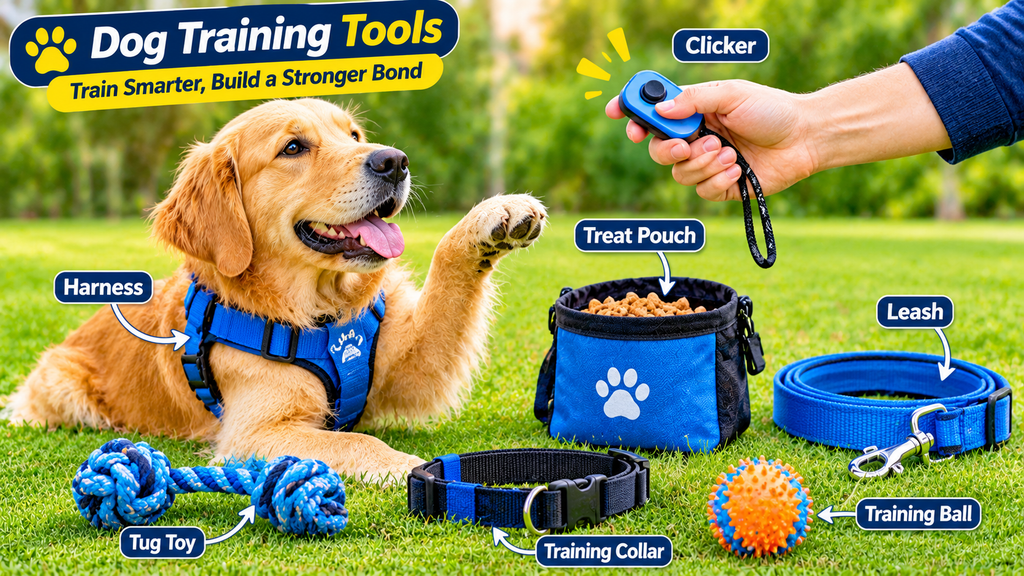
Dog Training Tools for Basic Obedience Commands
Different tools can help teach different commands. You do not need every product to train your dog successfully.
| Training command | Helpful tools |
|---|---|
| Sit | Clicker and treats |
| Stay | Treats and training mat |
| Come | Long training line and treats |
| Down | Clicker and treats |
| Heel | Standard leash and harness |
| Place | Training mat and rewards |
| Leave it | Treats and clicker |
For best results, teach one command at a time. Once your dog understands a command in a quiet environment, gradually practice it around distractions.
Are All Dog Training Tools Safe?
No. Some products can cause discomfort, fear, or physical injury when used incorrectly.
Reward-based training is generally recommended over equipment or techniques that rely on pain, intimidation, or fear.
Avoid relying on:
- Electric shock collars
- Prong collars
- Choke chains
- Spray collars
- Equipment designed to cause pain or fear
Instead, focus on comfortable harnesses, suitable leashes, food rewards, toys, and clicker training.
If your dog has serious fear, aggression, or anxiety, consult a qualified reward-based trainer or veterinary behavior professional.
How to Use Dog Training Tools Effectively
Having good equipment is only the beginning. The way you use it makes the biggest difference.
Follow these practical tips:
- Start with simple exercises: Teach basic commands before moving to advanced training.
- Use positive reinforcement: Reward the behavior you want to encourage.
- Keep sessions short: Several brief sessions can be easier for dogs than one long lesson.
- Be consistent: Use the same command words and hand signals.
- Practice regularly: Repeat exercises in different safe environments.
- Stay patient: Every dog learns at a different speed.
- End positively: Finish training with an easy command your dog already knows.
Clickers can be particularly helpful because they mark the exact moment your dog performs the desired behavior. Pair each click with a reward, especially while introducing a new skill.
Frequently Asked Questions About Dog Training Tools
1. What are the most important dog training tools?
The most useful basic supplies include a comfortable leash, properly fitted harness, training treats, clicker, treat pouch, and interactive toys. These items support everyday obedience and reward-based learning.
2. Are dog training clickers effective?
Yes. Clickers can help mark desirable behavior at the right moment. When paired with rewards, they help dogs understand which actions are being encouraged.
3. What tools do I need to train a puppy?
A puppy generally needs a lightweight leash, comfortable harness, small training treats, chew toys, a training mat, and a suitable clicker.
4. Can I train my dog without special equipment?
Yes. You can teach many basic commands using treats, praise, toys, and consistent communication. Special equipment can make some activities easier, but it is not essential for every training exercise.
5. Which leash is best for dog training?
A standard leash approximately six feet long is a practical choice for many everyday training situations. Choose a comfortable, durable leash with a secure attachment.
6. Are shock collars good for dog training?
Shock collars are not recommended as a routine training solution. Reward-based methods are more humane and help build trust between dogs and owners.
7. How long should dog training sessions last?
Short sessions of around 5–10 minutes are a useful starting point for many dogs. Adjust the duration according to your dog’s age, attention span, and comfort.
8. Do training toys help dogs learn?
Yes. Interactive toys and puzzle feeders can encourage problem-solving, mental stimulation, and independent play. They can complement obedience training.
Final Thoughts
Choosing the right dog training tools can make teaching new behaviors easier, safer, and more enjoyable. From clickers and tasty rewards to comfortable harnesses, long training lines, and interactive puzzle toys, every item has a different purpose. However, successful training depends on more than equipment. Patience, consistency, positive reinforcement, and understanding your dog’s needs are essential. Start with a few basic supplies, introduce them gradually, and reward good behavior. With the right approach, you can build better habits, strengthen your relationship, and help your dog become a confident and well-behaved companion.
[…] The goal is not to force a dog to share everything. Instead, you want to help your dog feel secure, reduce situations that trigger guarding, and teach positive behaviors without fear or punishment. For more insight here resource guarding in dogs […]
[…] Many dogs guard certain possessions because they feel uncomfortable when people or other animals come too close. The good news is that with patience, proper management, and positive training, many dogs can learn to feel more relaxed around their valuable items. For more insight here dog training tools […]