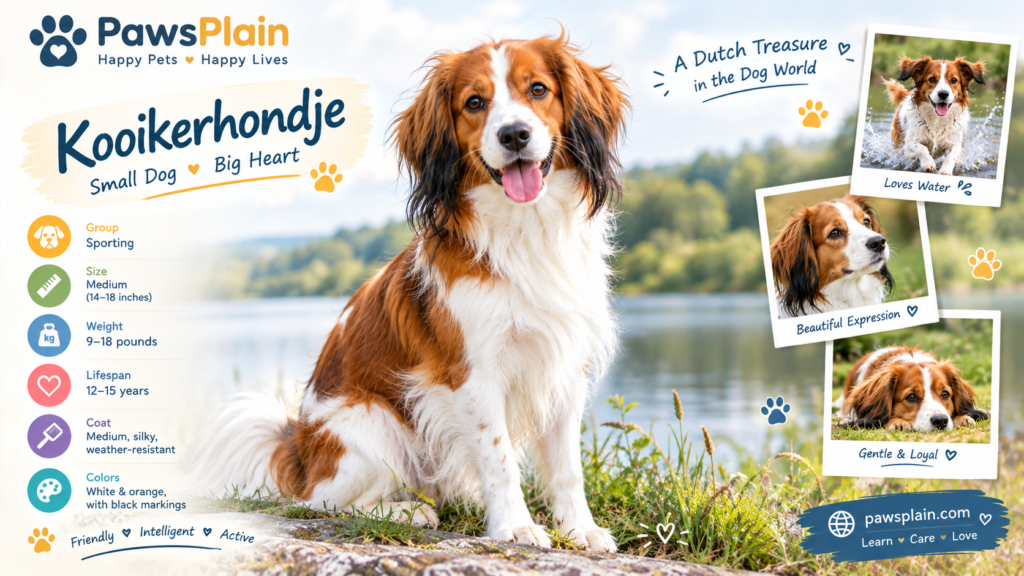
The Kooikerhondje, officially known as the Nederlandse Kooikerhondje, is a distinctive Dutch sporting dog recognized for its beautiful orange-and-white coat, feathered tail, dark-tipped ears, intelligence, and lively personality. Pronounced roughly “Nay-der-lands-say Koy-ker-hond-jay,” the breed is often simply called a Kooiker.
Originally developed in the Netherlands to help hunters lure ducks into specially designed traps, the Kooikerhondje is much more than an attractive companion. It is an intelligent, energetic, attentive sporting dog that generally enjoys having a job or activity to keep its body and mind busy.
Today, the Kooikerhondje remains relatively uncommon outside its homeland, making it an interesting choice for dog lovers looking for a less common breed with a fascinating history. For more insight here australian terrier
Quick Facts
| Feature | Details |
|---|---|
| Official Name | Nederlandse Kooikerhondje |
| Nickname | Kooiker |
| Origin | Netherlands |
| FCI Group | Group 8 – Retrievers, Flushing Dogs and Water Dogs |
| Type | Small sporting dog |
| Height | Roughly 14–16.5 inches |
| Weight | Around 20–30 pounds |
| Coat | Medium-length, silky, water- and dirt-repellent |
| Main Colors | White with orange-red patches |
| Temperament | Cheerful, confident, alert, affectionate |
| Energy Level | Moderate to high |
| Lifespan | Commonly around 12–14 years |
| Best For | Active owners and families prepared for training and socialization |
The FCI officially classifies the Nederlandse Kooikerhondje in Group 8, Section 2, covering flushing dogs. The breed received definitive FCI recognition in 1990.
History
The Kooikerhondje has a fascinating history dating back hundreds of years in the Netherlands.
The breed was developed to work around duck decoys, known in Dutch as eendenkoois. These were specially designed systems of waterways, screens, and traps used to catch waterfowl.
The Kooikerhondje helped by walking along the edges of these structures. Its movement, white markings, and beautifully feathered tail attracted the attention of ducks and encouraged them to move farther into the trap.
This job required a dog that could work independently while remaining highly responsive to its handler. Intelligence, attentiveness, stamina, and an ability to read its environment therefore became important characteristics of the breed.
Kooikerhondjes also worked as vermin hunters when they were not being used for duck trapping.
A Breed That Almost Disappeared
The Kooikerhondje experienced a dramatic decline during the early 20th century. By the period around World War II, the breed was in serious danger of disappearing.
A Dutch noblewoman, Baroness van Hardenbroek van Ammerstol, played an important role in rebuilding the breed. According to the AKC’s historical account, she used a photograph and a lock of Kooiker hair to search the Dutch countryside for remaining examples of the breed. One important dog, a female called Tommy, became central to the reconstruction of the modern Kooikerhondje.
The breed eventually recovered and gained wider recognition.
The FCI granted definitive recognition in 1990, while the American Kennel Club formally recognized the breed in the United States in 2018.
What Does a Look Like?
The Kooikerhondje has a graceful but sturdy appearance. It is a small sporting dog with a nearly square body, a silky coat, a well-feathered tail, and distinctive ears.
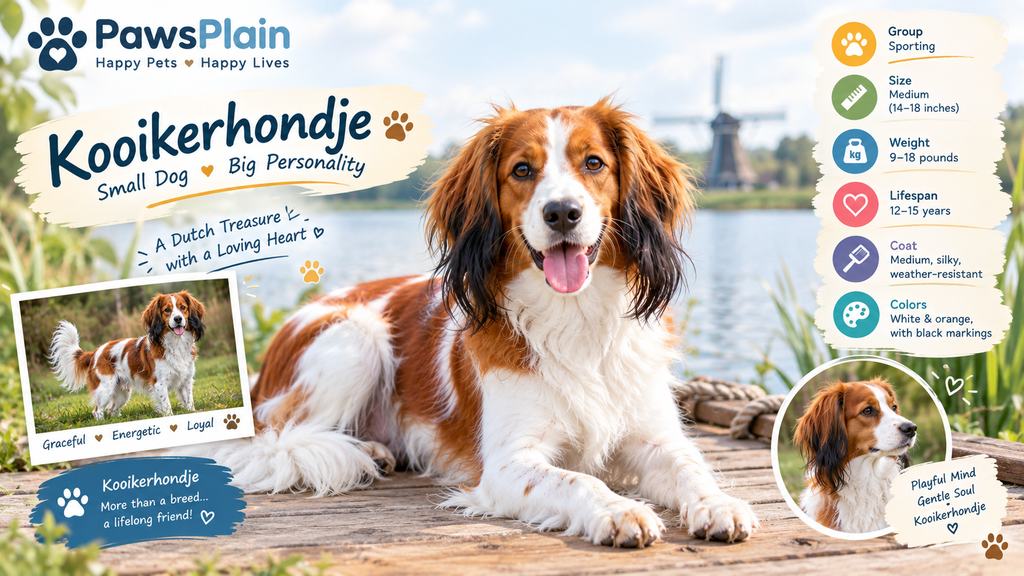
Its coat is primarily white with orange-red patches. Some dogs have black hair at the tips of their ears, creating the characteristic “earrings” associated with the breed.
The breed’s tail is particularly important to its traditional appearance and historical working function. Its movement helped attract ducks when the dog worked around duck decoys.
The Kooiker’s appearance is often compared with that of a small spaniel, but its history and temperament are distinctly its own.
Personality and Temperament
The Kooikerhondje is known for being lively, agile, confident, good-natured, and alert. The AKC describes the breed as faithful, easy-going, and friendly at home.
The breed can be affectionate with its family but somewhat reserved around unfamiliar people. This reserved behavior does not necessarily mean the dog is unfriendly. Many Kooikers simply take some time to assess new people before becoming comfortable.
Kooikerhondjes are also highly attentive dogs. Their working background means they tend to notice changes in their surroundings.
They can be:
- Intelligent
- Energetic
- Affectionate
- Alert
- Playful
- Sensitive
- Independent
- Eager to learn
Because they can be sensitive, training should be firm but kind rather than unnecessarily harsh.
Is a a Good Family Dog?
A well-socialized Kooikerhondje can make a wonderful family companion.
The breed tends to enjoy spending time with its people and can be affectionate and playful at home. However, it is important to understand that this is a sporting breed rather than a completely relaxed companion dog.
The AKC notes that Kooikerhondjes can be good family dogs but require a good amount of exercise and mental stimulation.
Families should also consider the individual dog’s temperament. Children should be taught to interact respectfully with dogs, and young children should always be supervised.
Exercise Needs
Kooikerhondjes have a moderately high energy level and need regular physical activity.
Daily walks are important, but many dogs will benefit from activities that also challenge their minds.
Good activities include:
- Long walks
- Hiking
- Fetch
- Swimming
- Agility
- Obedience
- Rally
- Scent work
- Retrieving games
- Interactive puzzle toys
The breed’s intelligence means physical exercise alone may not always be enough. Combining exercise with training and mental stimulation can help prevent boredom.
Training a
Kooikerhondjes are intelligent and generally highly trainable.
Their historical work required them to pay close attention to human direction, so many Kooikers enjoy learning new behaviors and participating in dog sports.
However, they can also be sensitive and may dislike repetitive or overly harsh training.
Positive reinforcement is a good foundation. Keep training sessions engaging, vary activities, and reward behaviors you want to see more often.
Useful training areas include:
- Basic obedience
- Recall
- Loose-leash walking
- Impulse control
- Socialization
- Resource-guarding prevention
- Calm behavior around other dogs
- Appropriate greetings
Early socialization is especially important because some Kooikerhondjes can be reserved around strangers or reactive toward unfamiliar dogs.
Grooming
The Kooikerhondje has a silky, medium-length coat that naturally helps repel dirt and water.
Regular weekly brushing is generally sufficient to keep the coat in good condition and help manage shedding.
Owners should also maintain:
- Regular nail trims
- Ear checks
- Dental hygiene
- Occasional baths
- Routine coat brushing
The breed’s coat is traditionally kept natural rather than heavily trimmed.
Because the ears are feathered, checking them regularly can help owners notice wax, debris, irritation, or other problems early.
Do Shed?
Yes. Kooikerhondjes shed, and regular brushing can help manage loose hair.
Their coat is relatively easy to maintain compared with some heavily coated breeds, but owners should still expect some hair around the home.
Weekly brushing is a practical starting point, with more frequent brushing potentially useful during heavier shedding periods.
Health
The Kooikerhondje is generally considered a relatively healthy and long-lived breed, but its relatively small genetic population means responsible breeding and health screening are particularly important.
The breed club’s health recommendations include screening for several inherited conditions.
Von Willebrand Disease
Von Willebrand disease is an inherited blood-clotting disorder. Testing can identify dogs carrying the relevant genetic mutation and can help breeders make responsible breeding decisions.
Hereditary Necrotizing Myelopathy
This is a recessive degenerative neurological condition that can occur in the breed. Genetic testing is available and is included among recommended health clearances.
Patellar Luxation
Patellar luxation involves abnormal movement of the kneecap. The Kooikerhondje Club of the USA includes patella examination among recommended health screenings for breeding dogs.
Hip Dysplasia
Hip screening is also recommended for breeding dogs. Hip X-rays can help evaluate the condition and support responsible breeding decisions.
Eye Conditions
Eye examinations are another recommended component of health screening for breeding Kooikerhondjes.
Prospective owners should ask breeders for appropriate health-testing documentation rather than relying solely on claims that puppies are healthy.
How Long Does a Live?
Kooikerhondjes generally have a lifespan of approximately 12–14 years, according to breed information published by the AKC.
Individual dogs can live shorter or longer lives depending on genetics, nutrition, weight, preventive care, exercise, and other factors.
Routine veterinary examinations, appropriate vaccinations, parasite prevention, dental care, and maintaining a healthy body weight can all contribute to a dog’s overall well-being.
Feeding a Kooikerhondje
A Kooikerhondje should receive a complete and balanced diet appropriate for its age, size, activity level, and health.
Puppies have different nutritional needs from adults, while senior dogs may require adjustments as their activity level changes.
Owners should monitor body condition rather than simply filling the food bowl according to habit. Treats should also be given in moderation.
Fresh water should always be available.
If a Kooikerhondje has a medical condition or unusual nutritional needs, its feeding plan should be discussed with a veterinarian.
Kooikerhondje Puppies
Kooikerhondje puppies are intelligent, curious, and active. Their early experiences can have a major influence on their adult behavior.
Puppies should receive gradual and positive exposure to:
- Different people
- Household sounds
- New environments
- Safe surfaces
- Car travel
- Grooming
- Veterinary handling
- Appropriately socialized dogs
Early training should focus on building confidence rather than forcing a puppy into situations that overwhelm it.
Because the breed can be sensitive, calm and positive handling is particularly valuable.
Kooikerhondje With Other Dogs
Kooikerhondjes can live successfully with other dogs, particularly when properly socialized from an early age.
However, the breed can sometimes be reactive toward unfamiliar dogs. The AKC also notes that early socialization is important.
Owners should not assume that every Kooiker will automatically enjoy dog parks or unrestricted interactions with strange dogs.
Controlled introductions and positive experiences are often more useful than simply exposing a puppy to as many dogs as possible.
Kooikerhondje and Other Pets
The breed’s sporting and hunting history means owners should consider its prey drive when introducing it to small animals.
A Kooikerhondje may be interested in chasing birds, rodents, or other small creatures.
Early socialization and careful management can help, but individual behavior varies. Small pets should always be introduced gradually and supervised.
Is a Kooikerhondje Good for First-Time Owners?
A Kooikerhondje can be rewarding for an experienced and committed owner, but it may not be the easiest breed for someone who has never trained a dog before.
The breed is intelligent and trainable, but it can also be sensitive, alert, energetic, and reserved with unfamiliar people.
A first-time owner who is willing to learn about positive training, socialization, exercise, and breed-specific behavior can potentially succeed with a Kooikerhondje.
However, prospective owners should understand the breed before choosing a puppy.
Kooikerhondje Pros and Cons
Pros
- Intelligent
- Attractive orange-and-white coat
- Affectionate with family
- Athletic and agile
- Highly trainable
- Enjoys dog sports
- Moderate grooming requirements
- Loyal and attentive
- Relatively long-lived
Cons
- Can be reserved with strangers
- Can be sensitive
- Requires regular exercise
- Needs mental stimulation
- May be reactive toward unfamiliar dogs
- Can have a prey drive
- Responsible health screening is important
- Relatively uncommon outside Europe
Frequently Asked Questions
What is a Kooikerhondje?
A Kooikerhondje is a small Dutch sporting breed originally developed to help hunters lure ducks into traditional duck traps. Today, it is primarily kept as a companion and sporting dog.
How do you pronounce Kooikerhondje?
The full Dutch breed name is difficult for many English speakers. The AKC gives a pronunciation roughly along the lines of “Nay-der-lands-say Koy-ker-hond-jay,” while owners often shorten the breed name to Kooiker.
How big does a Kooikerhondje get?
Kooikerhondjes are generally around 14–16.5 inches tall and weigh approximately 20–30 pounds, although exact size varies by sex and individual dog.
Are Kooikerhondjes good family dogs?
Yes, they can be excellent family companions when properly trained and socialized. They need regular exercise and mental stimulation and may be reserved around strangers.
Are Kooikerhondjes easy to train?
They are intelligent and generally highly trainable. Their sensitivity means owners should use patient, consistent, positive training methods.
Do Kooikerhondjes shed?
Yes. They shed and benefit from regular brushing. Weekly grooming is generally sufficient for maintaining their coat.
How long does a Kooikerhondje live?
The breed commonly has a lifespan of around 12–14 years.
Are Kooikerhondjes rare?
Yes. The breed remains relatively uncommon outside the Netherlands and Europe, although its popularity and recognition have grown internationally.
Final Thoughts
The Kooikerhondje is a remarkable combination of beauty, intelligence, athleticism, and history. From its origins helping Dutch hunters lure ducks into traps to its modern role as a family and sporting companion, the breed has retained many of the qualities that made it an effective working dog.
It is affectionate with its family, energetic outdoors, intelligent during training, and often cautious around unfamiliar people. That combination makes the Kooikerhondje especially appealing to active owners who want a dog that can participate in training, outdoor adventures, and canine sports.
However, this is not simply a pretty orange-and-white companion. A Kooikerhondje needs exercise, mental stimulation, early socialization, thoughtful training, and responsible health care.
For owners prepared to meet those needs, this rare Dutch sporting dog can become a loyal, lively, and deeply rewarding companion.
Conclusion
The Kooikerhondje is a charming, intelligent, and energetic Dutch breed that can make a wonderful companion for the right family. Its friendly personality, distinctive orange-and-white coat, and strong working instincts make it unique among sporting breeds. However, this active and sensitive dog needs regular exercise, mental stimulation, training, and early socialization. With proper care, a Kooikerhondje can become a loyal, playful, and affectionate member of the family for many years.
Leave a Reply