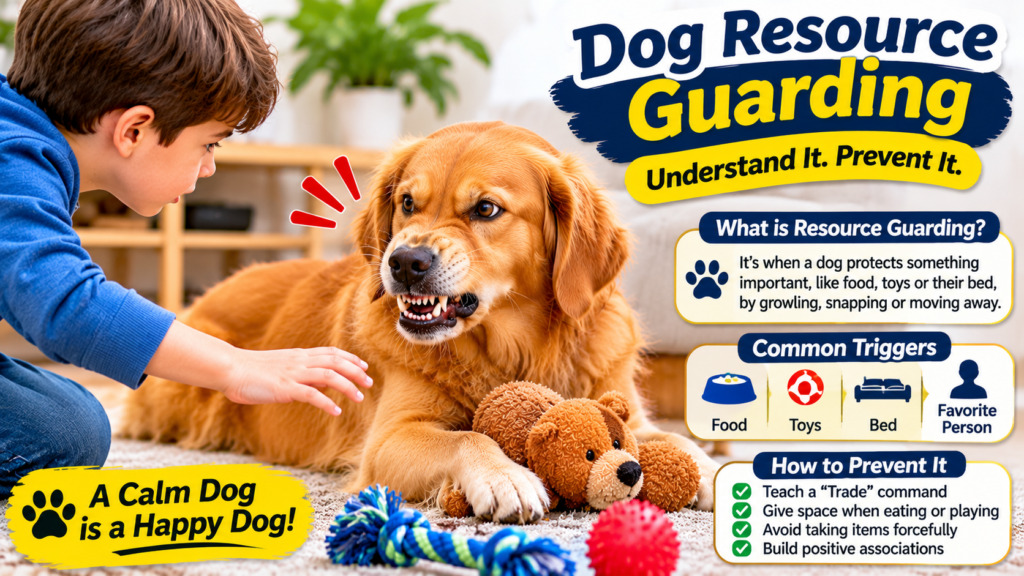
Dog resource guarding is a behavior in which a dog protects something it considers valuable, such as food, toys, treats, beds, or favorite people. A guarding dog may freeze, growl, show its teeth, or snap when someone approaches its possession. This behavior can be stressful for owners, but understanding its causes and warning signs can help you manage it safely.
The goal is not to force a dog to share everything. Instead, you want to help your dog feel secure, reduce situations that trigger guarding, and teach positive behaviors without fear or punishment. For more insight here resource guarding in dogs
What Is Dog Resource Guarding?
Dog resource guarding happens when a dog tries to keep another person or animal away from something it values. The dog may use body language or aggressive behavior to protect that resource.
For example, your dog might be eating from its bowl when someone walks nearby. If the dog suddenly becomes stiff, lowers its head over the food, or growls, it may be showing resource-guarding behavior.
A dog can guard many different things, including: Dog Resource Guarding
- Food bowls and treats
- Bones and chew toys
- Favorite balls and stuffed toys
- Beds, blankets, and sleeping areas
- Stolen objects such as shoes or socks
- Favorite people or family members
- Crates, sofas, or particular spaces
Some dogs guard only one type of resource, while others protect several things. The behavior can also vary depending on the situation, the people nearby, and the dog’s past experiences.
Common Signs of Dog Resource Guarding
Resource guarding does not always begin with growling or biting. Many dogs show small warning signs before their behavior becomes more serious. Learning to recognize these signals can help you respond before a conflict develops.
Look for the following signs: Dog Resource Guarding
1. Freezing or Stiffening the Body
Your dog may suddenly stop moving when someone approaches its food or toy. Its muscles become tense, and it may remain still while watching the approaching person.
2. Eating Faster Than Normal
Some dogs begin swallowing food quickly when another animal or person comes near. They may feel worried that their meal will be taken away.
3. Guarding an Object With the Body
A dog may stand over a toy, lower its head over a food bowl, or position its body between an object and another animal.
4. Hard Staring or Showing the Whites of the Eyes
Your dog may watch someone closely without looking away. Sometimes, the whites of its eyes become visible, a signal often called whale eye.
5. Growling or Showing Teeth
Growling, lip lifting, and showing teeth are clear warnings that your dog feels uncomfortable. Give the dog space instead of trying to correct the behavior.
6. Snapping or Biting
Some dogs may snap, lunge, or bite when they believe someone is going to take their possession. This is a serious safety concern and requires professional help.
These signals can appear gradually or happen together. Dogs Trust explains that guarding can involve subtle signs such as lip licking and body tension, as well as more obvious behaviors like growling and snapping. Dogs Trust+1
Why Does Dog Resource Guarding Happen?
There are several possible reasons behind this behavior. Understanding the cause can help you choose a safer and more effective approach.
1. Fear of Losing Something Valuable
One common reason for dog resource guarding is the fear of losing a valued possession. A dog may believe that someone approaching its food, toy, or bed will take it away.
2. Competition With Other Dogs
Dogs living together may compete for food, toys, attention, and comfortable resting places. Puppies can also develop protective habits when they have to compete with littermates for resources.
3. Previous Negative Experiences
A dog that has repeatedly had food or toys taken away may become more protective. It may learn that guarding is the only way to keep something it enjoys.
4. Stress and Anxiety
Changes in the home, unfamiliar visitors, loud environments, and conflicts with other pets can increase stress. A stressed dog may become less comfortable when someone approaches its possessions.
5. Lack of Available Resources
If several pets must share a small number of beds, toys, or feeding areas, competition may develop. Providing enough separate resources can reduce unnecessary conflict.
6. Pain or Medical Problems
A sudden change in behavior can sometimes be related to pain, illness, or changes in appetite. If your dog starts guarding unexpectedly, arrange a veterinary examination rather than assuming the problem is purely behavioral.
Resource guarding is not simply a sign of a dog being dominant or naughty. Fear of losing something, competition, stress, and previous experiences can all influence the behavior. Dogs Trust+2
10 Safe Ways to Manage Dog Resource Guarding
The best approach combines prevention, safe management, and reward-based behavior training. Never force your dog to surrender an item or deliberately create a situation that makes it growl.
1. Give Your Dog a Peaceful Feeding Area
Choose a quiet place where your dog can eat without interruption. Keep children and other pets away from the feeding area.
If your dog guards its food, use a separate room, secure gate, or suitable feeding enclosure. Allow your dog to finish eating before approaching the bowl.
2. Never Take Items by Force
Avoid pulling toys, bones, or food out of your dog’s mouth. Taking possessions away forcefully can increase anxiety and make the dog more defensive.
If your dog has something unsafe, do not put your hands near its mouth. Use a safe distance and contact a professional if the dog is guarding the object.
3. Teach the Trade Game
Trading helps a dog learn that releasing an object can lead to something rewarding.
For a dog without serious guarding behavior, start with a low-value toy. Offer a better reward at a comfortable distance and allow the dog to leave the toy voluntarily. Reward the dog and, when safe, return the toy.
Gradually introduce a verbal cue such as “trade” or “drop it.”
Do not practice this exercise with highly valued objects if your dog already growls, snaps, or bites when approached. Ask a qualified professional to guide the training.
4. Use Positive Reinforcement
Reward calm behavior instead of punishing defensive reactions. Your dog should learn that good things can happen when people are nearby.
For example, a carefully planned training exercise may involve a person approaching only as close as the dog remains relaxed, tossing a treat, and moving away.
The distance and difficulty should increase gradually. If the dog becomes tense, stop and make the next session easier.
5. Provide Enough Toys and Beds
If you have multiple dogs, give each one separate food bowls, resting places, and toys.
Avoid making dogs compete for a single favorite object. Put away toys or chews that regularly cause arguments, especially when pets are together without direct supervision.
6. Create a Safe Resting Space
Every dog should have a comfortable place where it can relax without being disturbed.
A dog bed, crate, or quiet corner can provide a sense of security. Teach children and visitors not to approach a dog that is sleeping or resting in its safe area.
7. Manage Interactions Between Dogs
If one dog guards food or toys from another, separate them during meals and when providing valuable chews.
Use doors, secure gates, or separate rooms to prevent direct competition. Do not expect dogs to work out serious guarding conflicts on their own.
8. Build Your Dog’s Confidence
Give your dog predictable routines, positive experiences, appropriate exercise, and opportunities to relax.
Avoid overwhelming your dog with situations that make it uncomfortable. Reward calm behavior during everyday activities and introduce new experiences gradually.
9. Teach Basic Training Cues
Useful training cues include: Dog Resource Guarding
- Drop it: Helps your dog learn to release an object.
- Leave it: Teaches your dog to move away from something.
- Come: Encourages your dog to move toward you when called.
- Go to your bed: Gives your dog a comfortable place to settle.
Teach these skills using low-pressure exercises and rewards. Do not use commands to force a dog away from something it is actively guarding.
10. Work With a Qualified Dog Behavior Professional
If your dog growls, snaps, lunges, or has bitten someone, seek professional help. A veterinarian can check for medical causes and recommend a qualified behavior professional.
A veterinary behaviorist or experienced reward-based behavior consultant can create a structured plan based on your dog’s triggers, history, and safety needs.
The Merck Veterinary Manual describes reward-based approaches such as offering treats when approaching a dog and teaching it to release objects in exchange for better rewards. Merck Veterinary Manual+2
How to Stop Food Guarding in Dogs
Food guarding is one of the most common forms of resource guarding. A dog may become uncomfortable when someone approaches its bowl, touches its food, or tries to move it while eating.
Here are safer ways to manage food guarding: Dog Resource Guarding
- Feed your dog in a quiet, separate location.
- Keep children and other animals away during meals.
- Do not touch the food bowl while your dog is eating.
- Avoid testing whether your dog will tolerate someone taking its food.
- Keep feeding times consistent.
- Provide an appropriate amount of food for your dog’s needs.
- Seek professional help if your dog shows threatening behavior.
For dogs with mild food-related concerns, a professional may recommend gradual training that changes how the dog feels about people approaching. This should be done at a distance where the dog remains relaxed.
If your dog has a history of biting or becomes aggressive around its food, do not attempt food-bowl exercises on your own. ASPCA+1
How to Handle Toy and Bone Guarding
Some dogs protect their favorite toys, chew bones, or balls. They may run away with an object, hide it, or growl when someone approaches.
Try these management tips: Dog Resource Guarding
- Give your dog valuable chews in a separate, peaceful area.
- Avoid grabbing toys from its mouth.
- Keep children away when your dog has a bone or chew.
- Remove objects that regularly cause conflict when your dog is not nearby.
- Teach trading with low-value toys if it is safe to do so.
- Ask a professional for help if your dog guards objects aggressively.
Remember that a dog does not need to share every possession with people or other pets. Providing safe personal space is often more helpful than forcing sharing.
Can a Dog Resource Guard Its Owner?
Yes. Some dogs may guard a favorite person in the same way they guard food or toys.
For example, a dog may growl when another person sits beside its owner, pushes between two people, or blocks someone from approaching.
This behavior can create problems in a family because the dog may react whenever someone comes close to its favorite person.
To manage it: Dog Resource Guarding
- Avoid encouraging the dog to block or control access to people.
- Give the dog a comfortable resting place away from busy interactions.
- Reward calm behavior at a safe distance.
- Avoid forcing visitors to approach or touch the dog.
- Seek professional help if the dog growls, lunges, or threatens people.
The behavior may be related to anxiety, fear, or learned guarding responses. A professional assessment can help identify what is happening. Cornell Vet School+1

Can Puppies Develop Resource Guarding?
Yes. Puppies can begin guarding food, toys, and other possessions at a young age. Some puppies become protective because they have experienced competition with littermates or feel uncertain about losing valuable items.
You can encourage healthier habits from the beginning: Dog Resource Guarding
- Give puppies their own food bowls.
- Allow them to eat without interruption.
- Provide several suitable toys.
- Avoid taking objects away just to test their reactions.
- Teach simple cues using rewards.
- Supervise children around puppies and their possessions.
If a puppy growls or freezes when approached, take the warning seriously. Do not punish the behavior or wait for it to become more serious before seeking guidance.
Mistakes to Avoid When Training a Resource-Guarding Dog
Some common training mistakes can increase fear and make guarding harder to manage.
| Mistake | Better approach |
|---|---|
| Shouting at a growling dog | Give the dog space |
| Taking food away by force | Allow peaceful feeding |
| Forcing the dog to share | Provide separate resources |
| Punishing warning signals | Understand the reason for the warning |
| Letting children approach guarded items | Keep children safely separated |
| Allowing dogs to fight over toys | Manage access to valuable objects |
Important: Never punish a dog for growling. Growling communicates discomfort. If you suppress that warning without changing the underlying emotion, the dog may still feel threatened and could move to snapping or biting with less warning.
How Long Does It Take to Improve Resource Guarding?
There is no fixed timeline for improving dog resource guarding. Some dogs respond well to careful management and training, while others need longer-term support.
Progress depends on: Dog Resource Guarding
- The severity of the behavior
- The number of resources being guarded
- The dog’s previous experiences
- The frequency of triggering situations
- The dog’s stress levels and health
- The consistency of the training plan
Look for signs that your dog is becoming more relaxed, such as a softer body posture and less tension around resources. Do not measure success by how close you can get to the food bowl or how easily you can take away a toy.
Some dogs may always need separate feeding areas or careful management around particular objects. That does not mean training has failed. Keeping everyone safe is an important part of success.
Frequently Asked Questions About Dog Resource Guarding
1. What is dog resource guarding?
Dog resource guarding is when a dog protects something valuable from people or other animals. Common guarded resources include food, toys, bones, beds, and favorite people.
2. Why does my dog growl when I go near its food?
Your dog may feel worried that someone will take its food away. Give it space, avoid touching the bowl, and consider professional help if the behavior happens regularly.
3. Can resource guarding be trained out of a dog?
Many dogs can improve through appropriate management and reward-based behavior training. However, results vary, and some dogs may need lifelong management around certain resources.
4. Should I take my dog’s food away to stop guarding?
No. Taking food away to test your dog can increase anxiety and make the behavior worse. Let your dog eat peacefully in a safe area.
5. Is resource guarding a sign of aggression?
It can involve aggressive warning signals such as growling, snapping, or biting. However, guarding often begins as a response to feeling threatened or worried about losing something valuable.
6. Can resource guarding suddenly appear in adult dogs?
Yes. Changes in health, pain, stress, competition, or previous experiences can influence behavior. If guarding starts suddenly, arrange a veterinary checkup.
7. Can two dogs live together if one has resource guarding?
Yes, some dogs can live safely together with appropriate management. Separate feeding areas, individual resting spaces, and controlled access to toys may help. Serious conflict requires professional guidance.
The Bottom Line
Dog resource guarding can be difficult for owners, but it is a manageable behavior in many situations. Dogs may protect food, toys, beds, or favorite people because they feel worried about losing something valuable. The best response is to understand their warning signs, provide safe personal space, and use positive training rather than punishment. Avoid taking possessions by force, keep children away from guarded resources, and seek professional help if your dog snaps or bites. With patience, proper management, and expert support when needed, you can help your dog feel more secure and create a safer home.
Leave a Reply