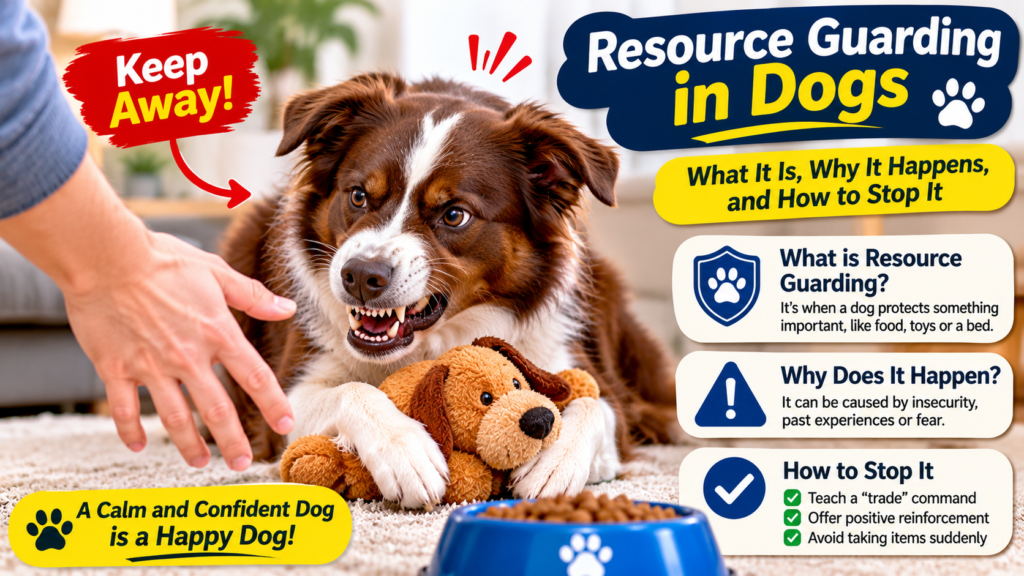
Resource guarding in dogs happens when a dog becomes protective of something valuable, such as food, toys, treats, resting places, or even a favorite person. A dog may growl, freeze, stare, or snap when someone approaches the item. Although this behavior can be worrying, understanding why it happens is the first step toward managing it safely.
Many dogs guard certain possessions because they feel uncomfortable when people or other animals come too close. The good news is that with patience, proper management, and positive training, many dogs can learn to feel more relaxed around their valuable items. For more insight here dog training tools
What Is Resource Guarding in Dogs?
Resource guarding is a behavior in which a dog tries to protect something it considers valuable. The dog may use body language, growling, barking, snapping, or biting to prevent another person or animal from taking that resource.
For example, a dog might eat peacefully until someone walks toward its food bowl. It may suddenly stop eating, stiffen its body, or growl. This reaction is a warning that the dog does not feel comfortable with someone approaching its food.
Dogs can guard many different things, including: Resource Guarding in Dogs
- Food bowls and treats
- Bones and chew toys
- Favorite toys and balls
- Beds, blankets, and sleeping areas
- Stolen objects such as socks or shoes
- Favorite people or family members
- Spaces such as sofas or crates
Not every dog guards the same things. Some protect only their food, while others may become defensive around toys, resting places, or objects they have found.
Common Signs of Resource Guarding
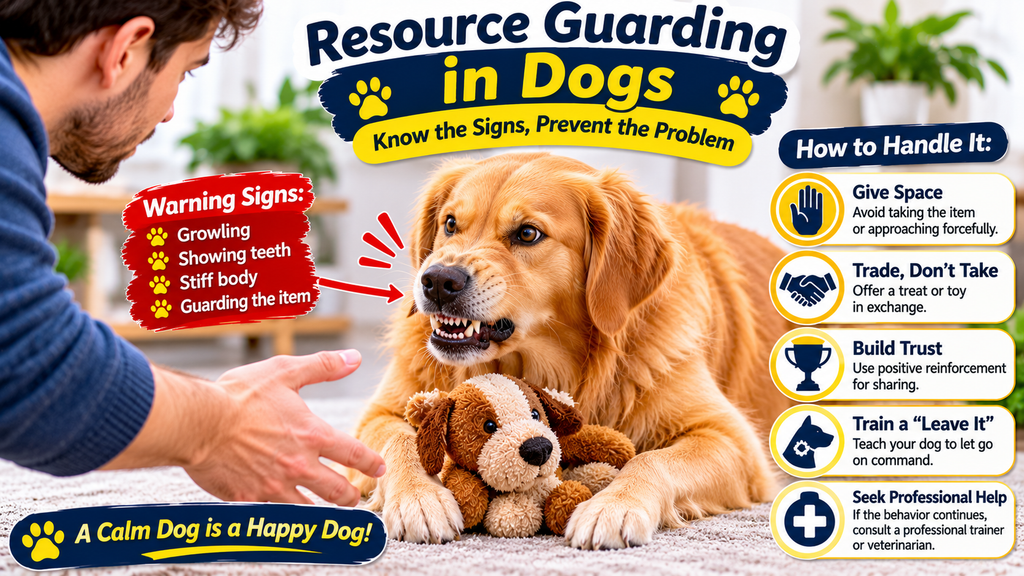
Recognizing early warning signs can help prevent a situation from becoming dangerous. Some dogs show very subtle signals before they growl or snap.
Watch for these common behaviors: Resource Guarding in Dogs
1. Freezing or Becoming Stiff
Your dog may suddenly stop moving when someone approaches its food, toy, or resting place. Its body may become tense, and it may remain completely still.
2. Growling
Growling is a warning that your dog feels uncomfortable. It should never be ignored or punished. Instead, give your dog space and identify what caused the reaction.
3. Eating Faster
Some dogs begin eating much faster when another animal or person comes near their food bowl. They may worry that their meal will be taken away.
4. Showing Teeth
A dog may lift its lips, show its teeth, or make a threatening facial expression. This is a serious warning sign that the dog needs more space.
5. Staring or Watching Closely
Your dog may keep its eyes fixed on someone approaching its possession. It might also lower its head over the object or position its body between the object and the approaching person.
6. Snapping or Biting
In more serious situations, a dog may snap at someone or bite when it believes its possession is threatened. If this happens, professional behavior support is important.
These warning signs can appear in different combinations. The ASPCA explains that food guarding can range from moving away with an item or growling to chasing or biting. ASPCA+1
Why Do Dogs Develop Resource Guarding?
There is no single reason every dog develops this behavior. It can be related to natural instincts, past experiences, anxiety, or competition over valuable resources.
1. Natural Protective Behavior
Dogs may naturally try to protect resources they consider important. Food, toys, and comfortable resting places can have high value to them.
2. Competition With Other Dogs
Dogs that have competed with littermates or other animals for food may become protective of their meals. They might learn that they need to defend their possessions to keep them.
3. Fear of Losing Possessions
Some dogs become defensive because they expect people to take their belongings away. If someone regularly removes toys or food without offering anything in return, the dog may become more worried.
4. Stress and Anxiety
A dog experiencing stress may become more protective of its surroundings and possessions. Changes in the home, unfamiliar visitors, or conflict with other pets can contribute to uncomfortable behavior.
5. Previous Negative Experiences
Dogs that have experienced competition, unpredictable handling, or repeated removal of valuable items may become more cautious when someone approaches them.
Resource guarding can be influenced by both inherited tendencies and learned experiences. Cornell Vet School+1
How to Stop Resource Guarding in Dogs Safely
The best approach is to help your dog feel safe rather than forcing it to give up possessions. Punishment and confrontation can increase fear and make guarding more difficult to manage.
Here are practical steps that may help.
1. Give Your Dog Space While Eating
Avoid touching your dog, moving its bowl, or standing too close while it eats. Choose a quiet feeding area where children and other pets cannot disturb it.
If your dog guards food, feeding it in a separate room or behind a secure barrier can help prevent conflict.
2. Never Take Food or Toys by Force
Do not pull objects out of your dog’s mouth or grab its food bowl to prove that you are in control. This can make your dog feel more threatened.
Instead, teach your dog that giving something up can lead to a positive reward.
3. Use Positive Reinforcement
Positive reinforcement rewards behavior you want to see again. When a dog is comfortable and safe around an item, you can reward calm behavior with praise or treats.
For example, during a professionally guided training plan, an adult may gradually teach a dog that a person’s presence near its food predicts something enjoyable.
Do not begin close-range exercises if your dog already growls, snaps, or bites around food. Get professional guidance first.
4. Teach the Trade Command
A trade exercise teaches your dog that releasing an object does not always mean losing something valuable.
Start with a low-value toy that your dog is comfortable sharing. Offer a more exciting treat at a safe distance and reward the dog for voluntarily leaving the toy.
Use a cue such as “trade” or “drop it” once your dog understands the exercise. Avoid practicing with bones, food bowls, or highly valued objects if your dog guards them.
5. Provide Enough Toys and Resources
If you have multiple dogs, provide separate food bowls, beds, and toys where possible. This can reduce competition and help each dog feel comfortable.
For example, give every dog its own feeding area and avoid placing valuable chews close together.
6. Create a Safe Resting Area
Dogs need a comfortable place where they can relax without being disturbed. A bed, crate, or quiet corner can become a safe resting area.
Teach children and visitors not to approach a dog when it is sleeping or relaxing in its designated space.
7. Reward Calm Behavior
Notice when your dog remains relaxed around people or other pets. Reward appropriate behavior with praise or treats when it is safe to do so.
Keep training sessions short and positive. Never move closer if your dog shows tension, freezes, or begins growling.
8. Manage Interactions With Other Pets
If your dog guards toys or food from another animal, prevent them from sharing valuable items until the behavior is properly assessed.
Feed pets separately, remove high-value chews when necessary, and supervise interactions from a safe distance.
9. Get Help From a Qualified Professional
If your dog has bitten someone, repeatedly snaps, guards several resources, or becomes aggressive when approached, contact your veterinarian and a qualified behavior professional.
A veterinary behaviorist or appropriately experienced reward-based behavior professional can assess the situation and develop a safe training plan. The ASPCA recommends professional help when there is a risk of biting or when treatment exercises are not progressing safely. ASPCA+1
What You Should Never Do With a Resource-Guarding Dog
Some common reactions can make the problem worse. Avoid these mistakes: Resource Guarding in Dogs
- Do not punish growling: Growling is a warning signal. Punishing it may make your dog more fearful and can remove an important warning before a bite.
- Do not forcefully remove possessions: Grabbing food, toys, or bones can increase defensive behavior.
- Do not challenge your dog: Avoid staring, shouting, or trying to physically dominate it.
- Do not allow children near guarded items: Children may not recognize warning signs and can be at greater risk of injury.
- Do not force interactions with other pets: Give dogs separate spaces and resources when needed.
The goal is not to make your dog afraid to protect its possessions. The goal is to reduce the fear or discomfort that triggers the behavior. Preventive Vet+1
Can Puppies Develop Resource Guarding?
Yes, puppies can show resource-guarding behavior. Some puppies become protective of food, toys, or objects because they have learned to compete with other puppies.
Early positive experiences can help puppies develop healthier habits. Owners can teach simple skills such as “drop it” and “leave it” using rewards and low-value objects.
Helpful puppy habits include: Resource Guarding in Dogs
- Provide separate feeding bowls.
- Avoid disturbing puppies while they eat.
- Reward voluntary sharing and releasing objects.
- Give puppies enough toys and resting spaces.
- Keep children away from food bowls and chew toys.
- Never take possessions away simply to test the puppy.
If a puppy freezes, growls, or snaps when approached, avoid testing or challenging it. Ask a qualified professional for guidance.
How Long Does It Take to Fix Resource Guarding?
There is no exact timeline for changing this behavior. Some dogs make progress with basic management and carefully planned training, while others need longer-term support.
The time required depends on several factors: Resource Guarding in Dogs
- How serious the guarding behavior is
- How many resources the dog protects
- Whether the dog has a history of biting
- How long the behavior has been happening
- The dog’s environment and stress levels
- Whether the training plan is suitable and consistent
Progress should be measured by relaxed body language and safer behavior, not by how close someone can get to a guarded object.
Never rush the process. If your dog becomes tense or uncomfortable, stop the exercise and seek professional advice.
Frequently Asked Questions
1. Is resource guarding in dogs normal?
Resource guarding can be a natural canine behavior. However, growling, snapping, or biting around valuable items can create safety risks and may need professional attention.
2. Why does my dog growl when I approach its food?
Your dog may feel that its food is in danger of being taken away. Give it space, avoid touching its bowl, and consider getting professional advice if the behavior is repeated or aggressive.
3. Should I punish my dog for resource guarding?
No. Punishing or frightening a dog for guarding can increase stress and make the behavior worse. Reward-based training and safe management are better approaches.
4. Can resource guarding be completely cured?
Some dogs improve significantly, but outcomes vary. The goal is to reduce guarding triggers, improve the dog’s comfort, and prevent dangerous situations. Some dogs may always need careful management.
5. Can dogs guard their owners?
Yes. Some dogs become protective around a favorite person and may growl, stare, or block another person or animal from approaching. This behavior should be assessed if it creates conflict or safety concerns.
6. When should I contact a dog behaviorist?
Contact a qualified professional if your dog snaps, bites, lunges, guards several objects, or reacts aggressively when someone approaches. Seek help early rather than waiting for the behavior to become more serious.
The Bottom Line
Resource guarding in dogs can be challenging, but it does not mean your dog is bad or impossible to train. It usually means the dog feels uncomfortable about losing something it values. Give your dog enough space, avoid punishment, and use safe positive-reinforcement methods to build trust. If the behavior includes snapping, biting, or serious aggression, work with a veterinarian and qualified behavior professional. With patience, consistent management, and the right support, you can help your dog feel safer and create a more peaceful home.
[…] The goal is not to force a dog to share everything. Instead, you want to help your dog feel secure, reduce situations that trigger guarding, and teach positive behaviors without fear or punishment. For more insight here resource guarding in dogs […]